A state of paper
Thematic dossier · Period: 1948–1989 · Reading time: 6 min
What the regime printed, what the citizen filled in, and what nobody checked.
In a collection devoted to communist Bulgaria, paper always ends up taking the most room. Newspapers, posters, booklets, forms, textbooks, bonds: it is the most abundant and the most fragile material, the kind one throws away and yet finds by the boxful in attics.
But all this paper did not circulate in the same direction, and that is what organises it. There was the paper that came down, printed by the state towards the citizen, and the paper that went up, filled in by the citizen towards the state. The first announced. The second proved. Between the two there was no third party to verify anything.
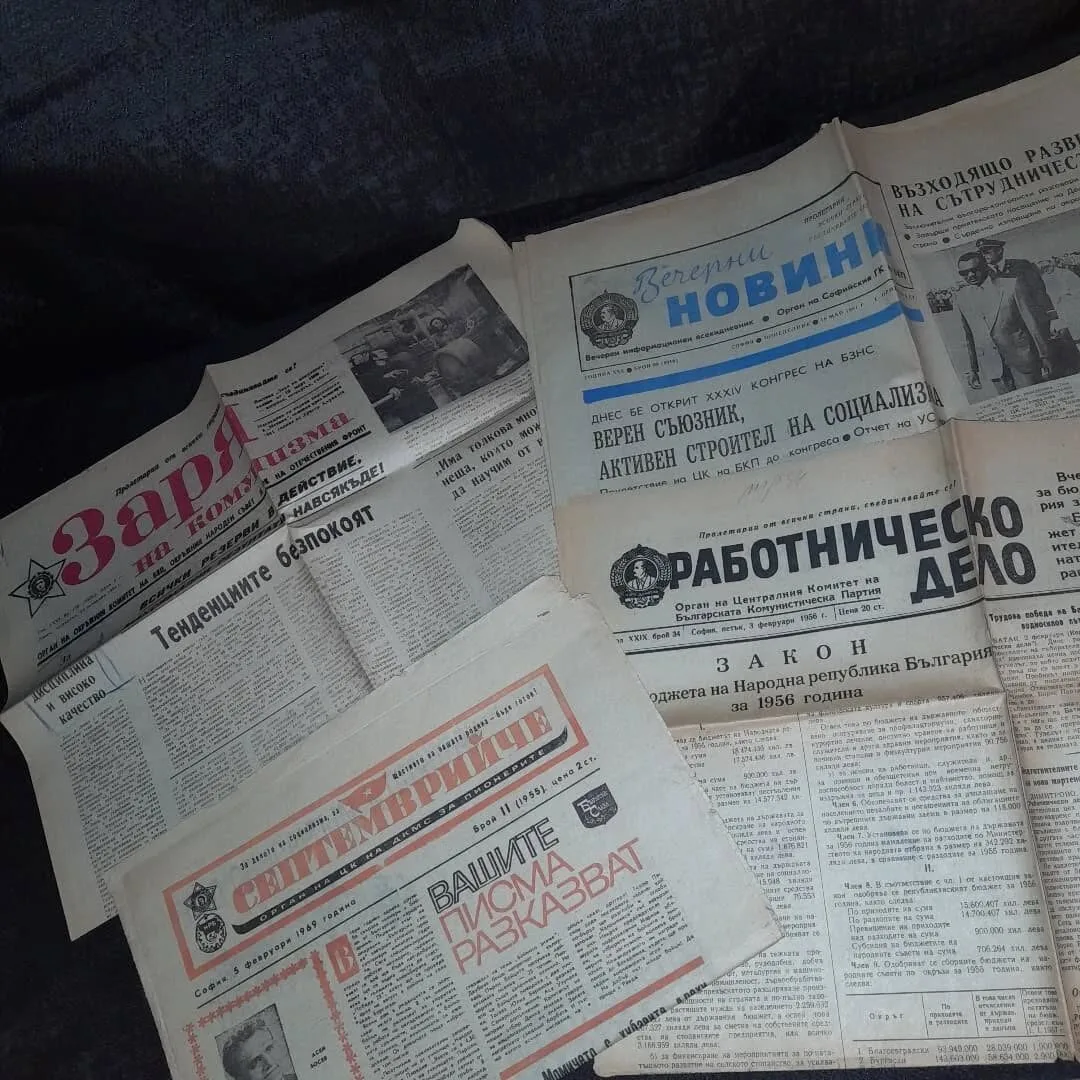 Various newspapers available in the People's Republic of Bulgaria — Collection Cold War Bulgaria
A single publisher
The Bulgarian press after 1944 had no competition, because the very notion no longer had a legal basis. All publishing passed under state control, down to the paper mills themselves, which were nationalised: the regime owned the material before it owned what was printed on it.
At the summit, Rabotnichesko Delo (Работническо дело), organ of the Central Committee of the Bulgarian Communist Party, founded in 1927 and one of the country's largest circulations until its disappearance in 1990, the year it became Duma. Below it, a press of corps and branch: every institution, every service, every organisation had its title.
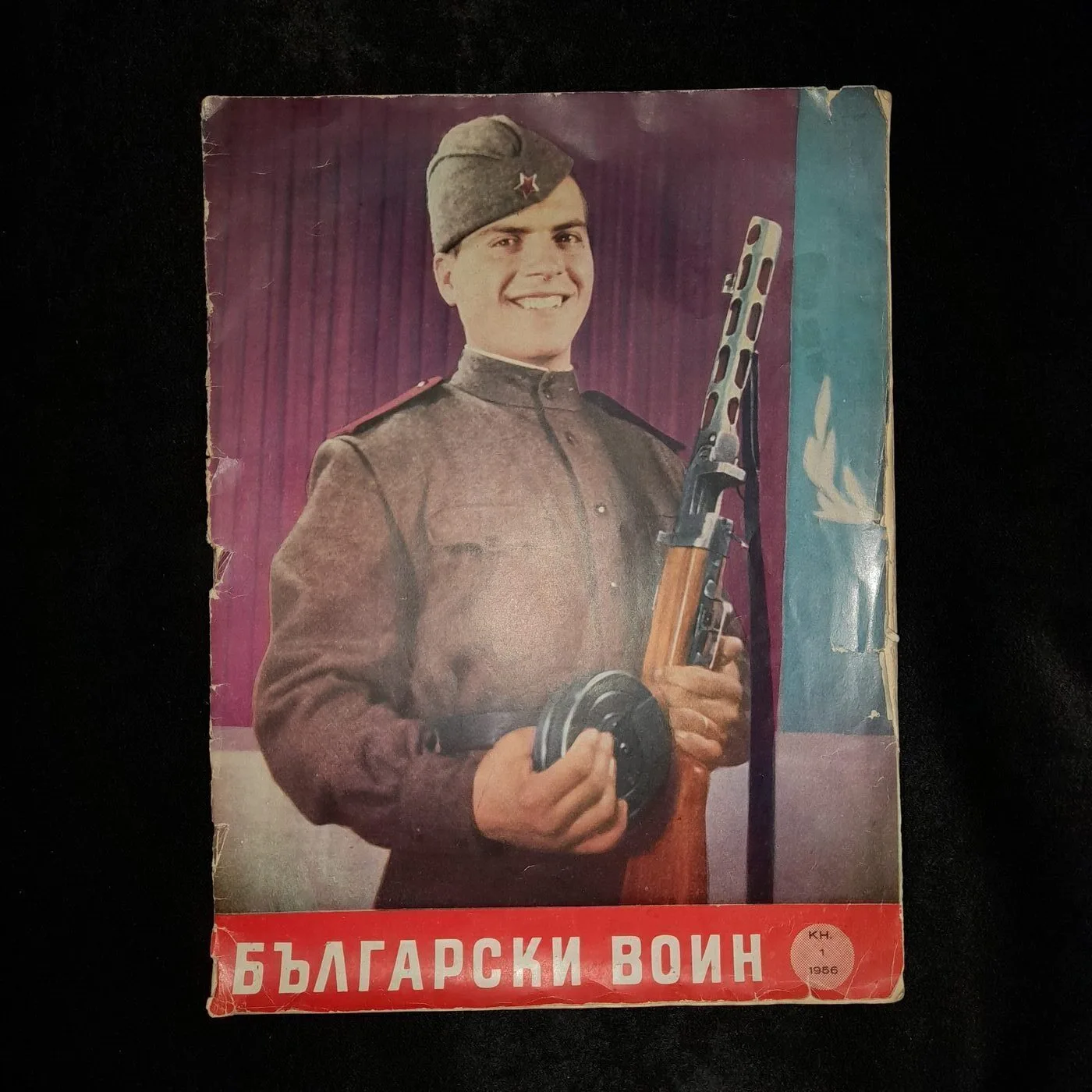 First issue of the magazine "Bulgarian Warrior", 1956 — Collection Cold War Bulgaria
A reader of the period did not lack for reading. He lacked points of comparison.
The paper that comes down
Descending paper did not merely inform: it declared. The Constitution set the framework, the Party programme set the direction, the poster set the formula everyone had to be able to recite.
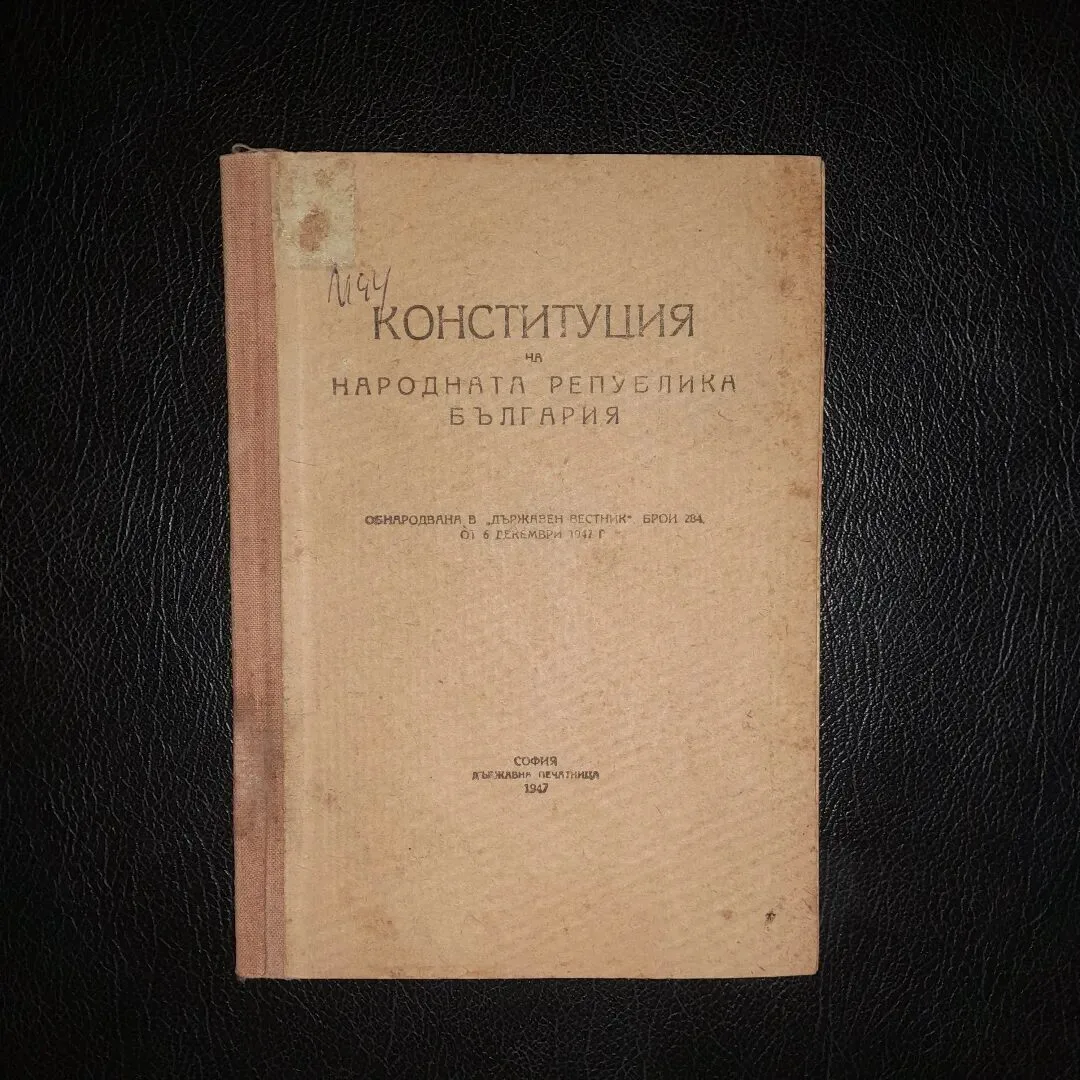 First Constitution of the People's Republic of Bulgaria — Collection Cold War Bulgaria
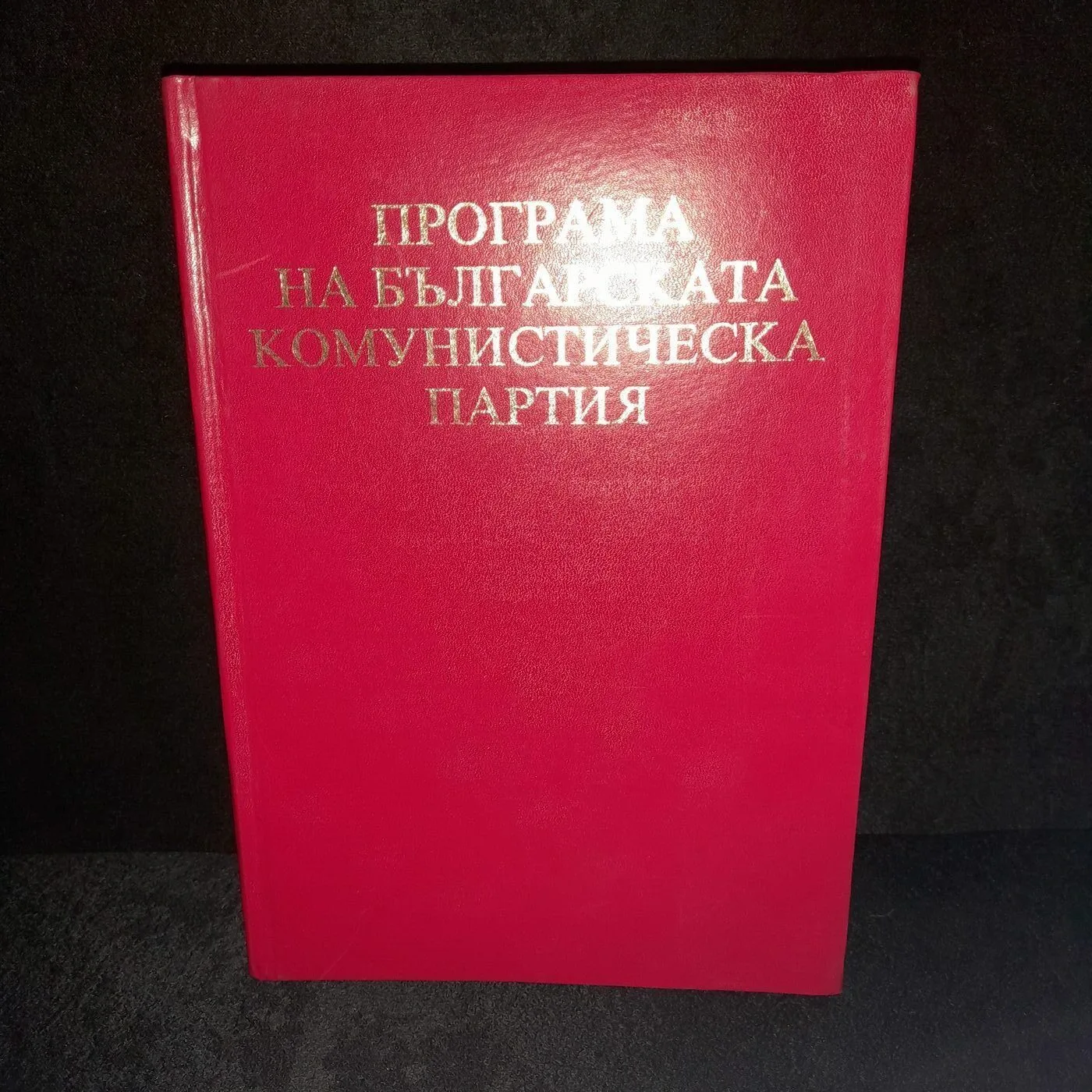 Programme of the Bulgarian Communist Party, 1974 edition — Collection Cold War Bulgaria
These texts were not meant to be discussed. They were meant to be posted, distributed, learned. The wall poster is its purest form: a sentence, a slogan, and nothing that calls for a reply.
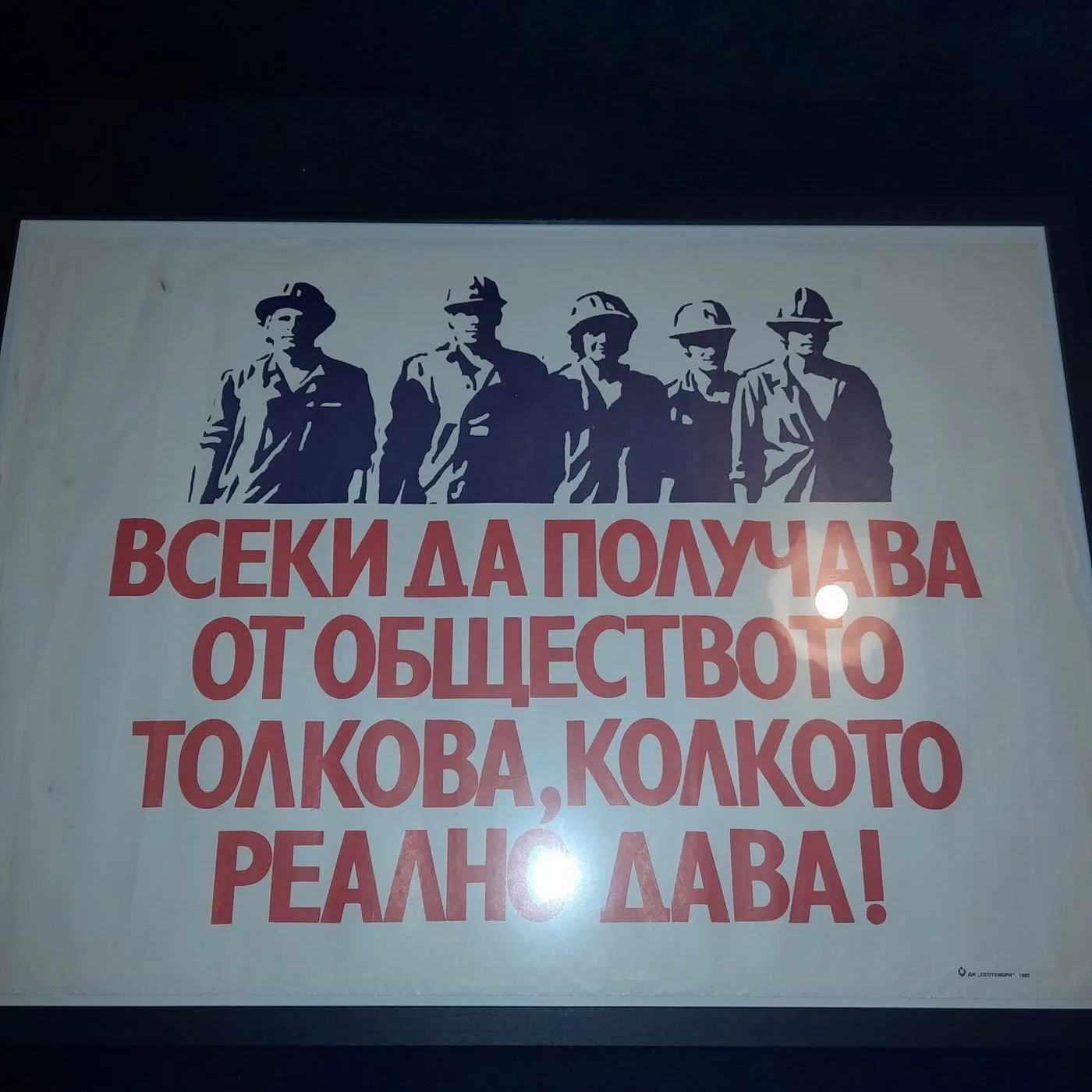 Propaganda poster setting out the principle of payment according to work performed — Collection Cold War Bulgaria
Twenty posters for five years
One piece in the collection sums up the whole mechanism on its own: a set of some twenty posters presenting the national five-year plan from 1949 to 1953. The first Bulgarian five-year plan, posted on the wall.
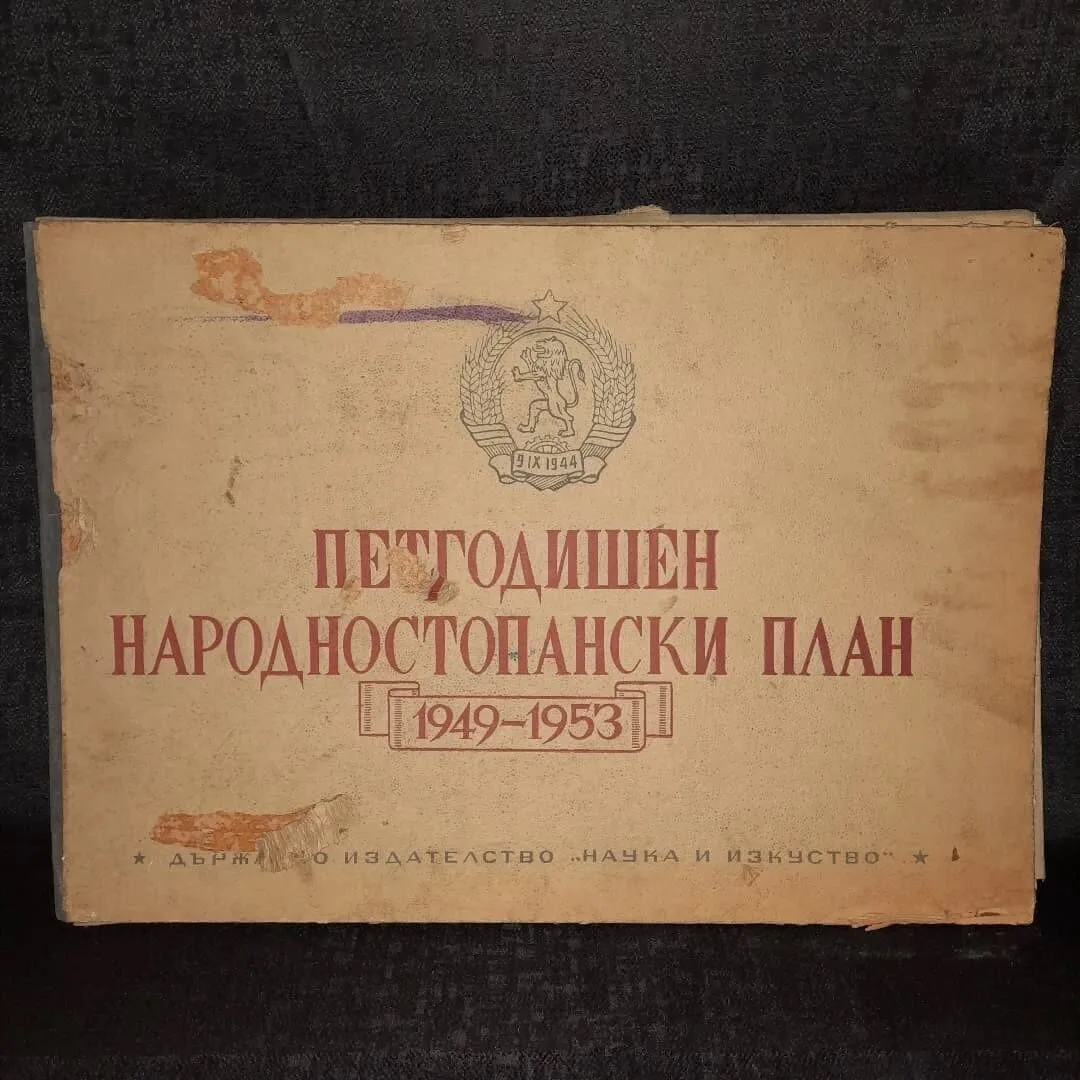 Set of posters presenting the national five-year economic plan from 1949 to 1953 — Collection Cold War Bulgaria
The apparatus that produced these figures had been set up just beforehand. In January 1948, a State Committee for Production was created; by October of the same year, this committee and the Main Directorate of Statistics jointly fixed the criteria for calculating the plan's fulfilment. The body that was to meet the targets thus defined, together with the body that was to measure them, the manner of measuring.
What followed is well known. In 1952, the plan was declared fulfilled a year ahead of schedule. But the statistics of the period are too incomplete and too contradictory for its real results to be assessed. Agriculture received only 13% of the planned investment and recorded no growth: where the plan announced a 59% rise in agricultural output, the accepted estimate is 0.9%.
That is the heart of the matter. These posters were not a lie: they were a printed promise, formulated by a power that also held the instrument of verification. The paper announced the result, and the paper attested that it had been reached.
The paper that goes up
At the other end of the chain, paper of an altogether different nature. This kind is not displayed, it is filled in, stamped and filed.
The work book followed an individual from one job to another. It recorded posts, dates, assessments. Without it, one could prove nothing of what one had done.
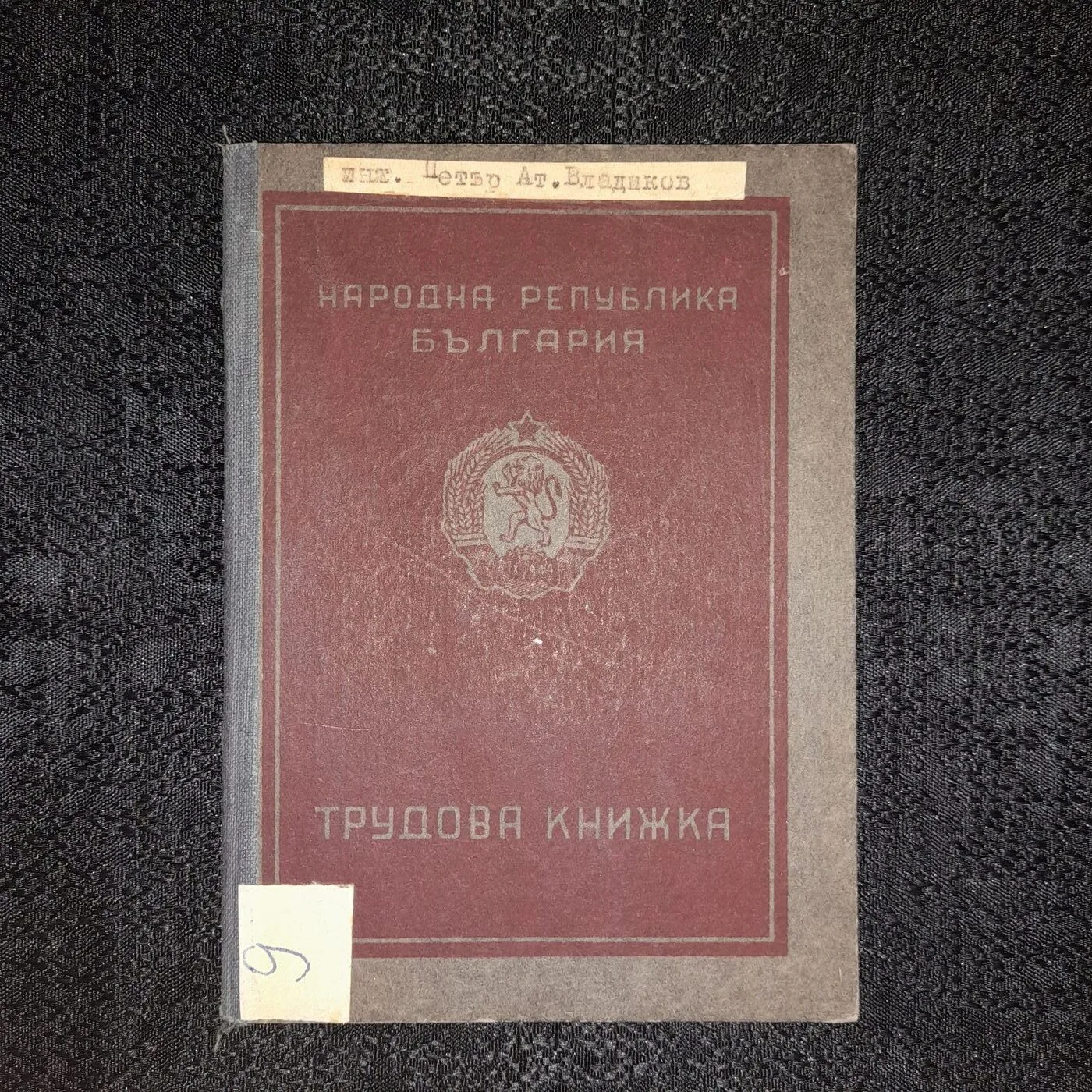 Work book from the late 1940s and early 1950s — Collection Cold War Bulgaria
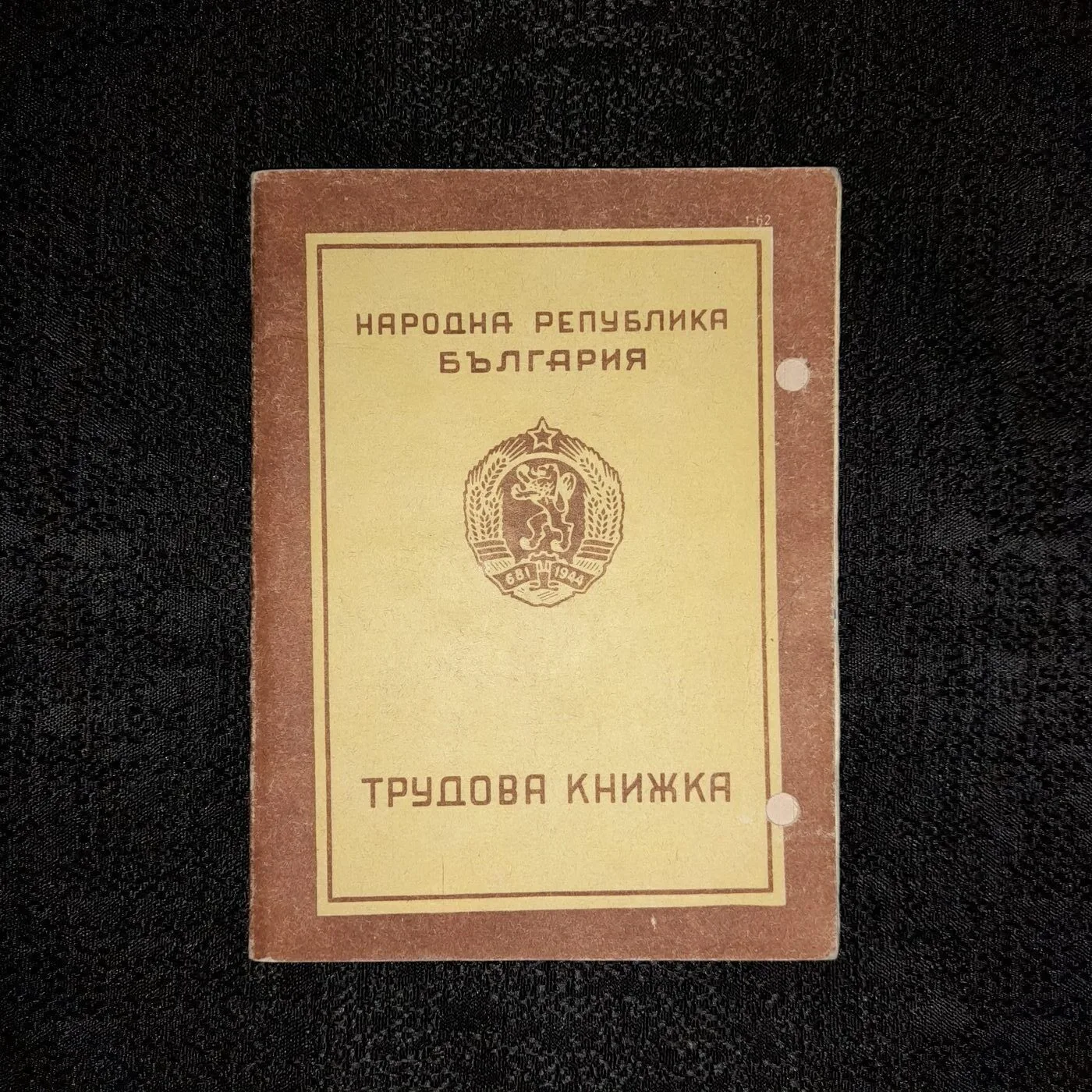 Work record book from the late 1980s — Collection Cold War Bulgaria
The state also borrowed from its citizens, in the form of bonds subscribed by wage earners. The certificate is modest, printed without ceremony; it is nonetheless a commitment of the state towards a private individual, in a system where savings and credit alike passed through a single bank.
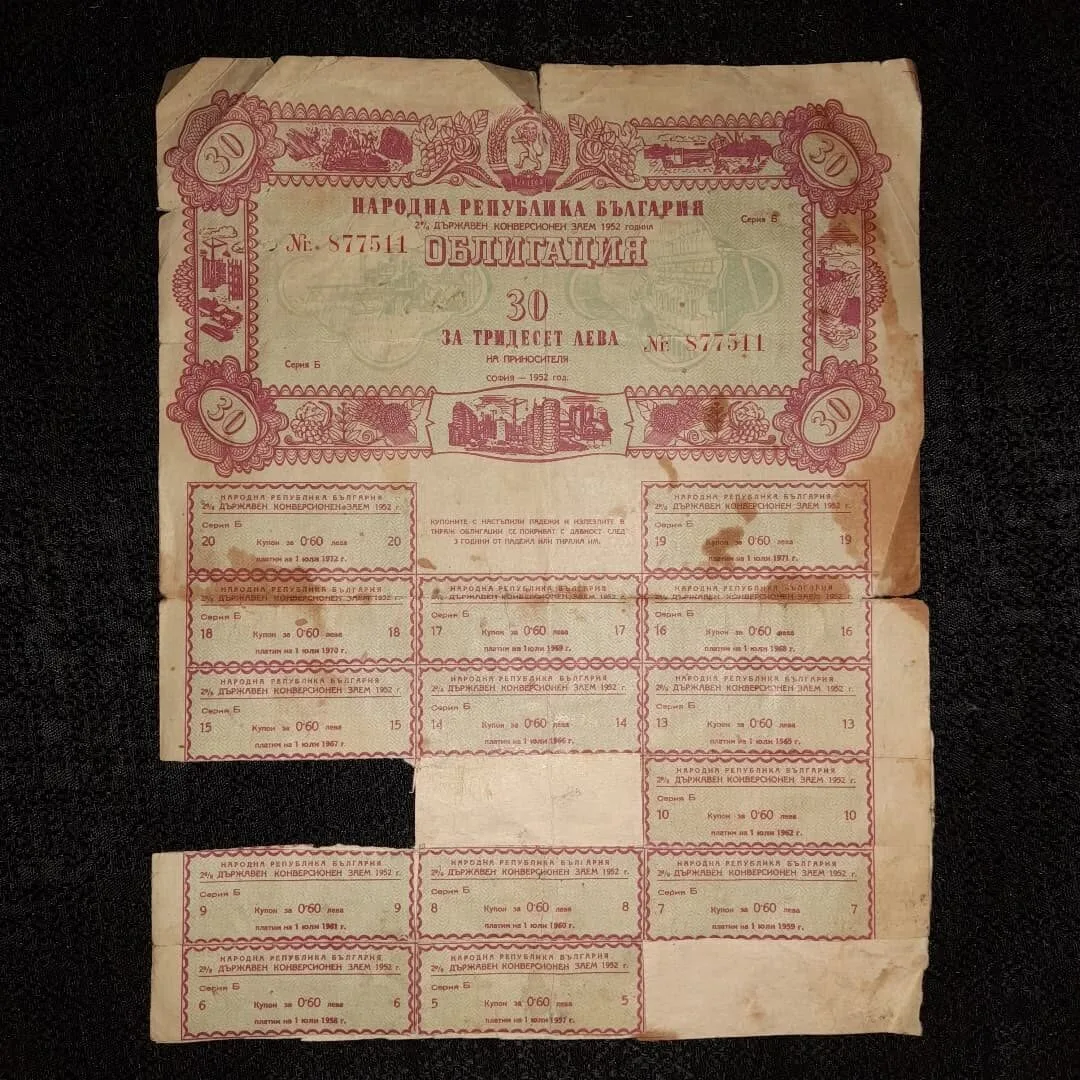 State bond of 30 leva issued in 1952 — Collection Cold War Bulgaria
This ascending paper has one decisive characteristic: it produced the figures. Every completed book, every docket, every workshop return fed the statistics that would, at the end of the chain, serve to declare the plan accomplished. The citizen was not merely administered. He was the source of the data.
Learning to read what is printed
For such a system to work, the descending paper must be received without reservation. That is the role of the school.
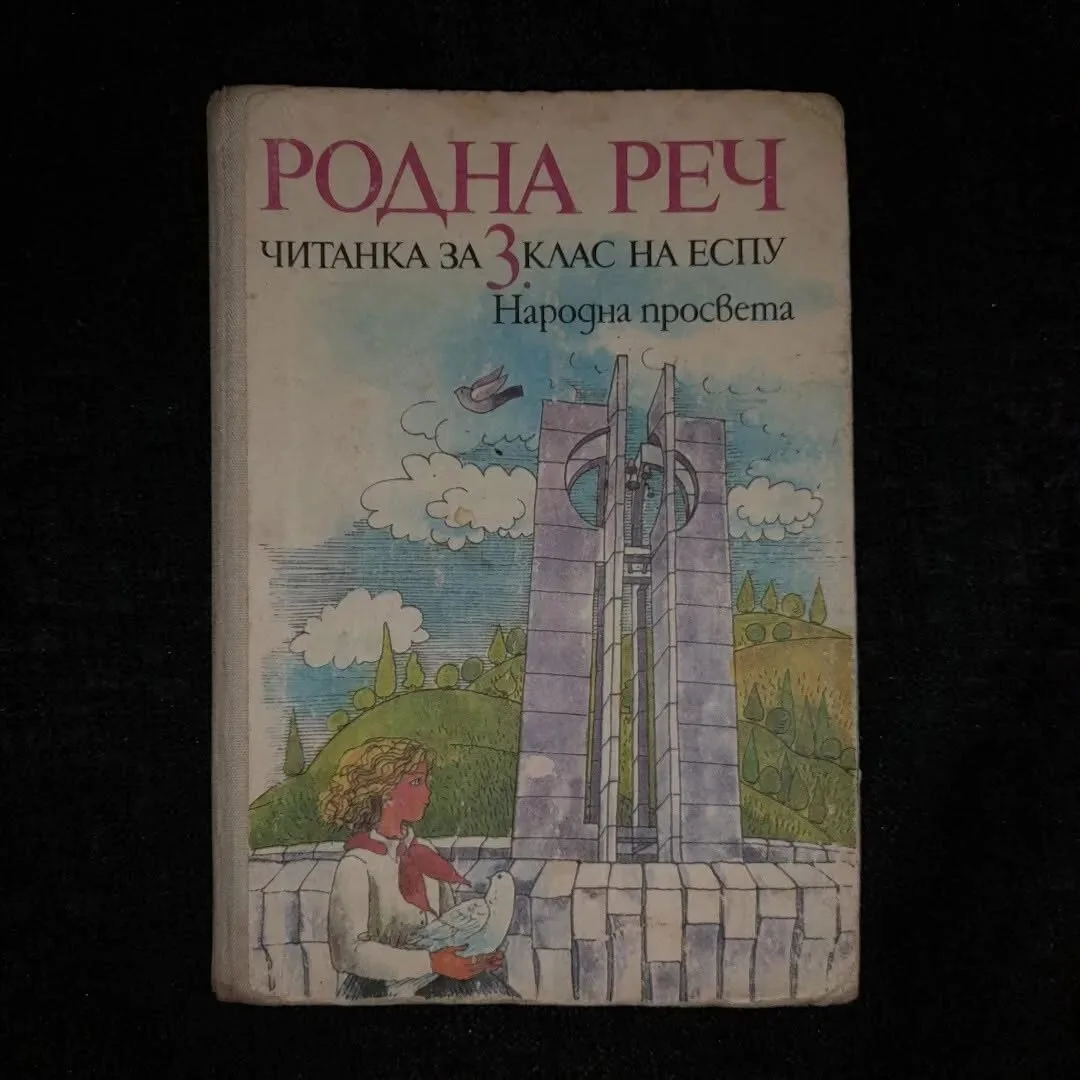 Third-year school reader, "Language of the homeland" — Collection Cold War Bulgaria
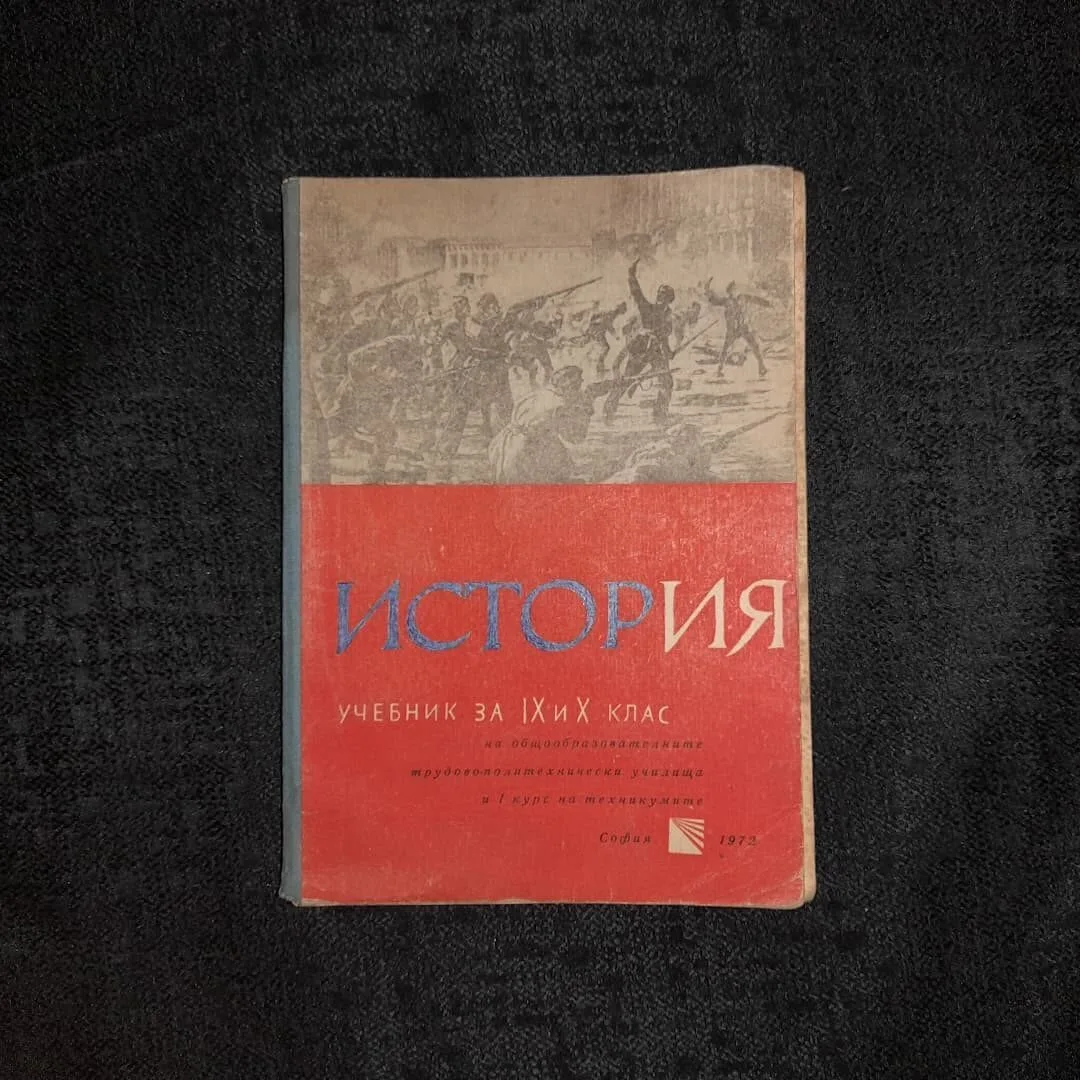 History textbook for the ninth and tenth years, 1972 — Collection Cold War Bulgaria
A state history textbook, in a country with a single publisher, is not one book among others: it is the only version available. Pupils were not only learning content. They were learning that a printed text carries authority by the very fact of being printed.
The workshop
There remains the bottom of the chain, the objects that physically bring all this paper into being.
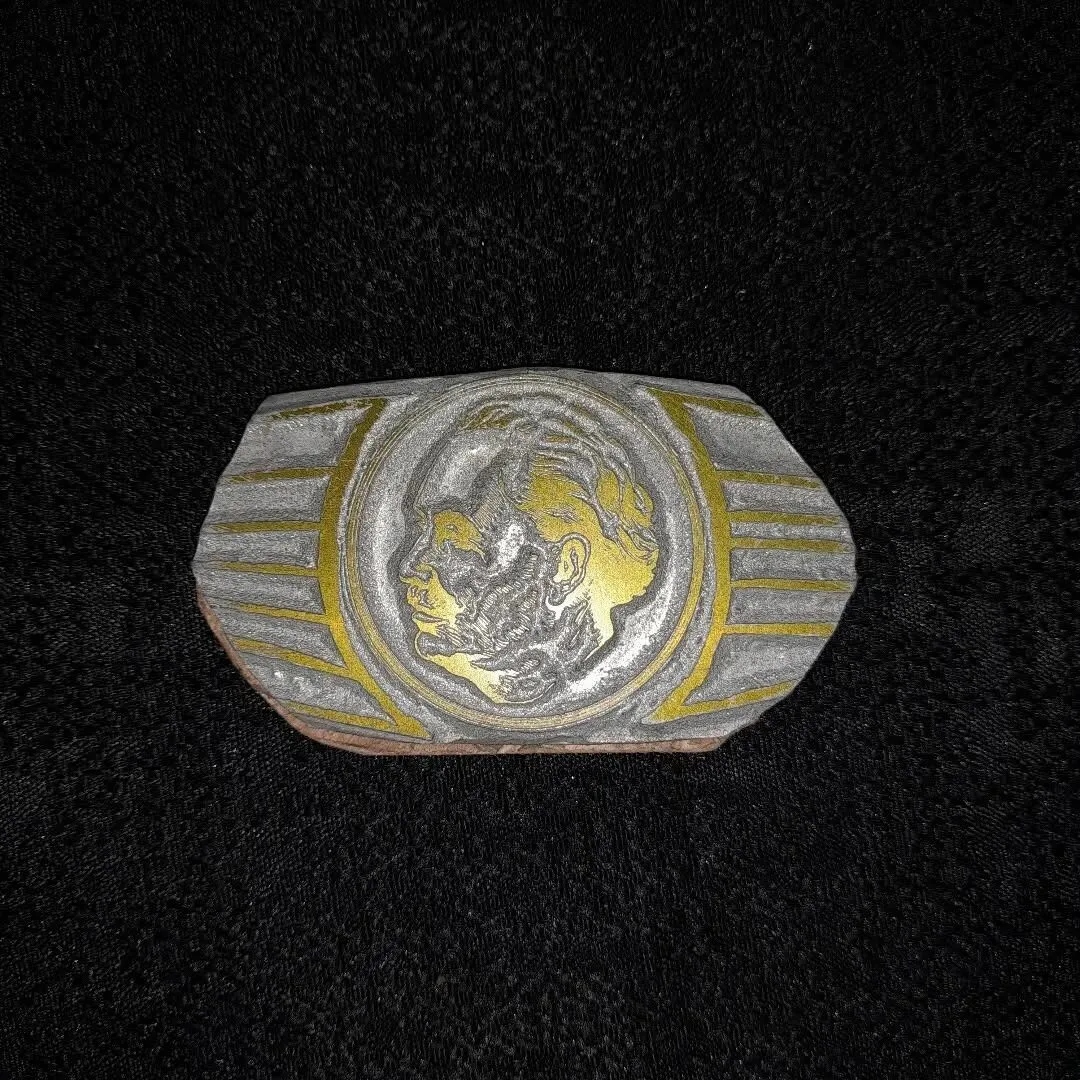 Printing type bearing the likeness of Georgi Dimitrov — Collection Cold War Bulgaria
This piece of type is perhaps the most literal object in the collection. It is not a portrait of Georgi Dimitrov: it is the tool that allows that portrait to be reproduced identically, indefinitely, on any surface. The official face is not an image, it is a workshop part.
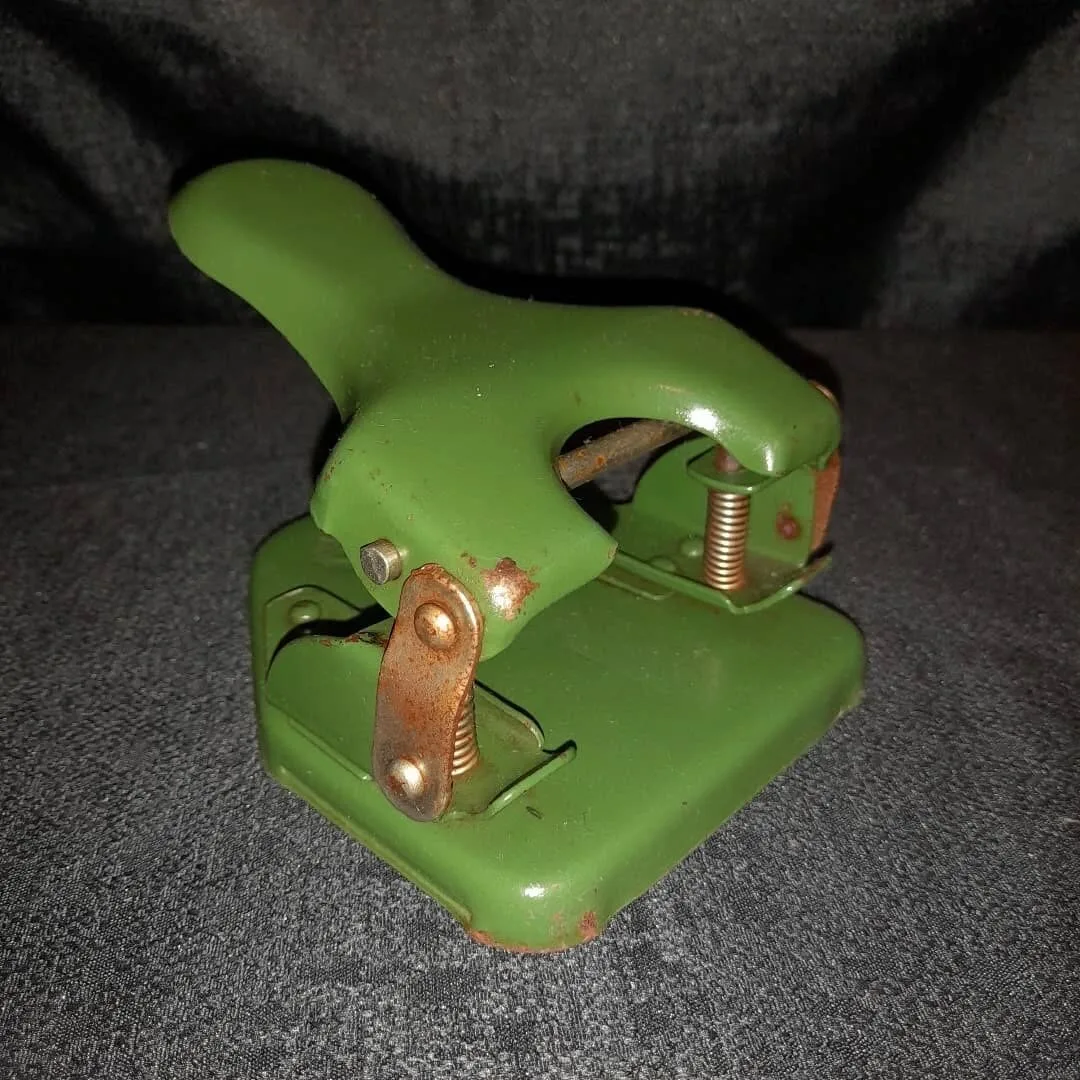 Paper punch manufactured in the People's Republic of Bulgaria — Collection Cold War Bulgaria
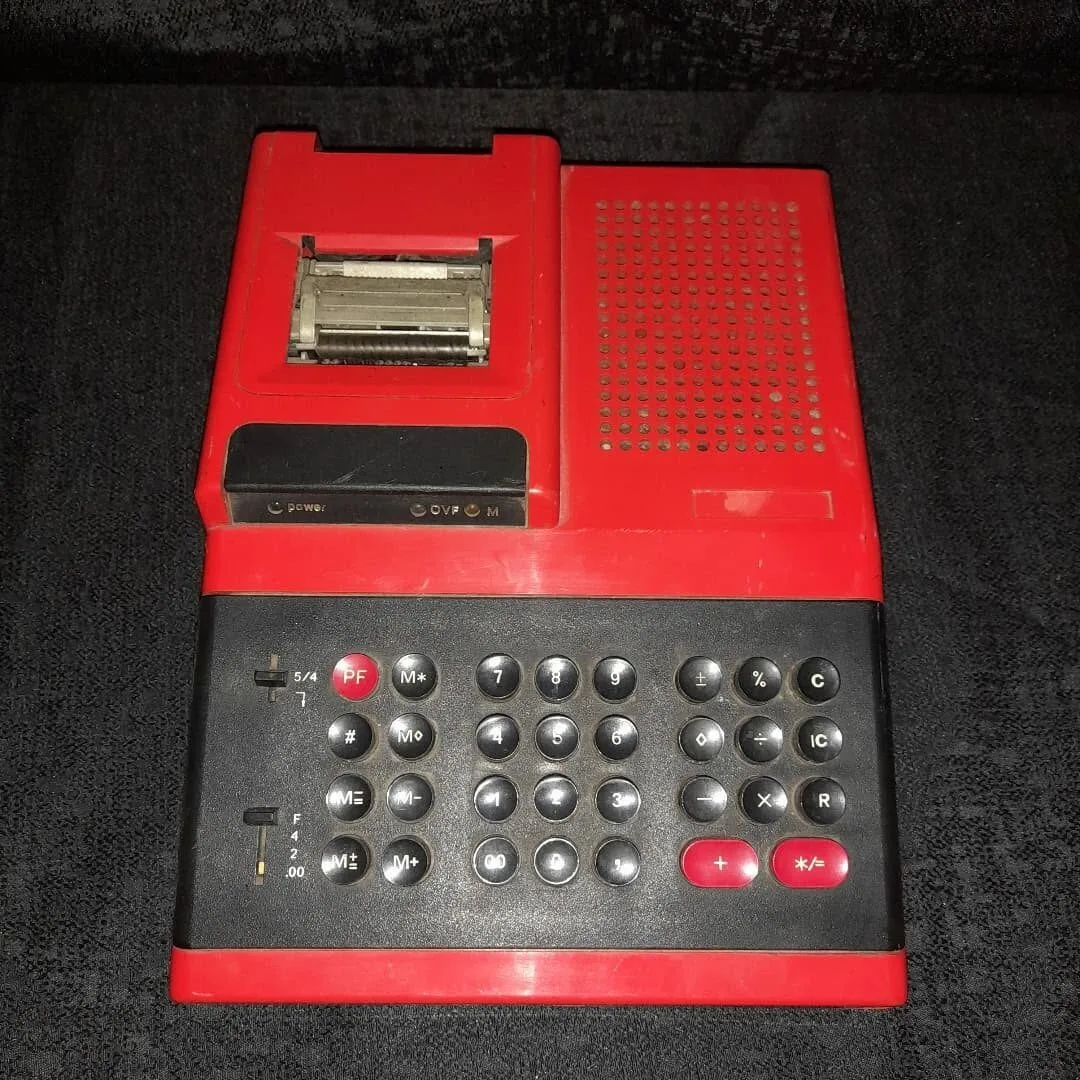 Bulgarian calculator for cashiers and accountants — Collection Cold War Bulgaria
A punch, a calculator. These two unremarkable objects are the real infrastructure of the system: what allows a file to be filed and a column to be added up. Without them, no statistics, therefore no plan, therefore no poster announcing that the plan has been fulfilled.
What a sheet weighs
A regime is often judged by its weapons, its police, its borders. Communist Bulgaria had all of these, and this museum devotes other dossiers to them.
But the machine rested on something far lighter. A country where one could neither work, nor save, nor travel, nor study without producing a written document, and where all these documents converged on a single administration, which also printed the newspapers that commented on the figures it had itself calculated.
Paper constrains nobody. It merely makes things verifiable — but only by whoever holds it. That is what these posters, these booklets and this piece of type recount together: not the violence of a regime, but its immense, patient and perfectly ordered paperwork.
Facts verified against sources: the creation of the State Committee for Production in January 1948 and the fixing of criteria for calculating the plan's fulfilment in October 1948 with the Main Directorate of Statistics; the declaration that the first five-year plan had been fulfilled in 1952, a year ahead of schedule, and the impossibility of assessing its real results owing to incomplete and contradictory statistics; the share of 13% of investment received by agriculture; the target of 59% agricultural growth and the estimate of 0.9% achieved; the founding of Rabotnichesko Delo in 1927 as organ of the Central Committee and its change of name to Duma in 1990; state control over all publishing and the nationalisation of the paper mills. Resting on the collector's description of the object and not on a documentary source: the composition and dating of the set of five-year plan posters. The exact circulation of Rabotnichesko Delo circulates under poorly sourced figures; none is advanced here.