Military life
Thematic dossier · Period: 1944–1989 · Reading time: 7 min
Dossier — The Bulgarian People's Army (Българска народна армия) and service under the People's Republic.
For forty-five years, putting on the uniform was, for almost all Bulgarian men, an obligatory stage of existence. The Bulgarian People's Army (Българска народна армия, the BNA) was not merely a military institution: it was a passage through which every generation went, a moment common to millions of lives, between adolescence and adulthood.
This dossier retraces what that world was, from conscription to the return to civilian life, through the objects, uniforms and images it left behind.
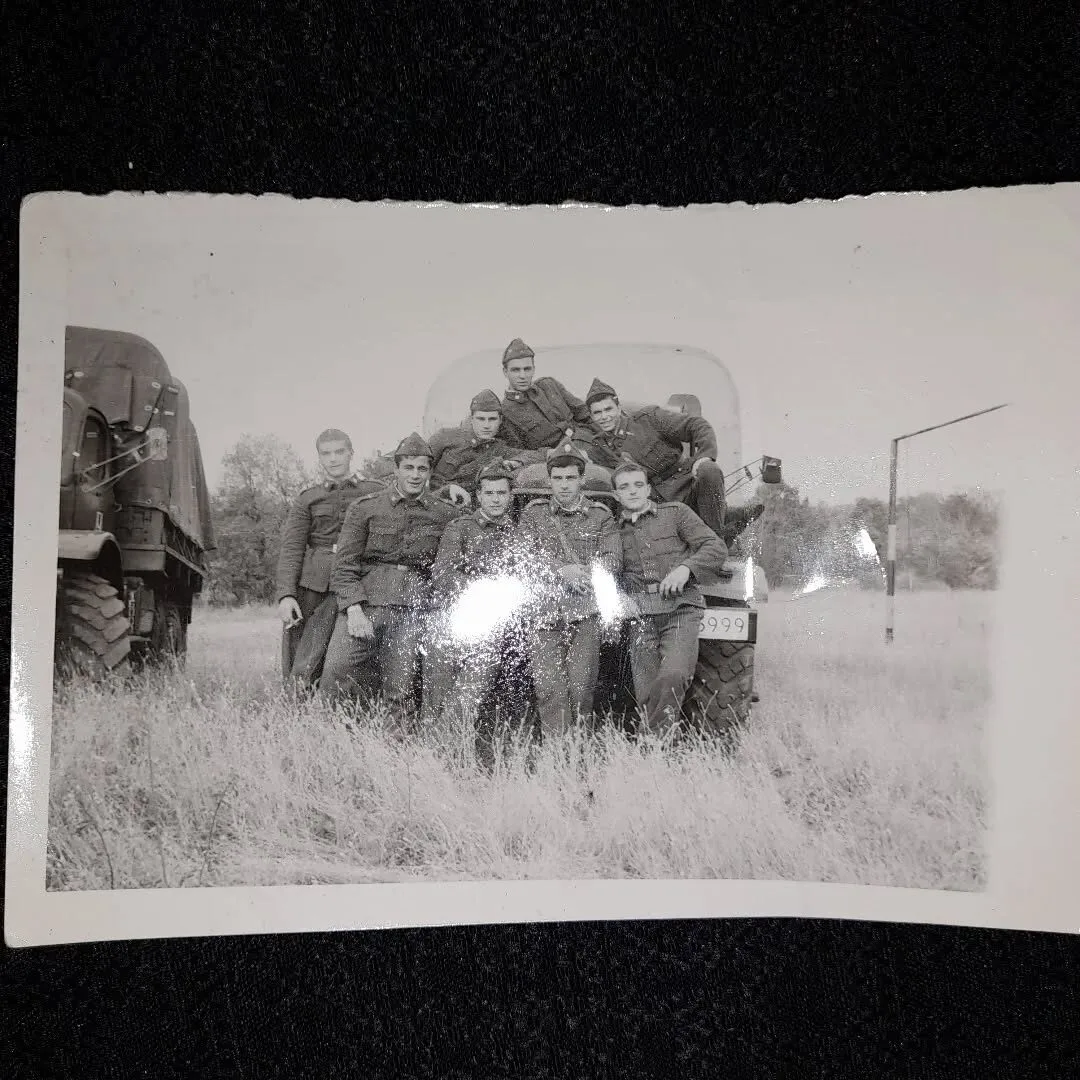 A squad in winter uniform in front of their truck — Collection Cold War Bulgaria
 Troops of the Bulgarian People's Army, period before the 1970s — Collection Cold War Bulgaria
Compulsory service
Under the People's Republic, military service was universal and compulsory for men. At the end of the 1980s, the army numbered some 152,000 active servicemen, a considerable figure for a country of nine million inhabitants, made possible precisely by this systematic conscription.
Every young man, on coming of age, knew he would have to serve. Service lasted two to three years depending on the arm and the period. There was no evading it: exemption was rare, reserved for medical cases or a few family situations, and refusal was not a conceivable option in a state where the army embodied the nation in arms.
This universality made service a shared experience. Whatever his social background, his region, his future trade, a Bulgarian man of this period had known the barracks. It was a common denominator of an entire generation.
The barracks and the hierarchy
The soldier's daily life was governed by a strict hierarchy, modelled in its principles on the Soviet pattern but with its Bulgarian particularities.
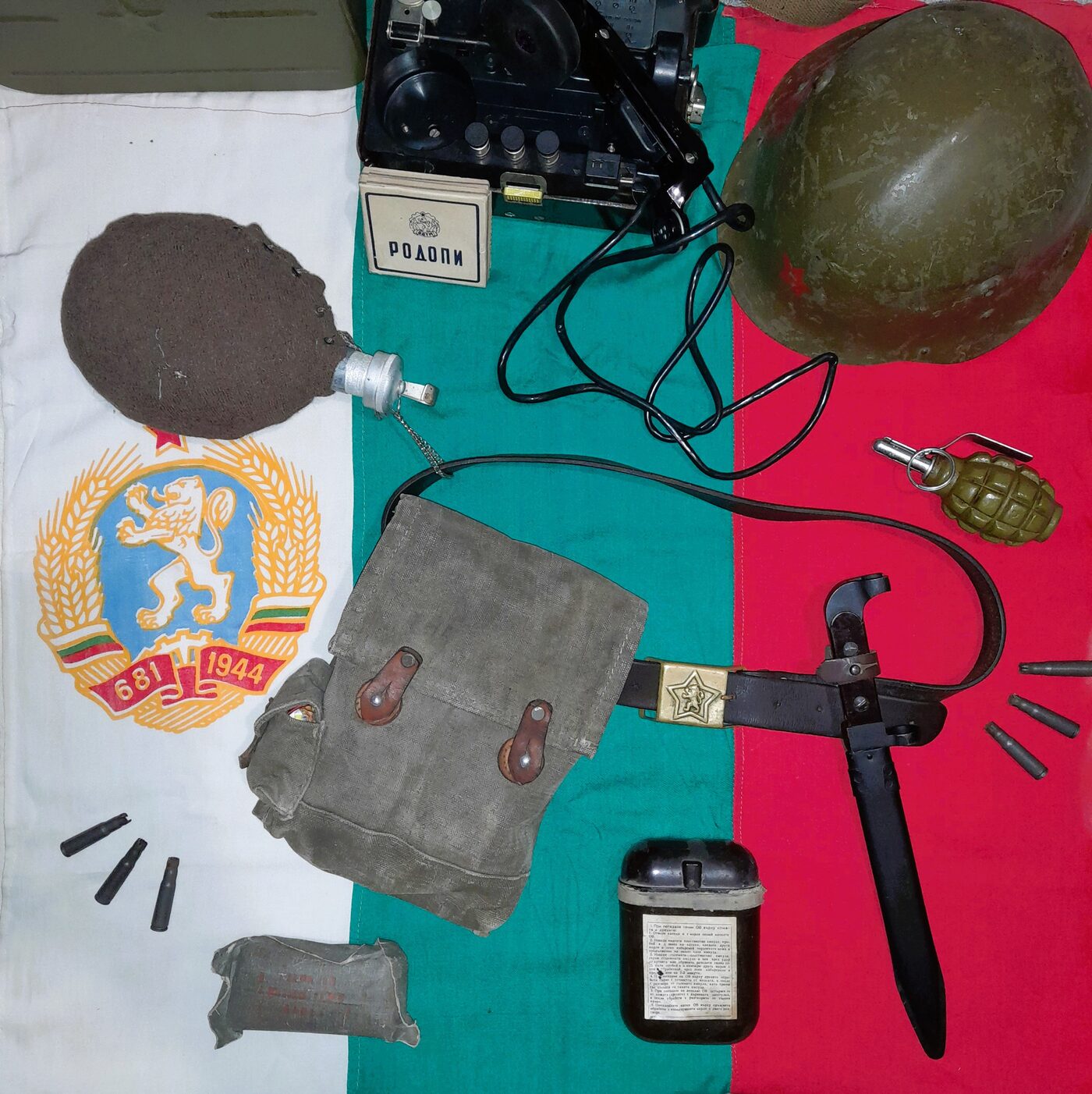
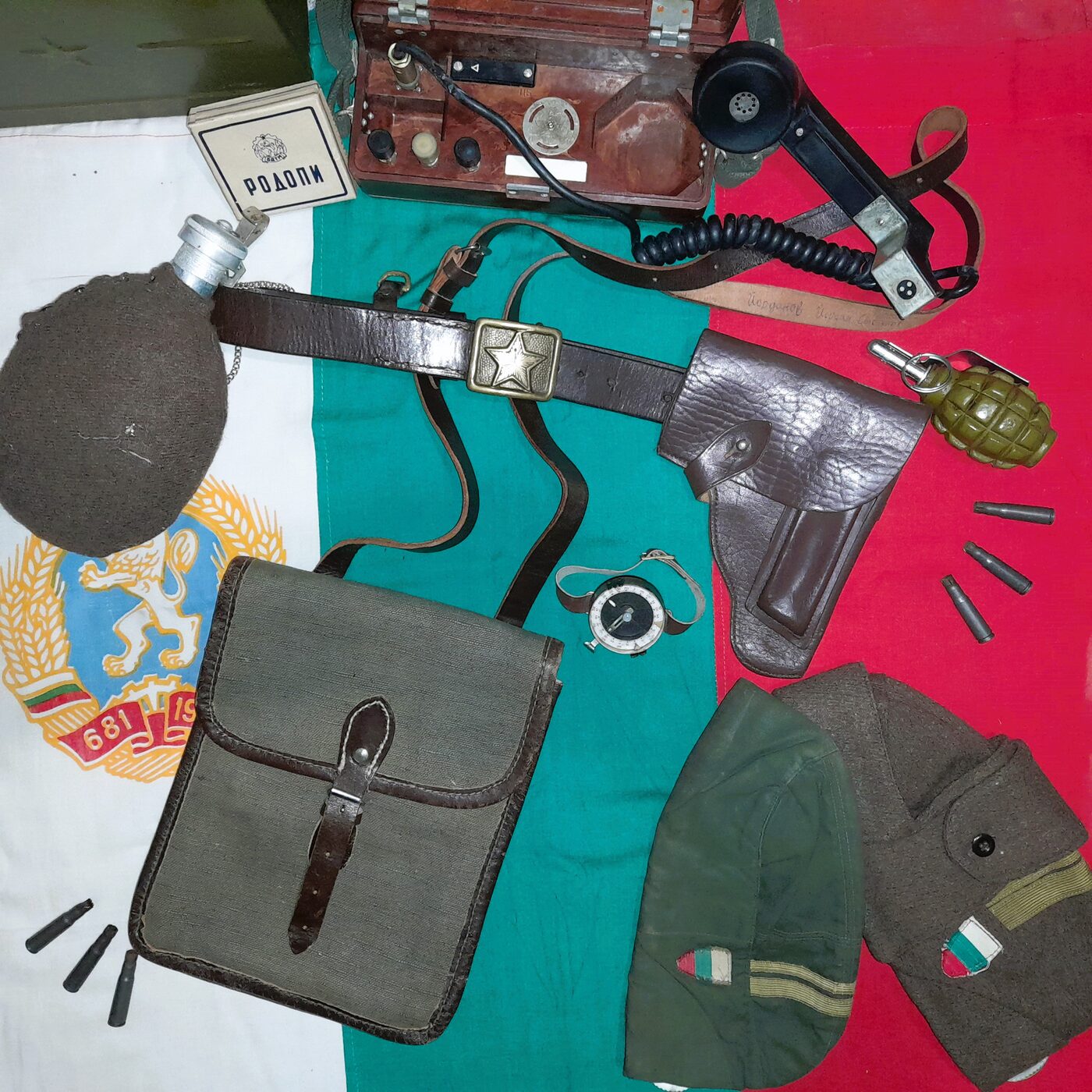 Non-commissioned officer of the Bulgarian People's Army — Collection Cold War Bulgaria
The NCO, sergeant or staff sergeant, was the figure closest at hand, the one who supervised the conscript from day to day. It was he who led the instruction, saw to discipline, passed on orders. The belt, the stripes, the specialist badge: every detail of the uniform stated rank and role.
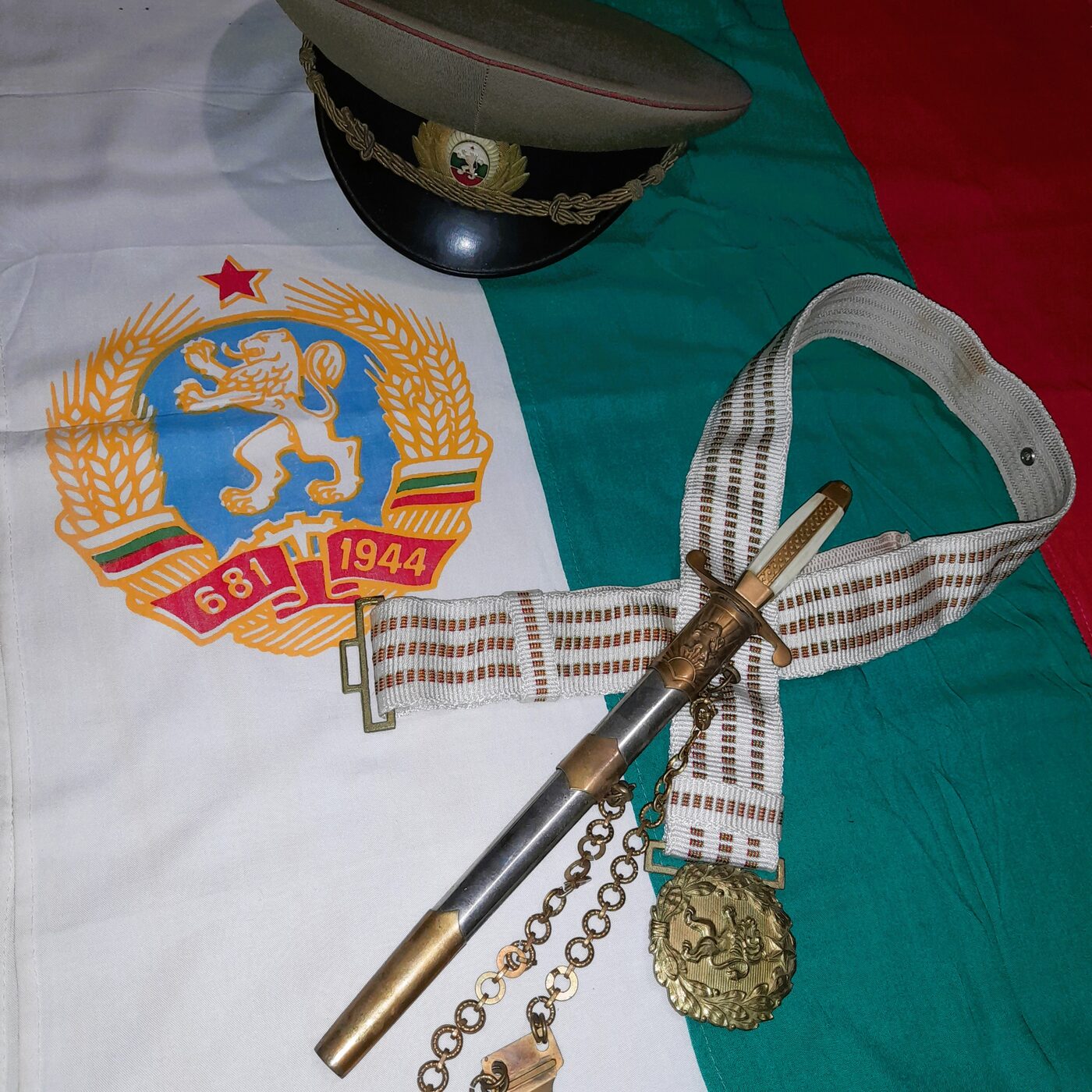 Officer of the Bulgarian People's Army, with cap, parade belt and dagger — Collection Cold War Bulgaria
Above him, the officer belonged to another world. The stiff cap, the parade belt, the ceremonial dagger marked a clear distance from the ranks. The parade uniform in particular was as much a matter of representation as of service: it displayed the prestige of the military institution in a society where the army held a central place.
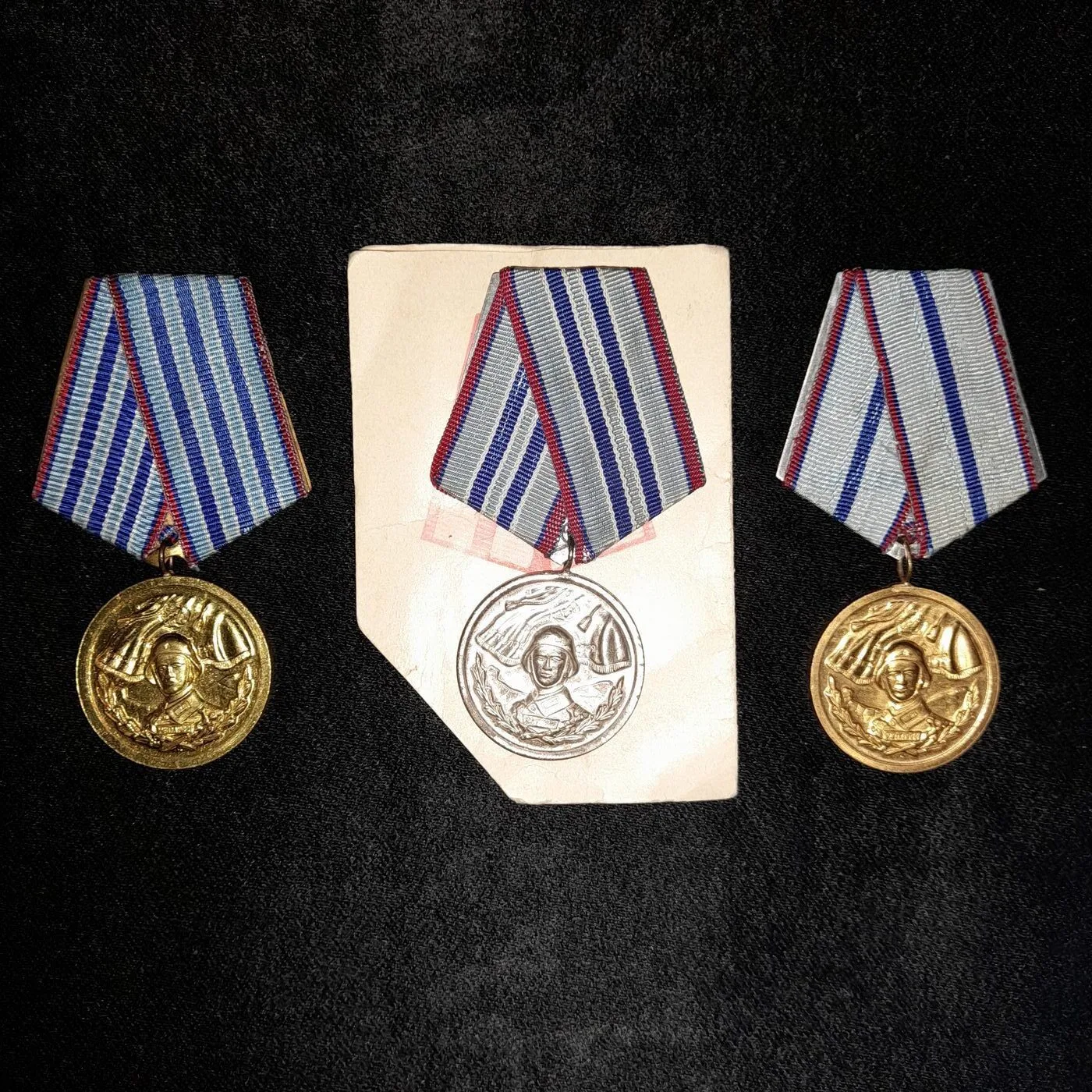 Medals for impeccable service — Collection Cold War Bulgaria
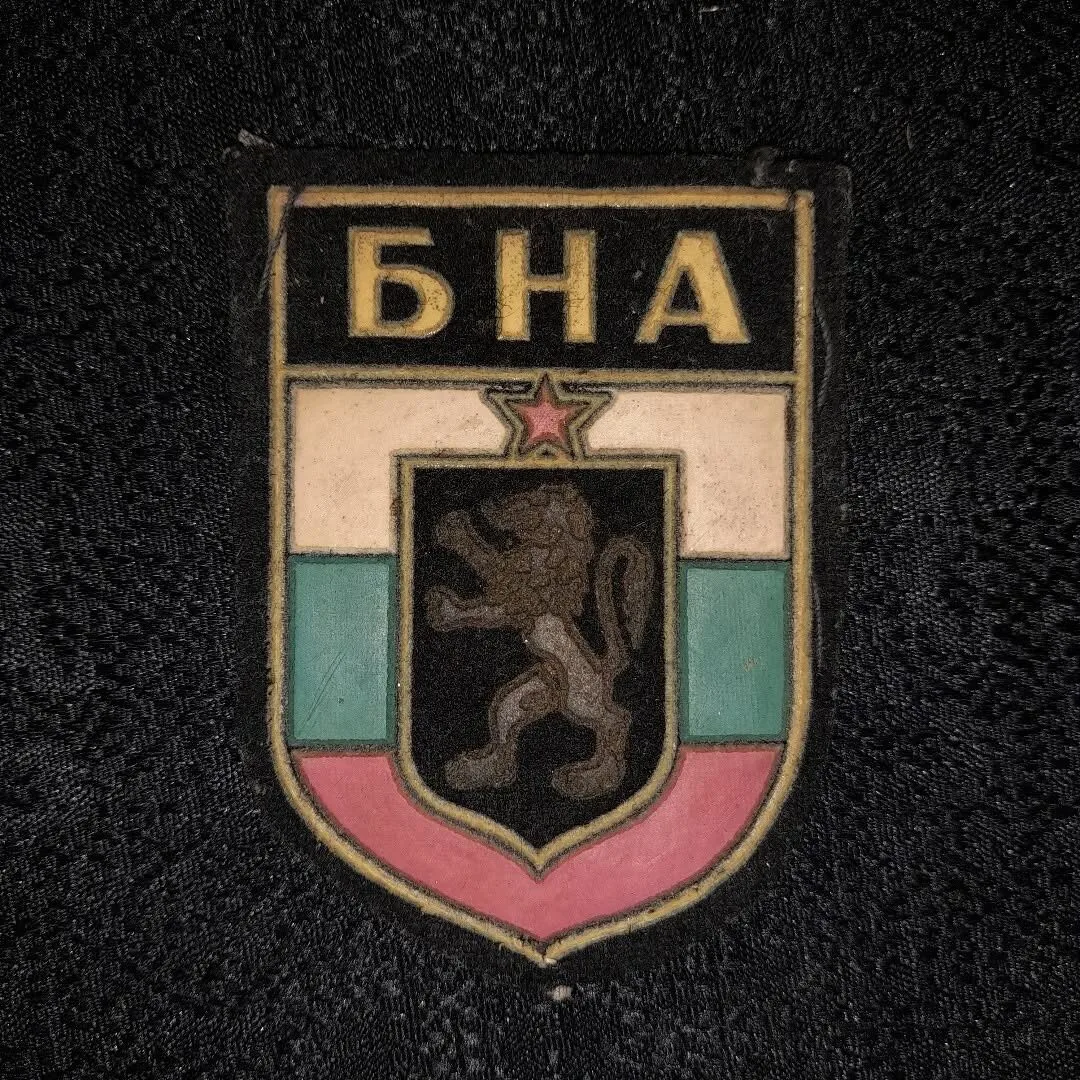 Cloth emblem of the Bulgarian People's Army — Collection Cold War Bulgaria
Between these ranks, barracks life followed an unchanging rhythm: reveille, instruction, maintenance of equipment, fatigues, exercises. A routine made of repetition and discipline, which hundreds of thousands of men shared and of which many keep the memory.
Political education
To military instruction was added instruction of another order: political education. It was not incidental, it was consubstantial with the People's Army: the word "people's" itself designated this ideological vocation. The army was to form soldiers, but also citizens loyal to the socialist regime.
This ideological framework was structured. The army had a Main Political Directorate, a dedicated apparatus that supervised the political training of the troops and could, if need be, mobilise military opinion, as in May 1968, when it launched a campaign to justify to the soldiers the imminent intervention in Czechoslovakia. At every level, political officers saw to the ideological conformity of units.
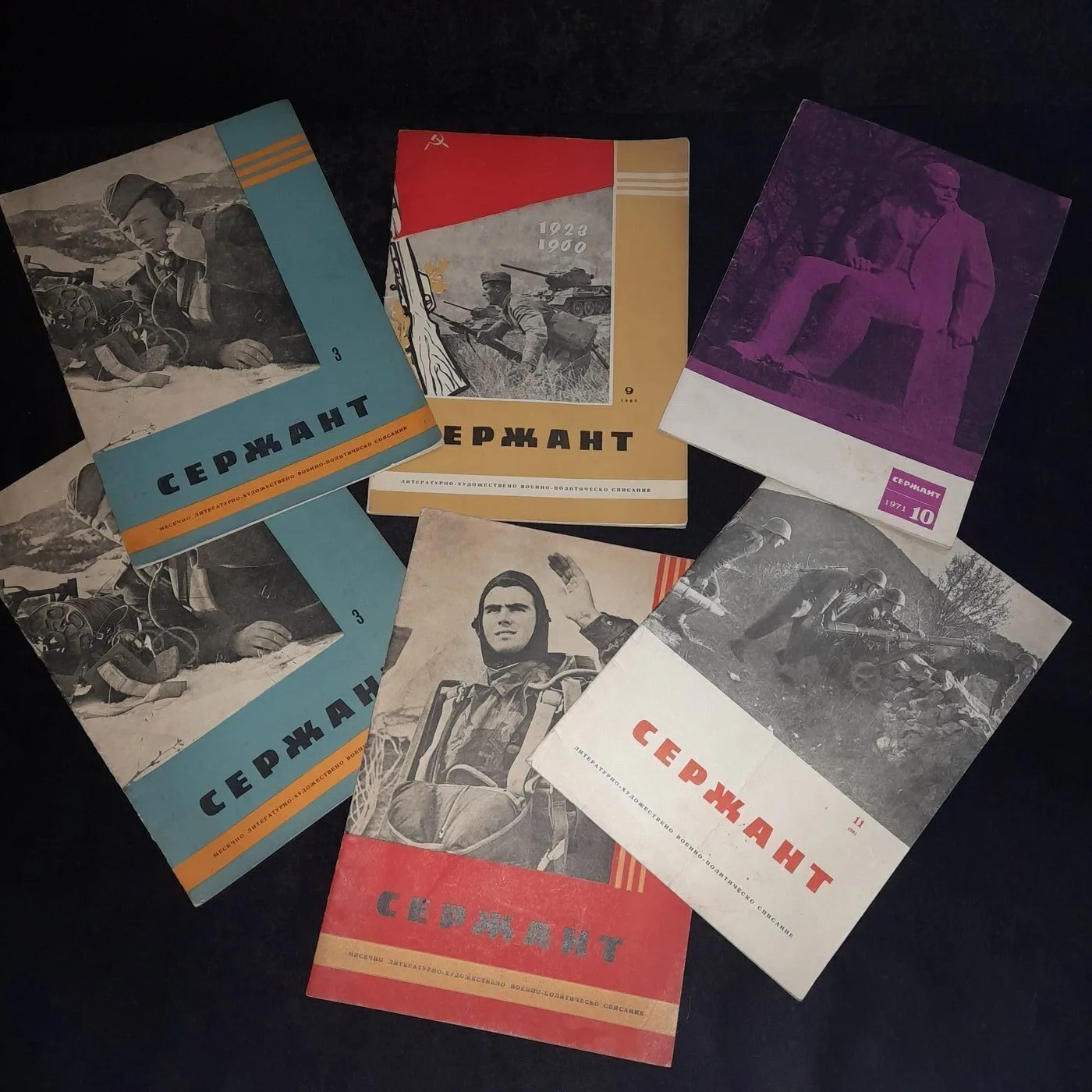 Issues of the military magazine "Sergeant" — Collection Cold War Bulgaria
For the ranks, this meant hours of instruction devoted to Marxism-Leninism, to the history of the Party, to official doctrine. For the officer corps, the stakes were heavier still. Political reliability counted as much as professional competence in the assessment of an officer, and membership of the Bulgarian Communist Party was the norm: within the officer corps, the rate of membership exceeded 80%. Making a career as a senior officer without being a Party member was, in practice, very difficult: political commitment and military advancement went together.
Only after 1990 was this link broken: professional competence then replaced political allegiance as the principal criterion, and the post of political officer was officially abolished. The change, by contrast, measures how far the old system was politicised.
The army in the Warsaw Pact
The BNA was not an isolated army. Since 14 May 1955, Bulgaria had been one of the signatories of the Warsaw Pact, the Moscow-led military alliance that brought together the socialist countries of Eastern Europe.
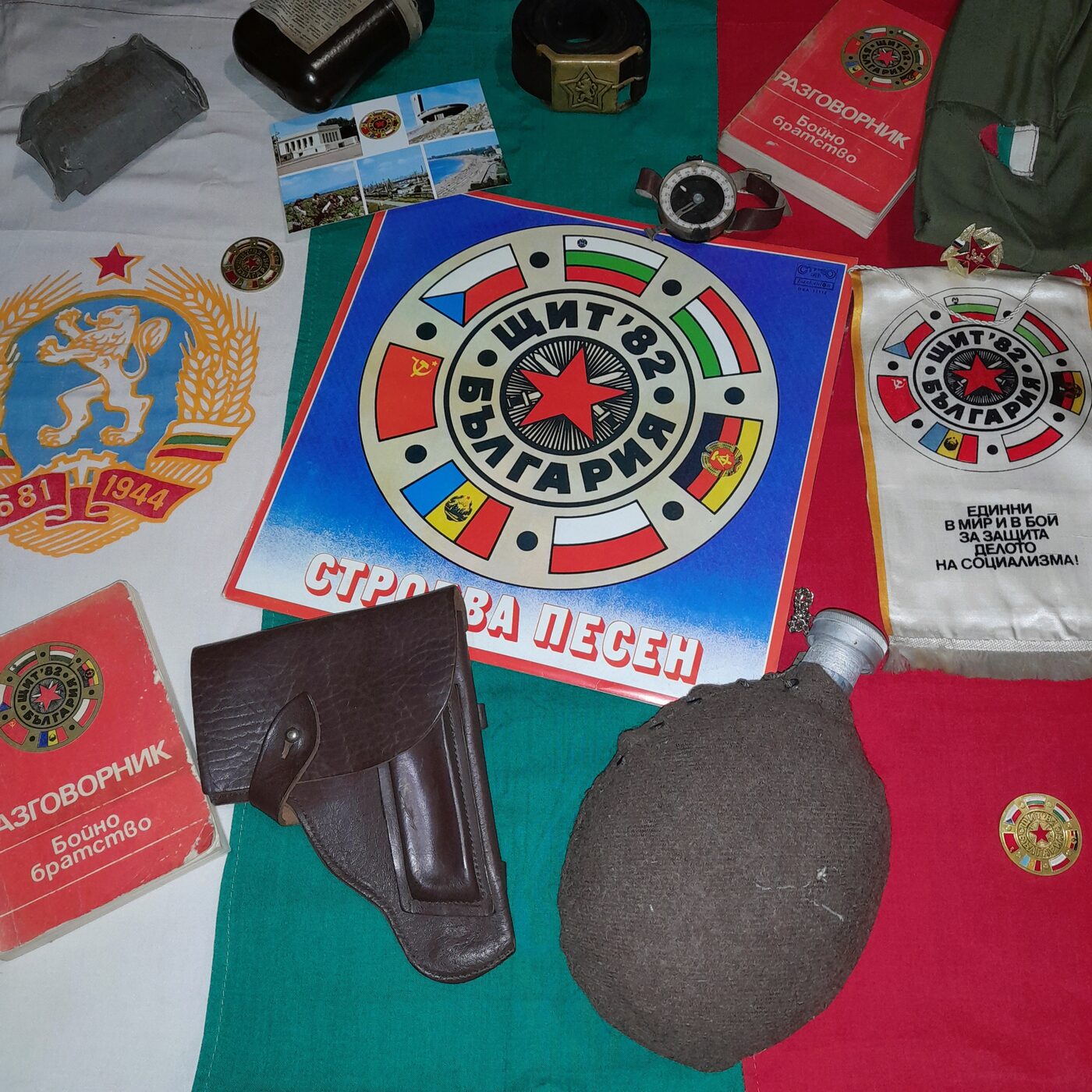 Souvenir of the Warsaw Pact Shield 82 manoeuvres — Collection Cold War Bulgaria
This membership structured the whole of Bulgarian military doctrine. In the event of war between NATO and the Pact, the Bulgarian army had a precise mission: to hold the southern border facing Greece and Turkey, two NATO members, and to secure the deployment of Soviet and Romanian reinforcements on Bulgarian soil. Bulgaria was the lock on the alliance's southern flank.
The great manoeuvres gave substance to this integration. Exercise Shield 82 (Shtit 82), held in Bulgaria, was one of the largest Warsaw Pact exercises organised on Bulgarian territory, bringing together troops from several allied countries. These manoeuvres had a dual function: to train forces to fight together, and to demonstrate the cohesion of the bloc, to its own members as much as to the Western adversary.
A paradox must nonetheless be noted. Despite its size and its constant state of readiness, the Bulgarian People's Army almost never fought. Its only real engagement in forty-five years was its participation, alongside other Pact troops, in the invasion of Czechoslovakia in 1968 to crush the Prague Spring; two Bulgarian regiments were sent. Apart from that episode, this immense army, always ready, never knew the war for which it was preparing.
The corps and the equipment
Beneath the common uniform, the army divided into corps with distinct equipment.
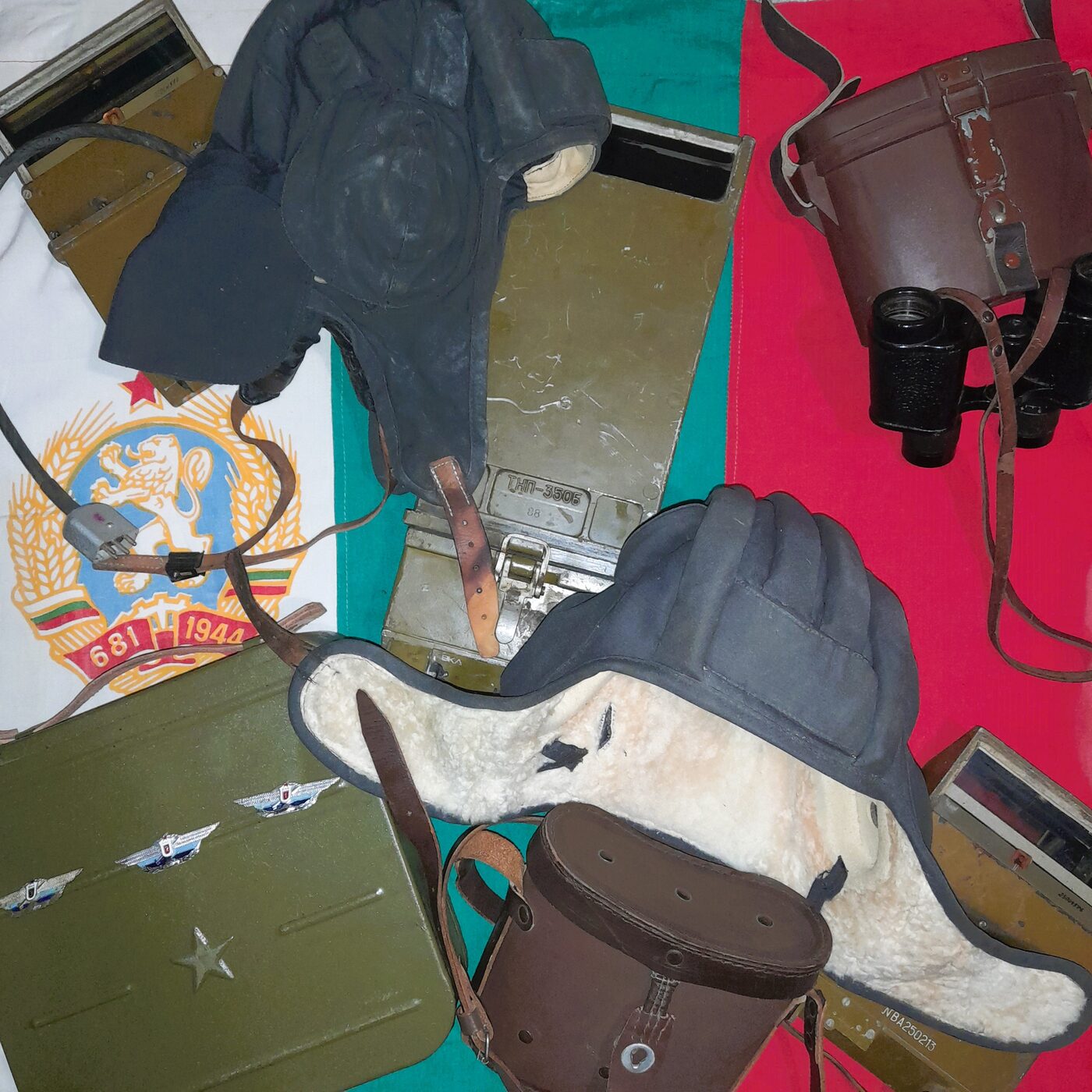 Tank crewman of the Bulgarian People's Army — Collection Cold War Bulgaria
Tank crews formed a world apart, with their padded leather helmet, their overalls, their equipment adapted to the confined space of the armoured vehicle. It was a prestige arm, modern, associated with firepower and mobility, the very image of the Pact's mechanised army.
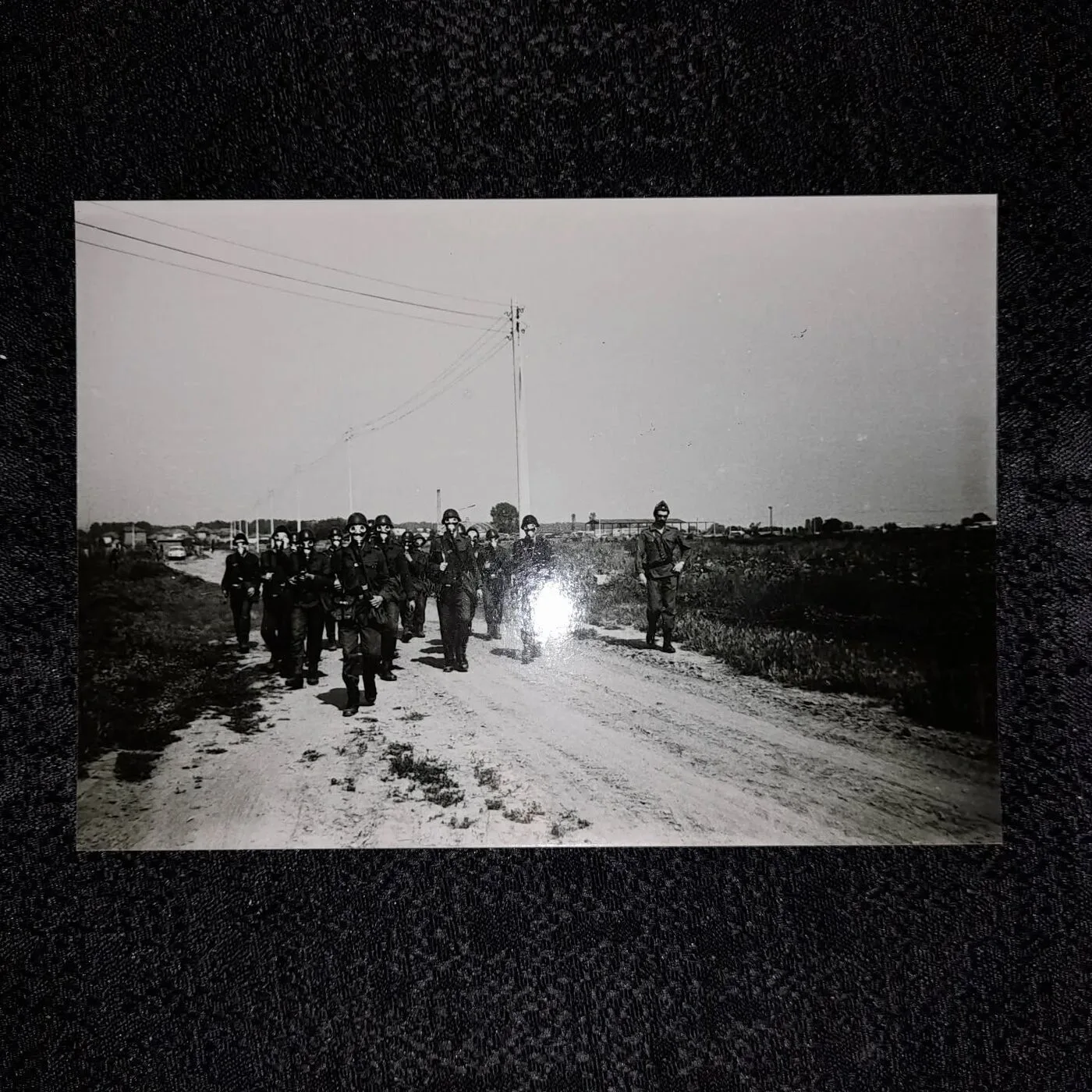 Soldiers in training, fitted with the PMG gas mask — Collection Cold War Bulgaria
The Bulgarian soldier's equipment deserves a pause, for it tells a story of discreet independence. Contrary to what one might expect of so loyal an ally of Moscow, Bulgaria did not simply copy Soviet materiel.
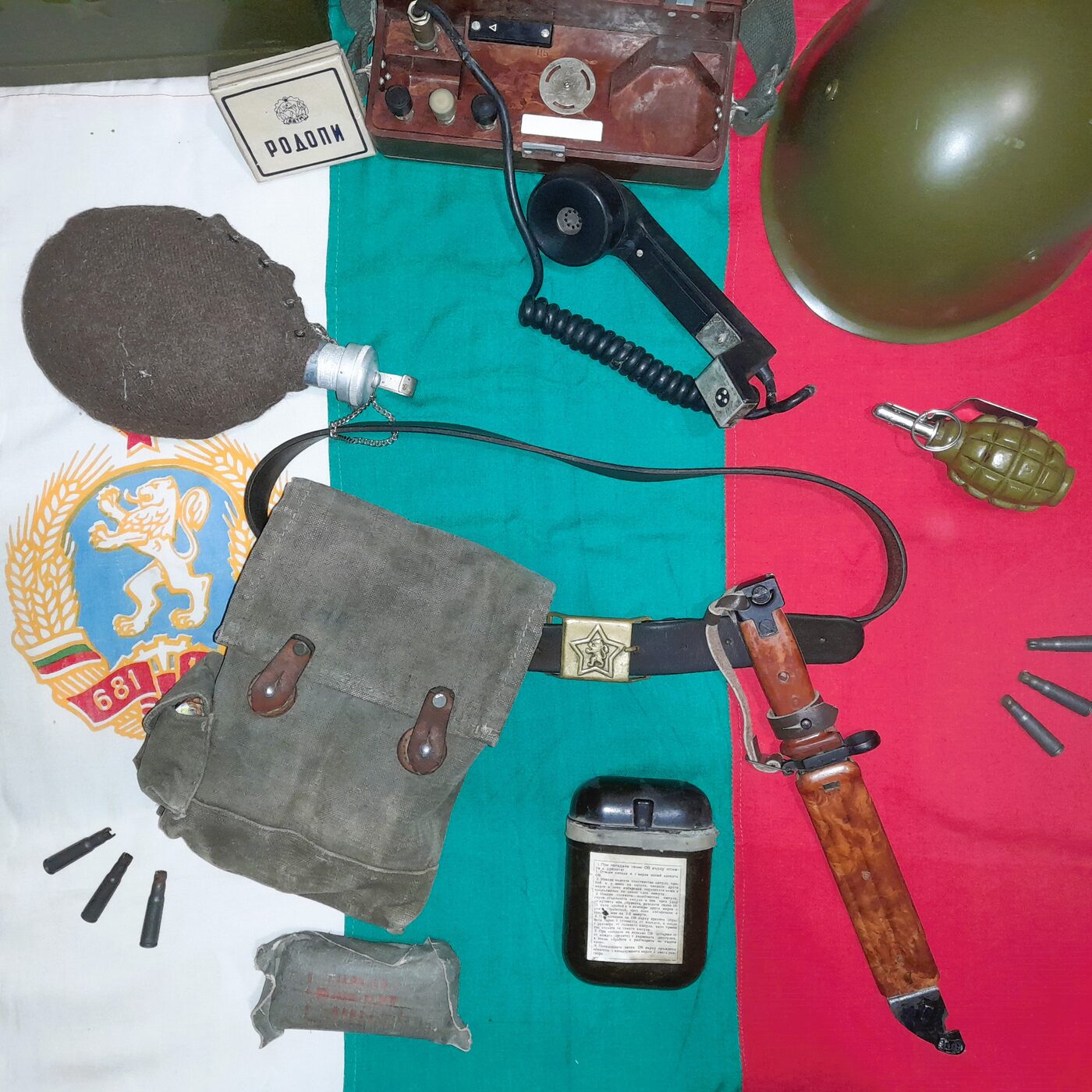 Troops of the Bulgarian People's Army, period after the 1970s — Collection Cold War Bulgaria
The helmet is the most telling example. Where many Pact armies adopted copies of the Soviet helmet, Bulgaria kept a line of its own. Its helmet, derived from the Italian M33 model, had a singular, recognisable silhouette: a choice that asserted a national identity within the alliance. Likewise, the Bulgarian army developed its own camouflage patterns, in a tradition inherited from "splinter" patterns rather than from the Soviet model.
At the end of the 1960s and during the 1970s, the uniform evolved towards something more distinctly Bulgarian, moving away from cuts inherited from the Second World War. This gradual modernisation of equipment accompanied the army's rise in strength. (The exact date and official framework of this reform remain to be established, to be verified against Bulgarian sources.)
The air force and air defence, the navy on the Black Sea, the border guards: each arm had its traditions, its uniforms, its culture. Together they formed a military apparatus that weighed heavily in society and in the state budget.
A rite of passage
Beyond its military function, service was a total social fact.
For a young man, going into the army marked the exit from childhood. One left one's family, one's town, one's habits, for a universe of discipline, close quarters and effort. One came back, two or three years later, regarded as an adult. Service was the threshold that separated the boy from the man, in collective representations as in individual lives.
It was also a crucible. Men from every region of Bulgaria, from every background, found themselves mixed together there. Friendships were formed that lasted a lifetime, hardships shared that were still talked about decades later. For many, these years remained a formative memory, sometimes harsh, often nostalgic.
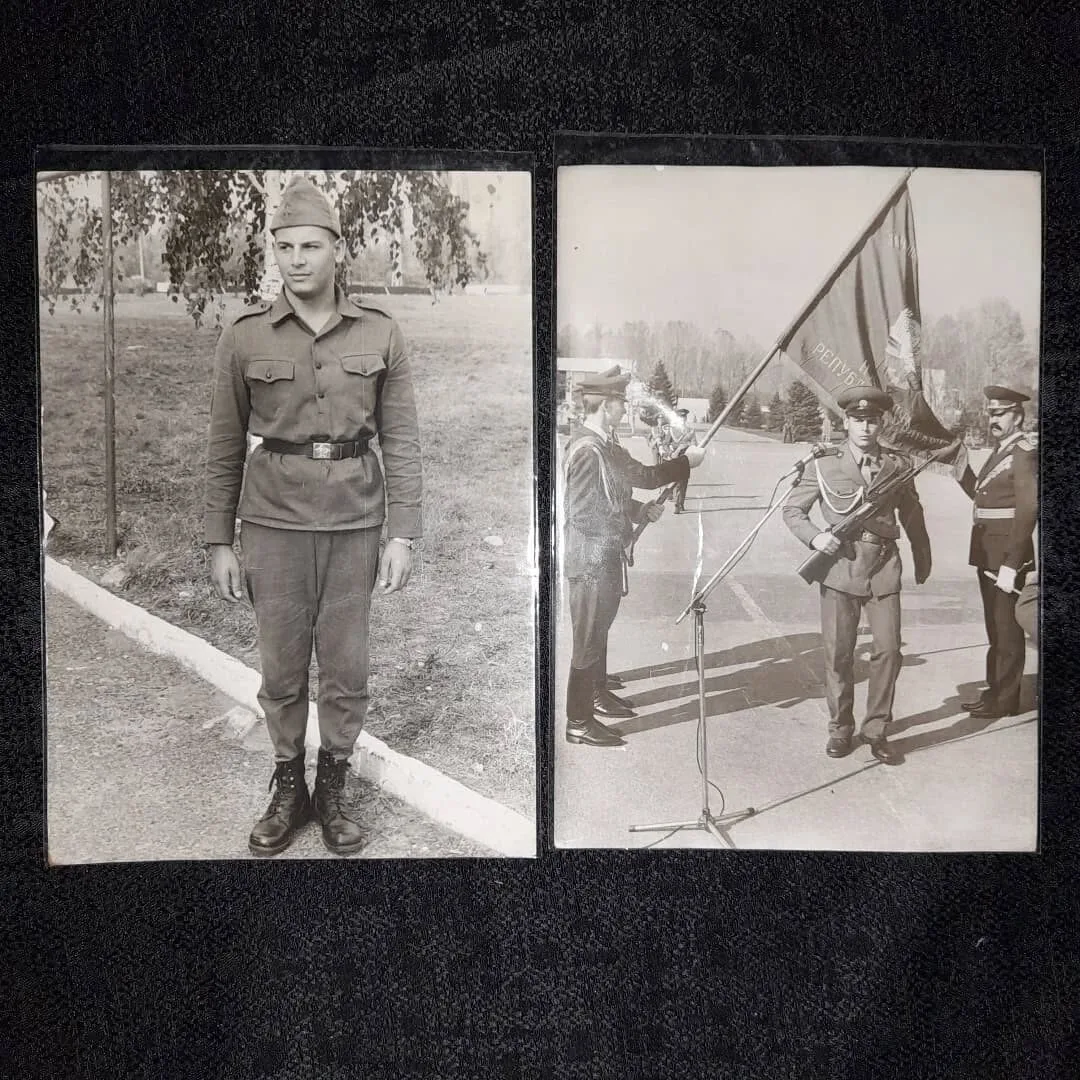 The same conscript photographed in service dress and at the swearing-in ceremony — Collection Cold War Bulgaria
The objects that survive (service books, uniforms, badges, photographs of conscripts) are the traces of that passage. Each belonged to a man who lived this common experience, and who kept it in memory long after handing back the uniform.
It is that memory, ordinary and shared, that this dossier seeks to preserve.
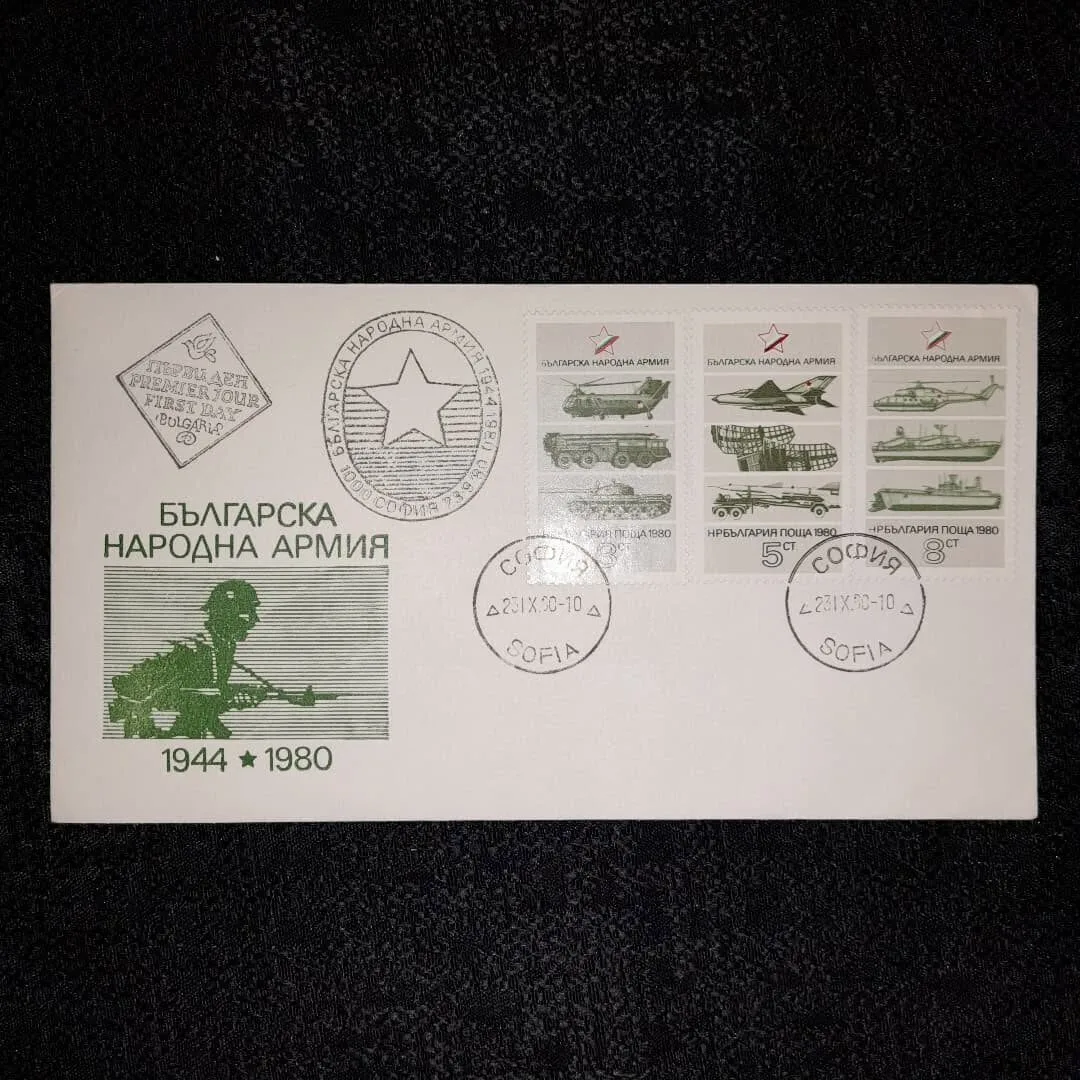 Postal envelope in praise of the People's Army, 1980 — Collection Cold War Bulgaria
This dossier draws on documentary sources concerning the Bulgarian People's Army and the Warsaw Pact, as well as on the objects in the collection. Certain elements, notably the precise dating of the uniform reform, deserve to be verified against Bulgarian primary sources. The videos are montages of archive footage produced by the channel Peoples Republic Of Bulgaria.