Civil defence
Thematic dossier · Period: 1950–1989 · Reading time: 7 min
Dossier — The preparation of an entire population for war and catastrophe.
The People's Army defended the borders. Civil defence prepared for the unimaginable: the day war would cross those borders and fall upon the towns, the factories, the schools. It was a different world from that of the barracks, a world where the soldier was no longer a young conscript, but the worker, the schoolgirl, the housewife, the pensioner. Everyone was concerned, all the time.
This dossier retraces that apparatus of mass protection through the objects it left behind: masks, dosimeters, first-aid kits, membership cards. Ordinary objects that speak of a permanent anxiety, that of living under the constant threat of apocalypse.
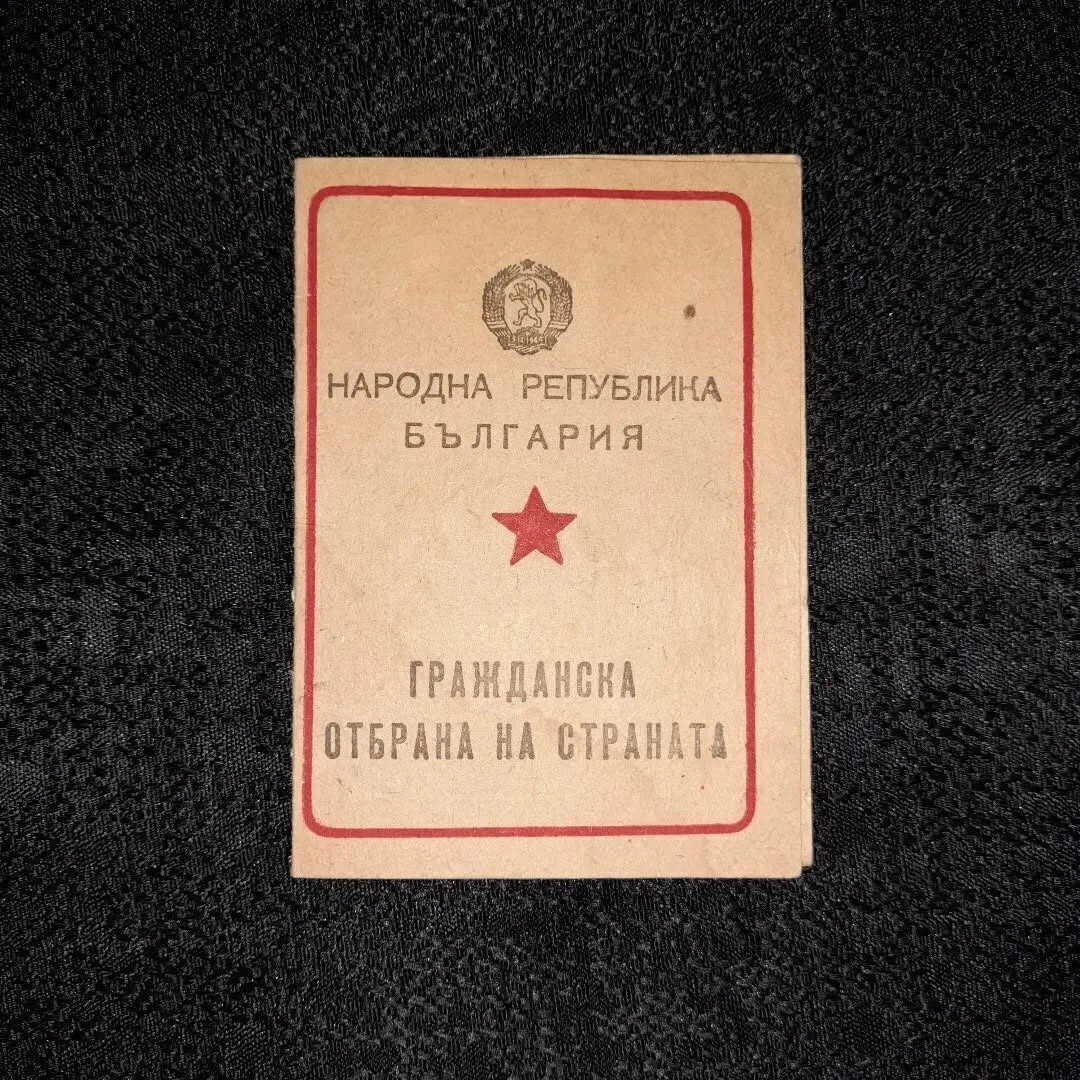 Membership card of the Nation's Civil Defence — Collection Cold War Bulgaria
Preparing the whole population
The Bulgarian civil defence programme developed in the 1960s, from a chilling observation: nuclear, biological and chemical weapons, carried by long-range missiles, had erased the boundary between front and rear. There was no longer a safe zone. A bomb could fall anywhere, a toxic cloud drift over any town. Faced with this threat, the answer was to organise the entire population.
Membership of civil defence was not an individual choice but a social fact. One was a member as one was a citizen, with one's card, one's obligations, one's exercises. The organisation covered the country in a grid, attached to the factories, the collective farms, the schools.
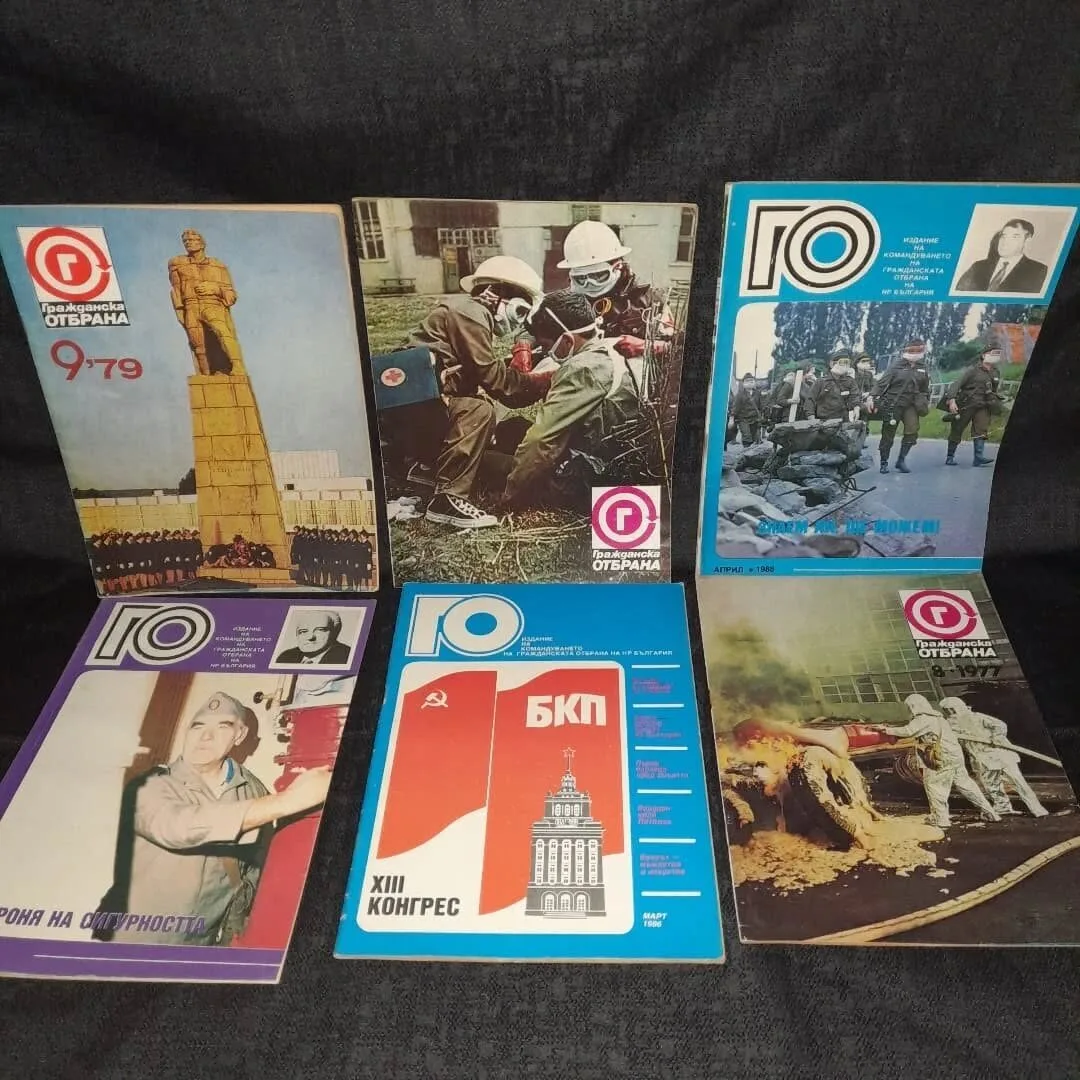 Issues of the magazine "Grazhdanska Otbrana" (Гражданска отбрана) — Collection Cold War Bulgaria
This framework had its press. The magazine Grazhdanska Otbrana, "Civil Defence", disseminated official doctrine: reports of exercises, instructions on how to behave in a disaster, articles on protection against radiation, down to the civil defence lessons introduced in primary schools. There, from childhood, one learned to live with the idea of catastrophe.
The atomic, chemical, bacteriological threat
At the heart of the whole arrangement: fear of the weapon of mass destruction. The Cold War held over Europe the possibility of a conflict in which the atom and war gases would be used. Bulgaria, the lock on the Warsaw Pact's southern flank facing Greece and Turkey, knew itself to be in the front line.
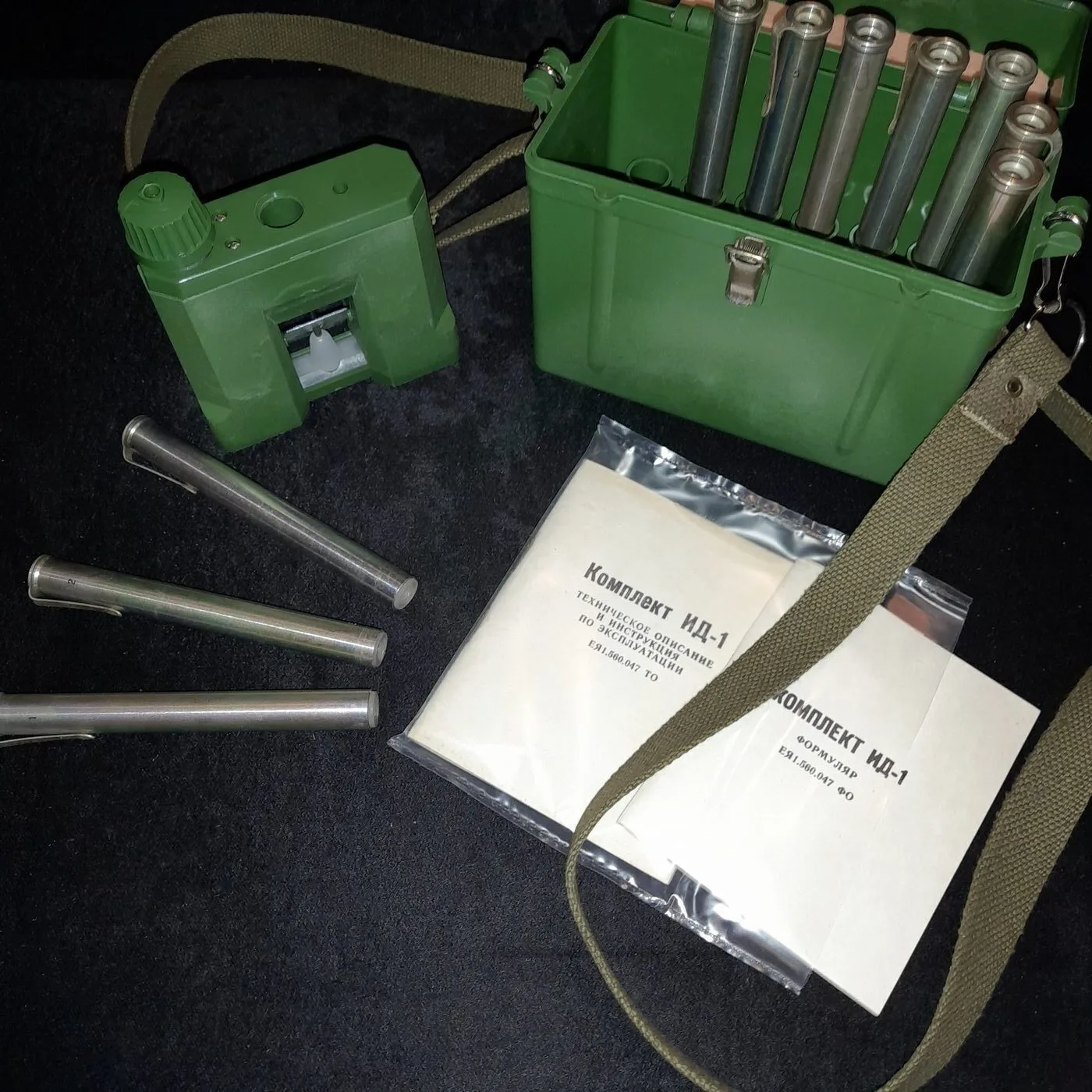 Soviet ID-1 dosimeter used in the People's Republic of Bulgaria — Collection Cold War Bulgaria
The dosimeter is the emblematic object of this anxiety. This instrument measures the dose of radiation received, a tool that makes sense only in a world where one expects to be irradiated. Its very presence speaks of the supposed imminence of nuclear catastrophe.
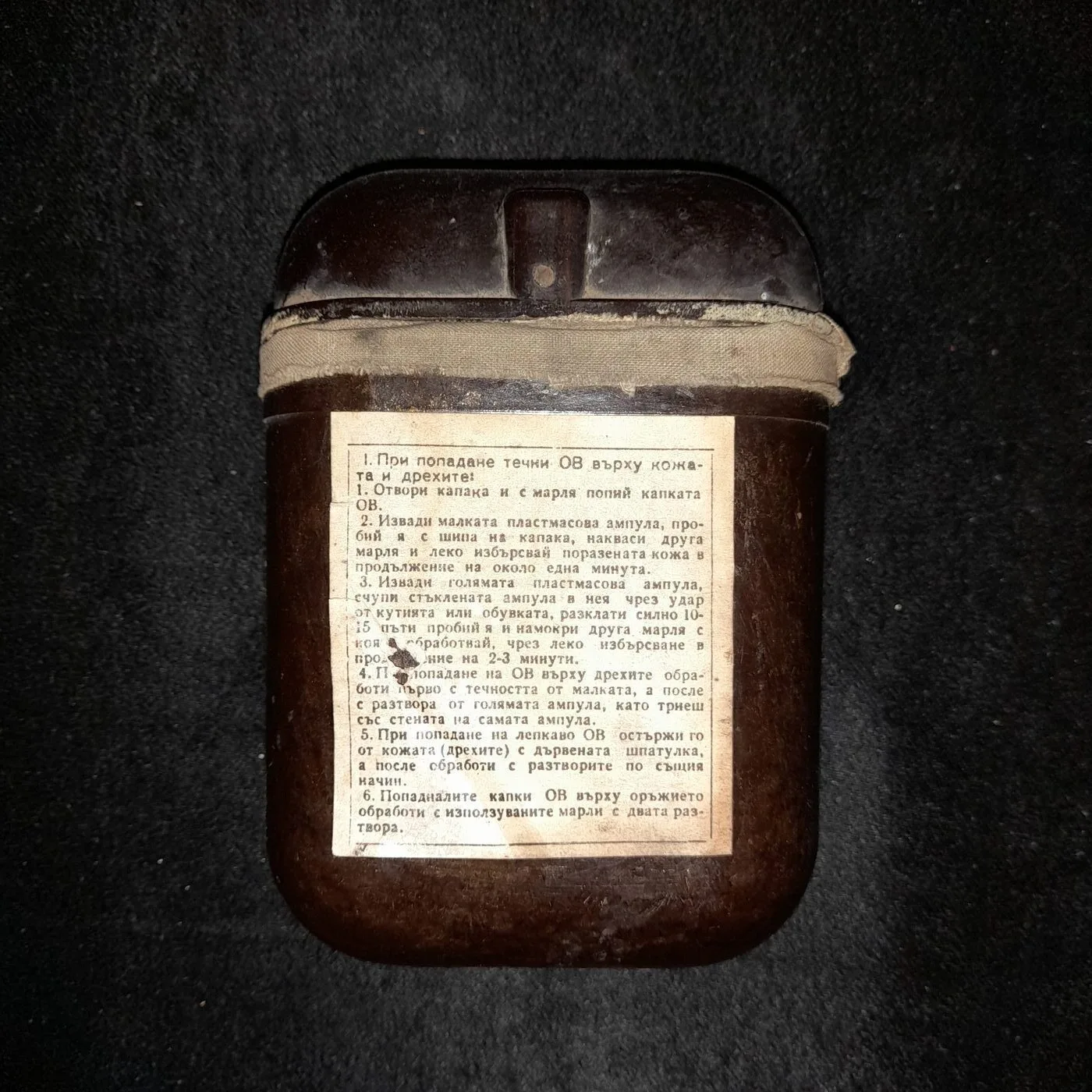 Personal decontamination kit of the Bulgarian People's Army — Collection Cold War Bulgaria
Beside it, the decontamination kit answered the chemical threat. In the event of an attack with toxic agents, it allowed substances to be neutralised on the skin and on equipment. Here again, an object that presupposes the unthinkable: that the invisible poison would eventually fall.
Protection: the gas mask
If one had to choose a single symbol of civil defence, it would be the gas mask. Distributed en masse to the population, it embodied everyone's preparation for chemical attack or contamination.
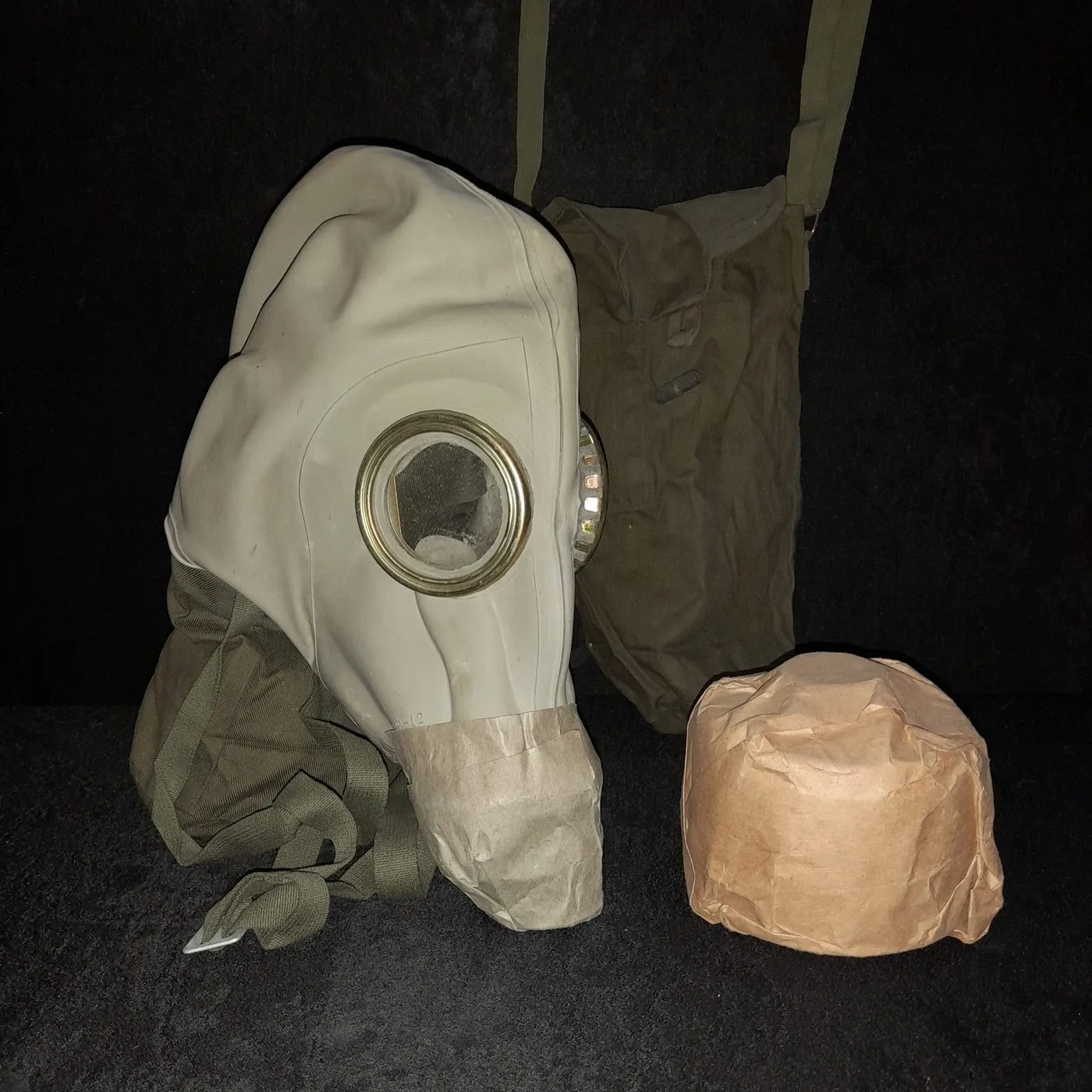 ShM62 civilian gas mask — Collection Cold War Bulgaria
The ShM62, derived from a Soviet model, existed in a version intended for the protection of civilians. It was not a soldier's equipment, but an anticipated everyday object, kept at home, at the factory, at school, ready for the day the alarm sounded.
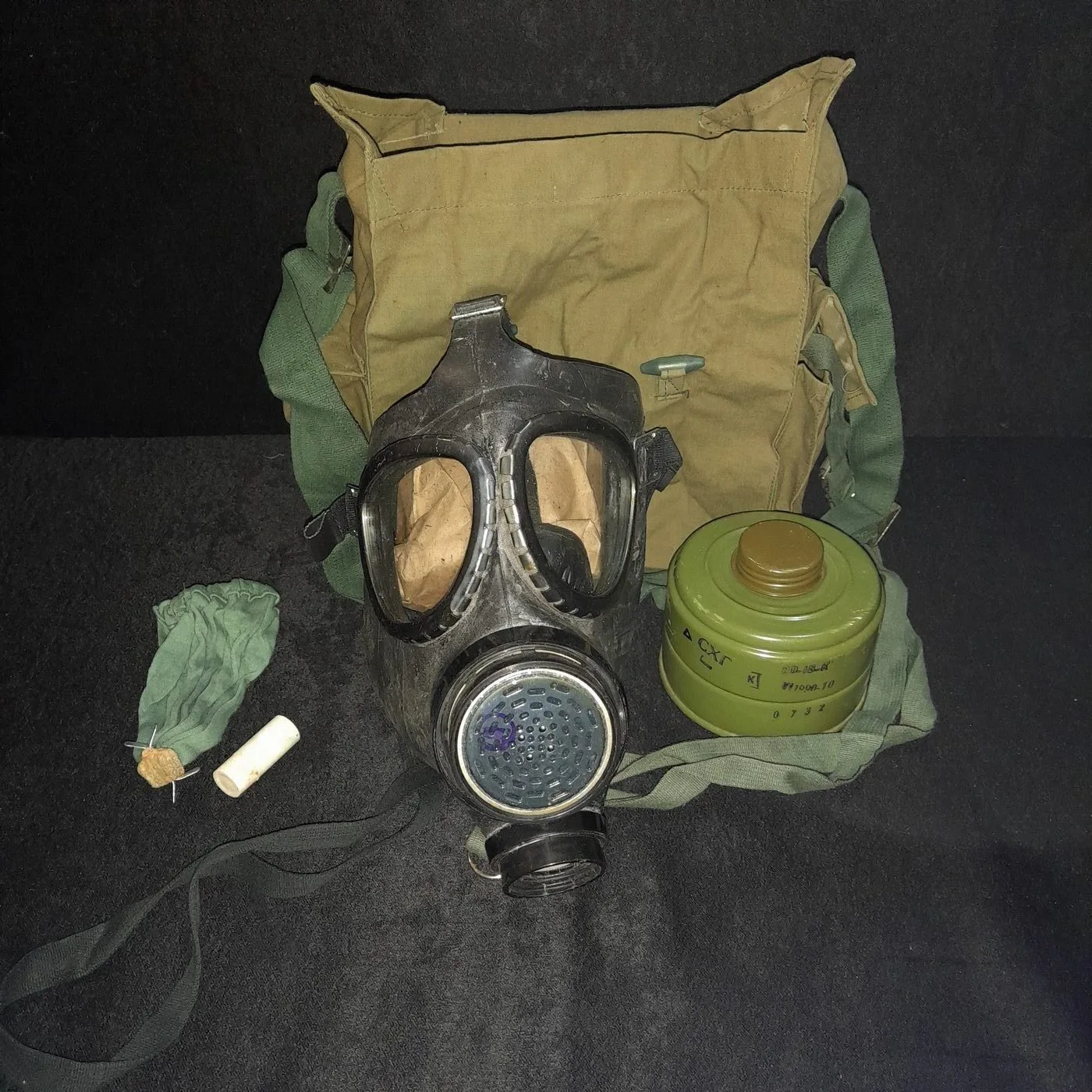 PG-1 model civilian gas mask — Collection Cold War Bulgaria
The PG-1, another civilian model, completes the picture. The multiplicity of masks speaks of the scale of distribution: millions of people had to be equipped. These objects, inert today in a display case, carried an anguishing promise, that of a possible breath in poisoned air.
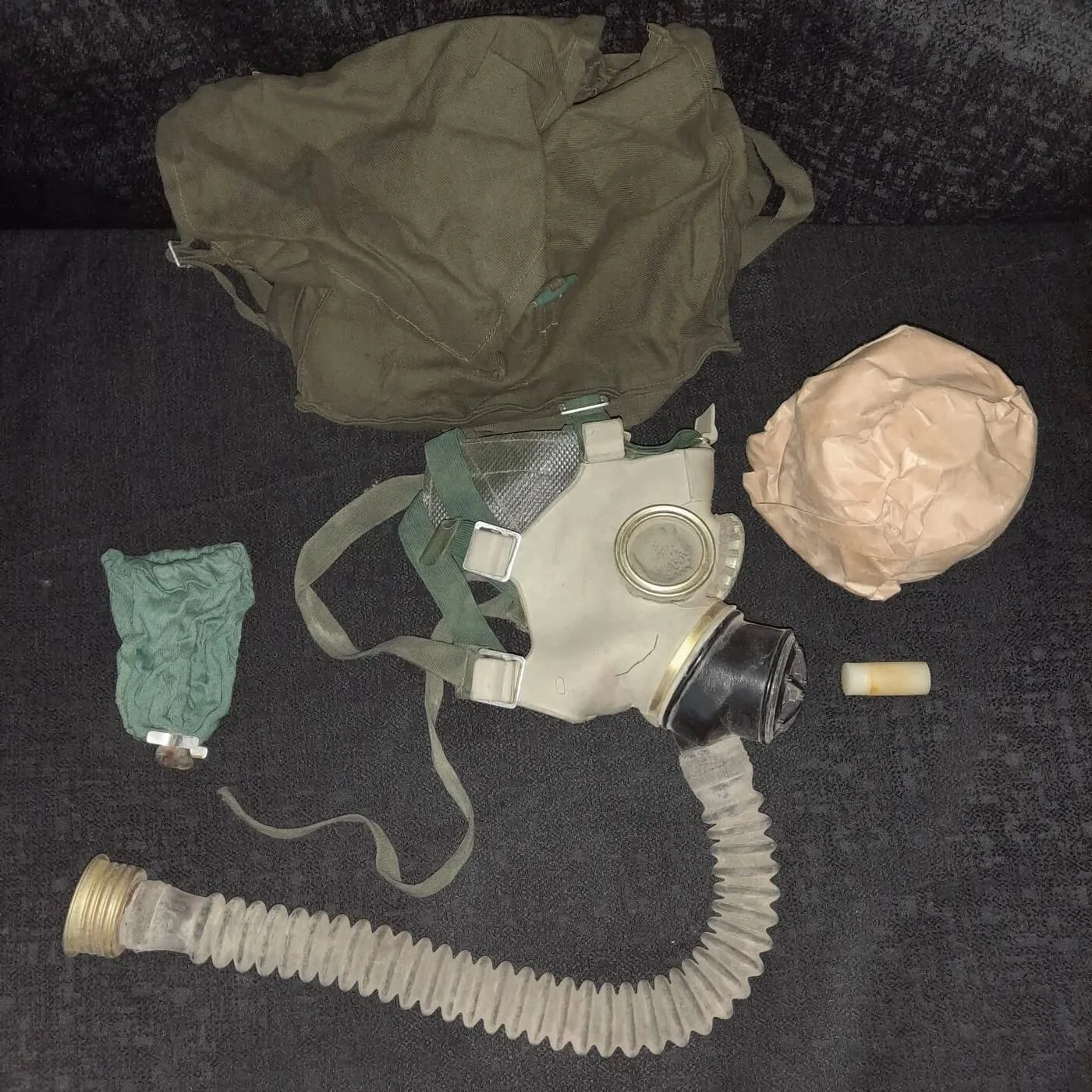 DP-1 children's gas mask — Collection Cold War Bulgaria
But it is the children's mask that strikes hardest. The DP-1 was designed for the youngest, an object that states plainly what preparing the whole population meant. In the logic of civil defence, the child was not spared by the threat, and therefore not excused from preparing for it. To equip schools with masks in children's sizes was to admit that catastrophe would make no distinction of age. Few objects make so tangible the anxiety of an era that had built the apocalypse into its everyday horizon, right into the classroom.
Rescue and care
Civil defence was not only protection: it also organised rescue, health and the fight against disaster. For after the bomb or the catastrophe, there would be care to give, fires to put out, lives to save.
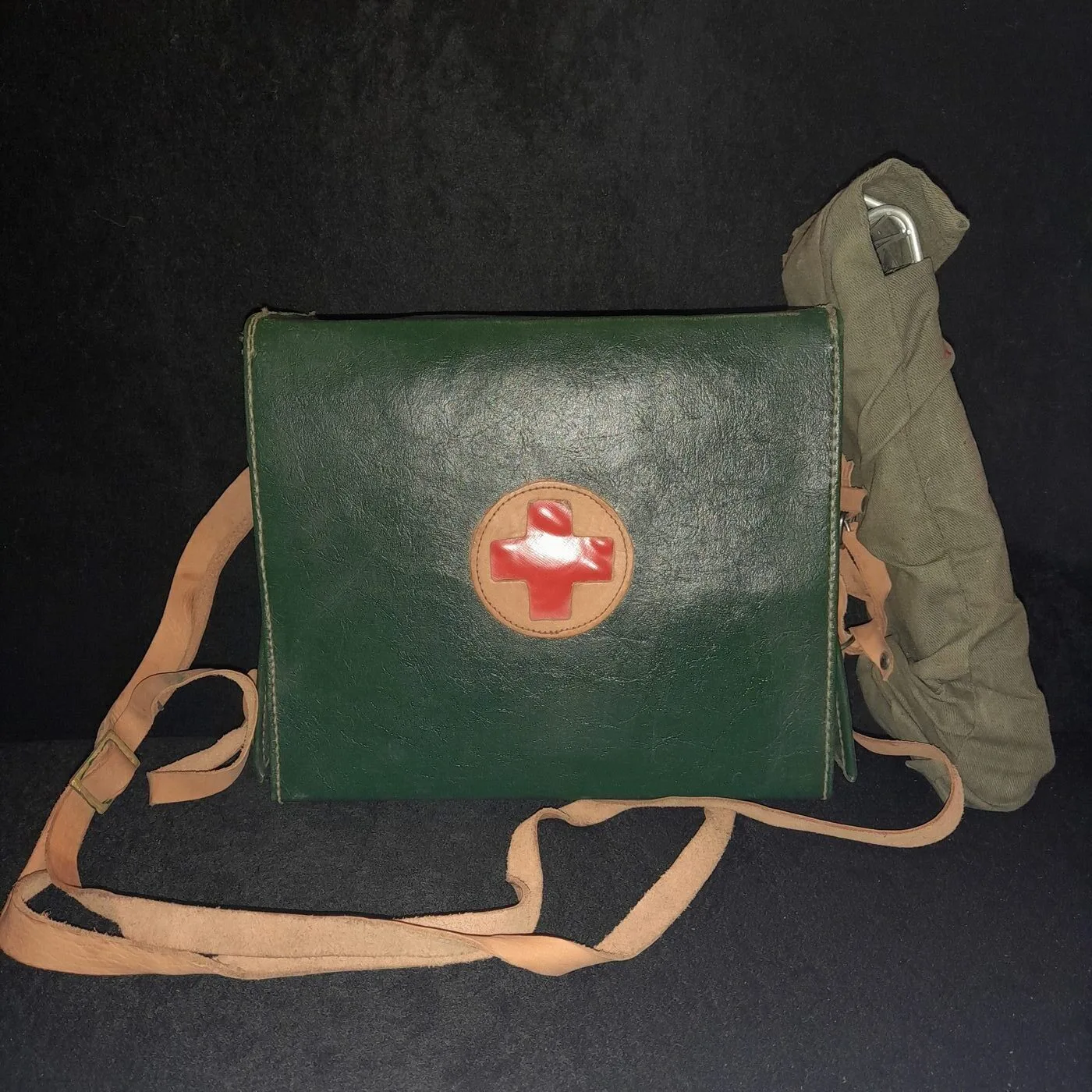 Field medical bag of the sanitary troops — Collection Cold War Bulgaria
The field medical bag equipped the sanitary troops, responsible for first aid. Its contents (dressings, tourniquets, emergency materials) were conceived for rapid intervention in the field, in the midst of the presumed chaos.
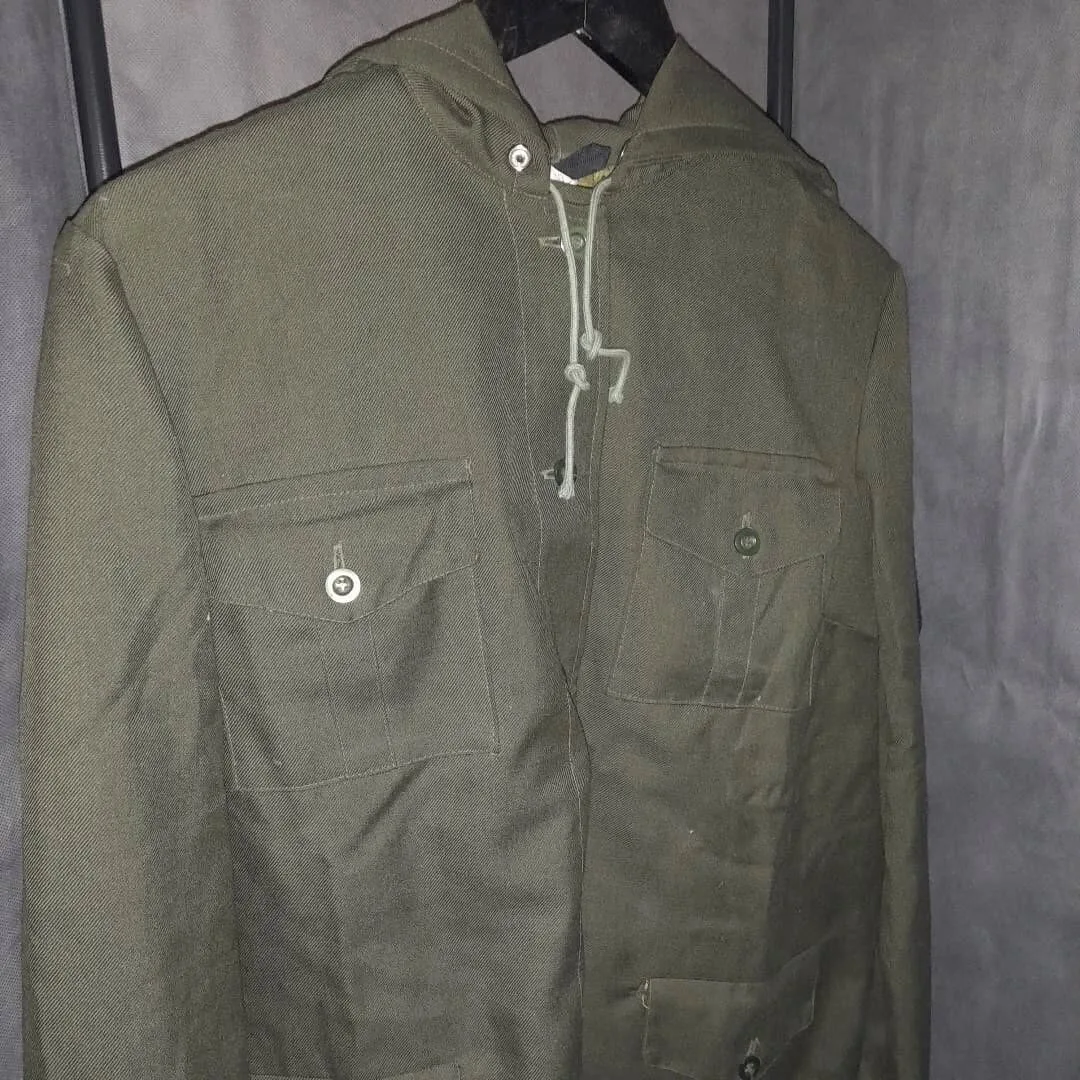 Complete women's uniform of the sanitary troops — Collection Cold War Bulgaria
This complete women's uniform of the sanitary troops recalls an essential dimension: civil defence mobilised women extensively. Where the army was a world of men, civil rescue counted on them: nurses, first-aiders, supervisors. It is one of the rare militarised fields where the female presence was central and acknowledged.
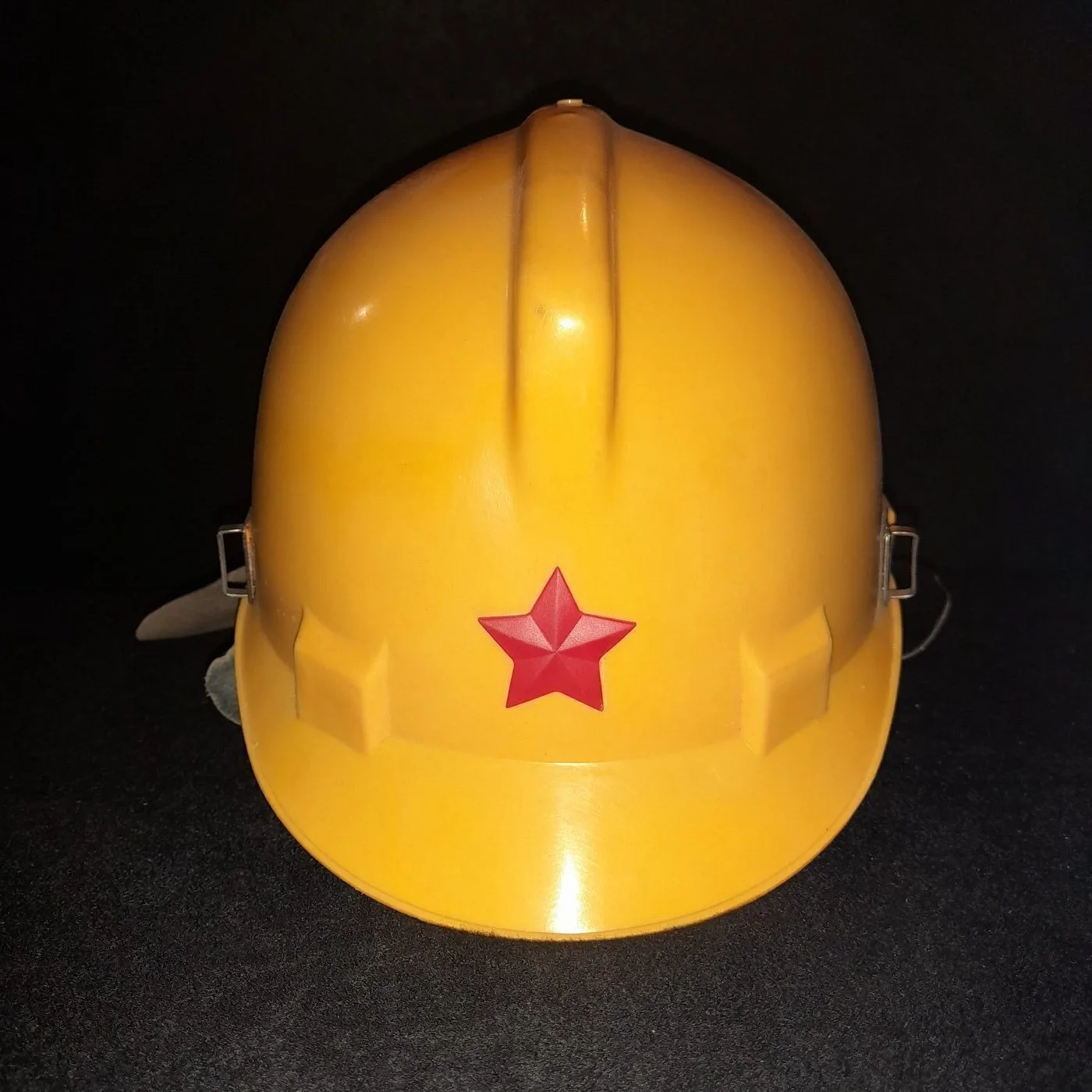 Firefighter's helmet of the People's Republic of Bulgaria — Collection Cold War Bulgaria
The firefighter's helmet completes this side of rescue. Firefighters, in the event of bombing or industrial accident, were in the front line. This plastic model, of more recent date, testifies to the gradual modernisation of equipment over the decades.
Training: the Spartak organisation
All this preparation was worth nothing unless the population was trained. Hence the importance of exercises, standards, and the associations that kept everyone in a state of vigilance.
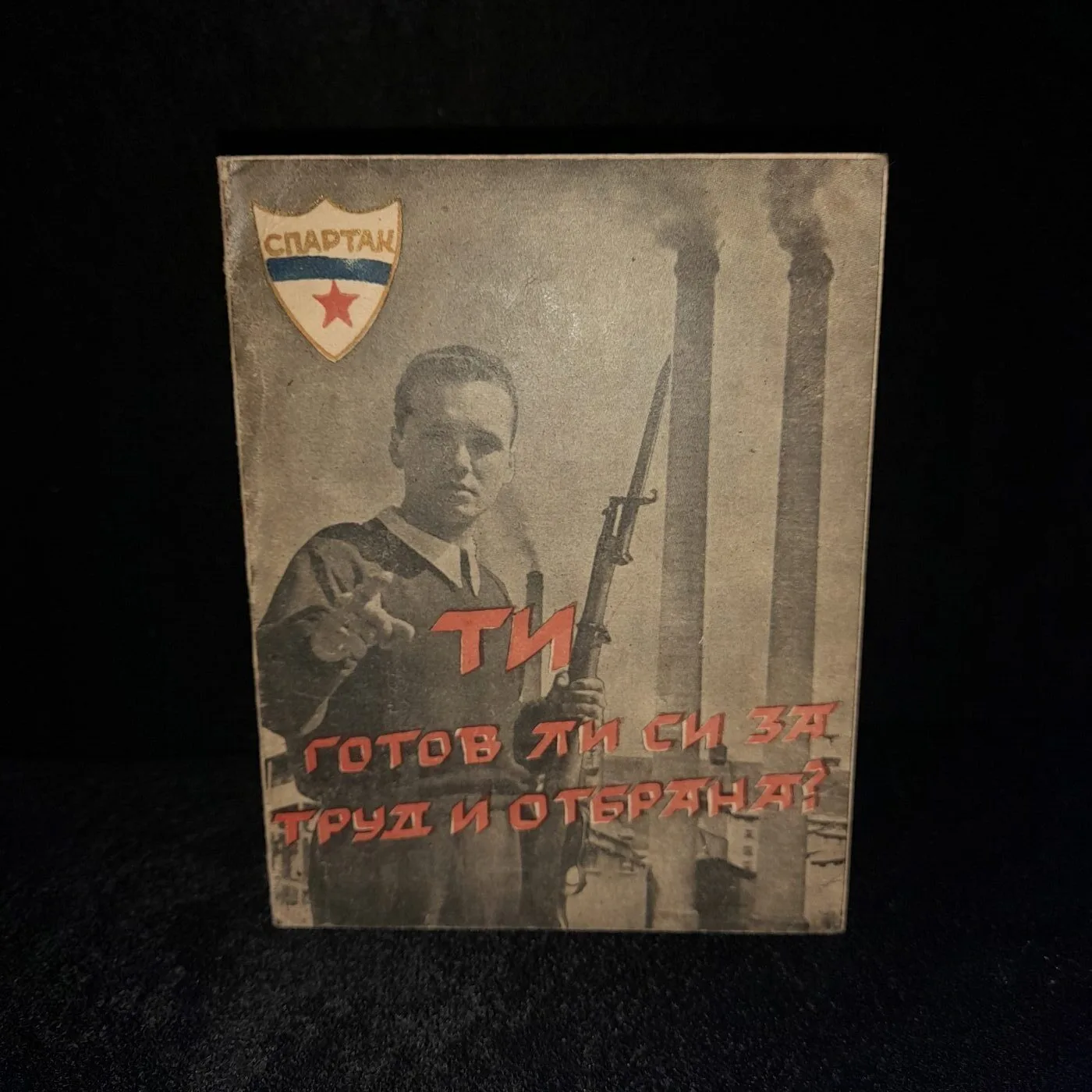 Leaflet of the "Spartak" civil defence association — Collection Cold War Bulgaria
The leaflet of the "Spartak" association evokes this meshing of physical and civil preparation. It set out fitness criteria, exercises, the idea of a citizen always ready for effort and mobilisation. Civil defence did not merely distribute masks: it sought to forge prepared bodies and minds, fit to react when the day came.
(The exact details of the Spartak organisation and its articulation with official civil defence deserve to be clarified against Bulgarian sources.)
The test of reality: Chernobyl
All this machinery of protection was put to the test once, for real. And the result was the opposite of its promise.
On 26 April 1986, reactor number four at the Chernobyl plant exploded. The radioactive cloud reached Bulgaria in early May. The civil defence apparatus then worked exactly as designed: across the country, detachments measured radiation several times a day and transmitted the figures, district by district, to Civil Defence headquarters, which passed them straight up to the Politburo. The instruments worked. The measurements were taken. The information circulated. Upwards.
But it did not come back down. The leadership knew exactly what was happening, and chose to say nothing to the population, for fear of panic. While the entire country remained in ignorance, the army was quietly put on tinned food and powdered milk, as was the nomenklatura. For everyone else, there were only reassuring and confused messages.
The reckoning is bitter: having not been warned, Bulgarians received one of the highest internal radiation doses in Europe. Heavier, according to studies, than that of the populations of Ukraine or Belarus, not because the fallout was greater, but because their own government decided they did not need to know.
Therein lies the tragic irony of civil defence. For decades it had prepared everyone to survive an apocalypse coming from the enemy. When catastrophe finally struck, the apparatus worked, but to inform the authorities, not to protect the people. The masks, the dosimeters, the membership cards: all this arsenal rested on a promise the state betrayed at the decisive moment.
That is perhaps the truest thing these objects tell us. Not protection, but the idea of protection: an immense theatre of preparedness, maintained for forty years, which revealed its true nature on the day it should have served.
This dossier draws on documentary sources concerning Bulgarian civil defence, the magazine Grazhdanska Otbrana and the regime's handling of the Chernobyl disaster, as well as on the objects in the collection. Certain elements, notably the precise organisation of the Spartak association, deserve to be verified against Bulgarian primary sources.