Growing up in three scarves
Thematic dossier · Period: 1944–1989 · Reading time: 6 min
Chavdarche, pioneer, Komsomol: the three compulsory ages of a Bulgarian childhood.
A schoolgirl poses in front of the Party House in Sofia. The photograph is unremarkable, and that is what makes it precious: someone judged that this particular building made a fine backdrop for a child's portrait. The central building of the Largo, seat of the Bulgarian Communist Party, was the natural background for a family photograph.
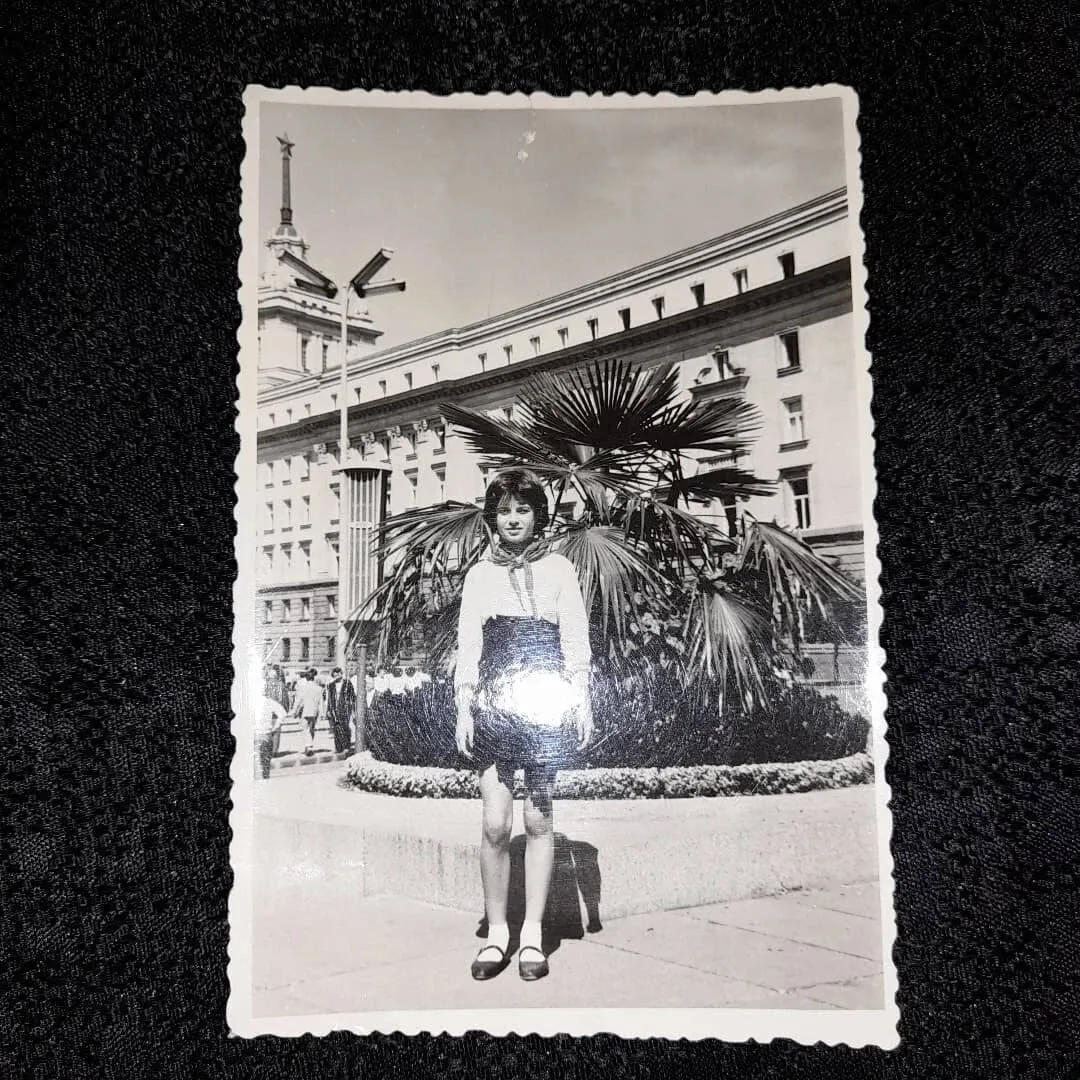 Schoolgirl posing in front of the Party House building in Sofia — Collection Cold War Bulgaria
A Bulgarian childhood of this period can be told through what the child wore around the neck. Sky blue first, red next, then the Komsomol card. Three successive organisations, three thresholds, and each time a ceremony. This dossier follows that path, from the first scarf tied in the first year to entry into the Party's youth organisation.
The first scarf
Until the age of nine, one was a chavdarche. The name comes from Chavdar Voivode, a figure of the struggle against Ottoman domination, whom popular legend described as the protector of the poor, a patron borrowed from national folklore rather than from communist history.
The distinguishing mark was a sky-blue scarf, worn every day, without exception. It was tied around the child's neck a few weeks after entering the first year, during a solemn ceremony, often before a monument to the fighters of the Ottoman period.
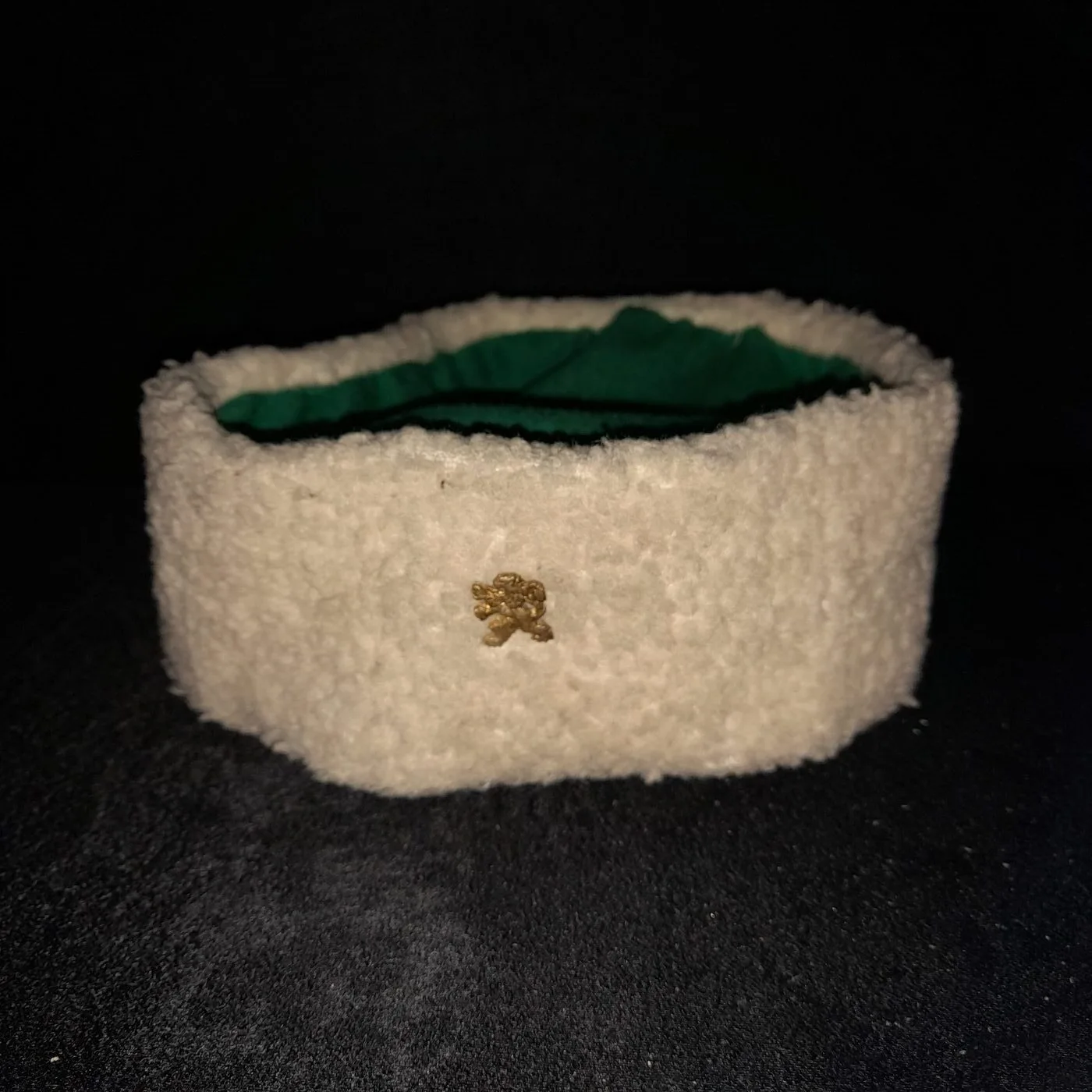 Cap of a young chavdarche pioneer — Collection Cold War Bulgaria
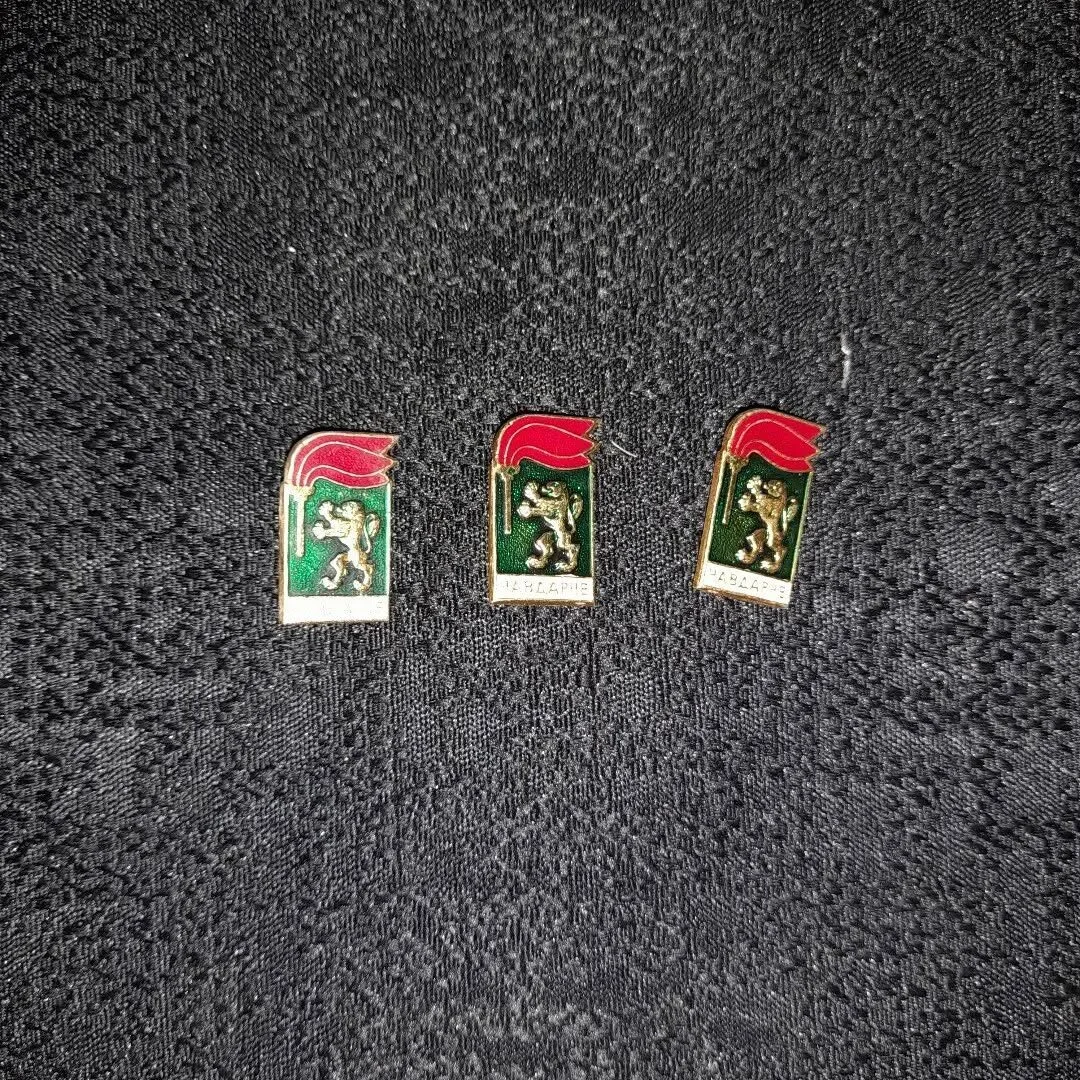 Badge of the chavdarche youth organisation — Collection Cold War Bulgaria
What was learned at that age came down to a few recited verses: the chavdarche greets politely, respects the elderly, loves work and is first to come to the rescue, and loves his free homeland as his own mother. Nothing that speaks of politics. Everything that prepares one to accept it.
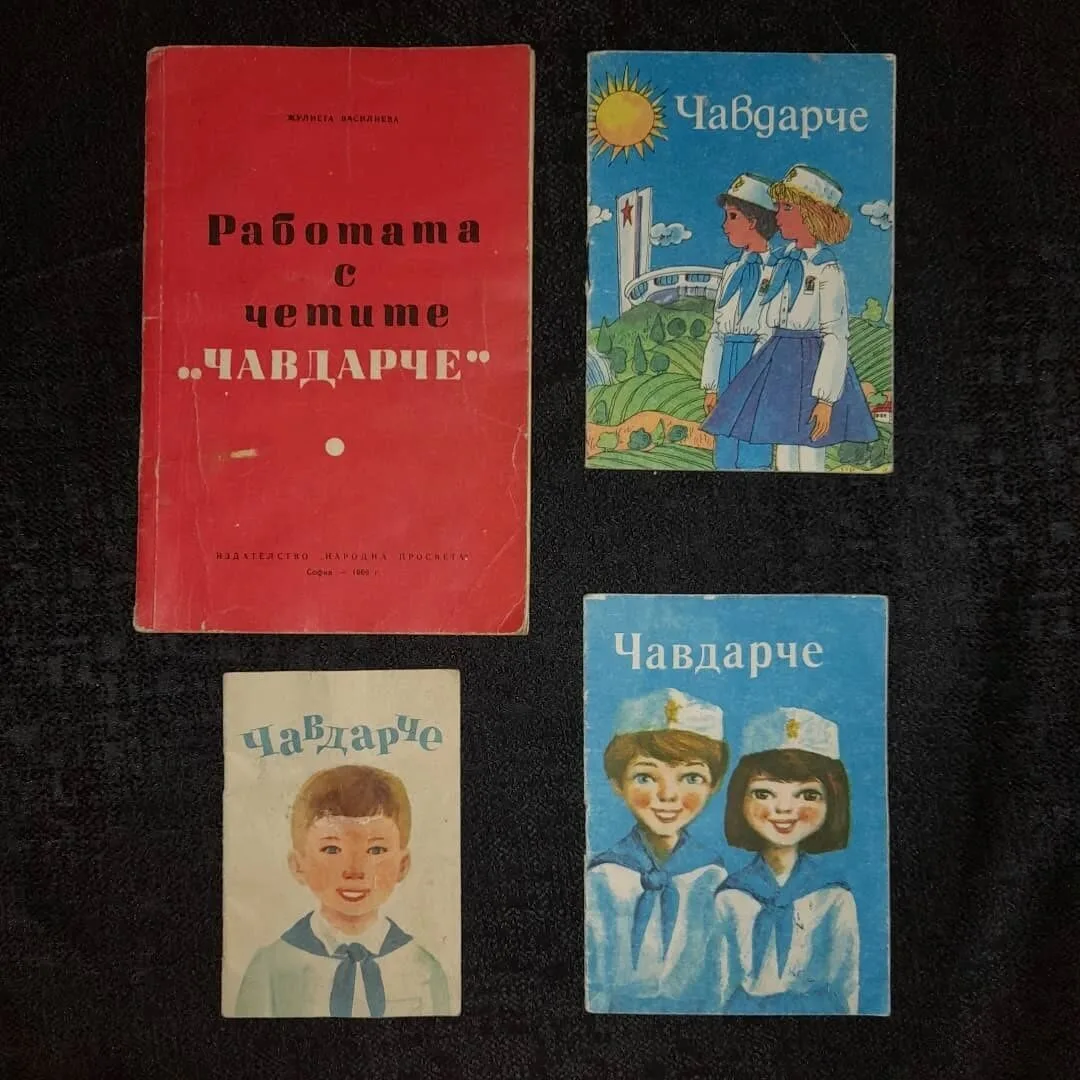 A set of books on the theme of the chavdarcheta, including a songbook — Collection Cold War Bulgaria
The passage to red
From the fourth to the eighth year, children belonged to the Dimitrov Pioneer Organisation "Septemvriche" (Септемврийче), created by decision of the Politburo on 2 November 1944. Around 1967 it numbered some seven hundred thousand members.
Visually, only one detail changed: the scarf went from sky blue to red. But the manner of gaining it deserves to be recounted, because it says a great deal about how the whole system worked.
The pioneer detachment met in assembly, in the presence of the chavdarcheta who were candidates for admission. It formally discussed their cases, then voted by show of hands, one child after another. The candidate was admitted if a majority of the pioneers had pronounced in his favour.
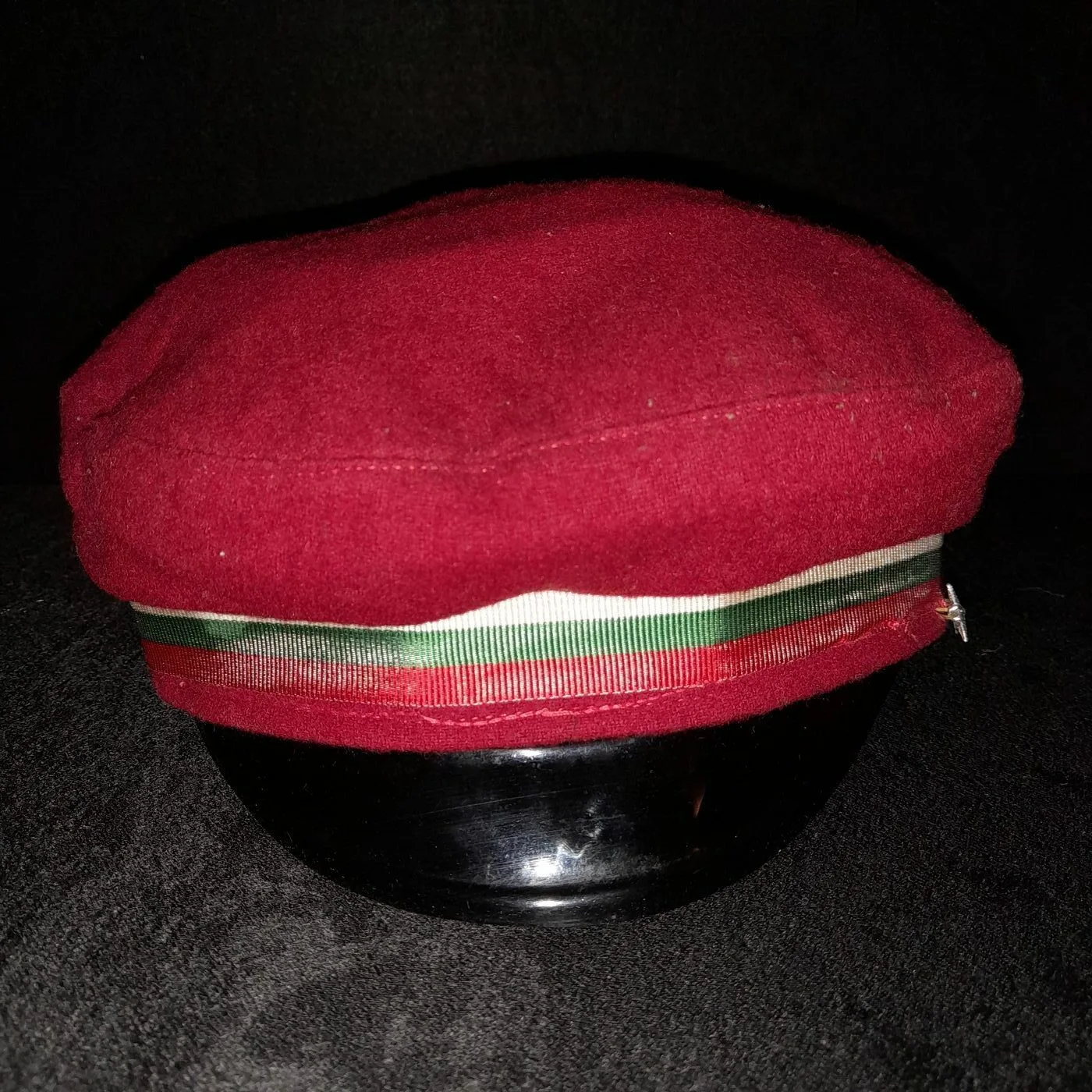 Cap of the Socialist Youth, the pioneers — Collection Cold War Bulgaria
A nine-year-old child thus learned, through direct experience, that belonging is decided by a vote of one's peers with a show of hands, under the eye of the supervisors. The procedure was doubtless a formality in the great majority of cases. That is precisely what makes it effective as training: one rehearses the gesture long before it commits one to anything.
School
Between these ceremonies there was the classroom, and a uniform.
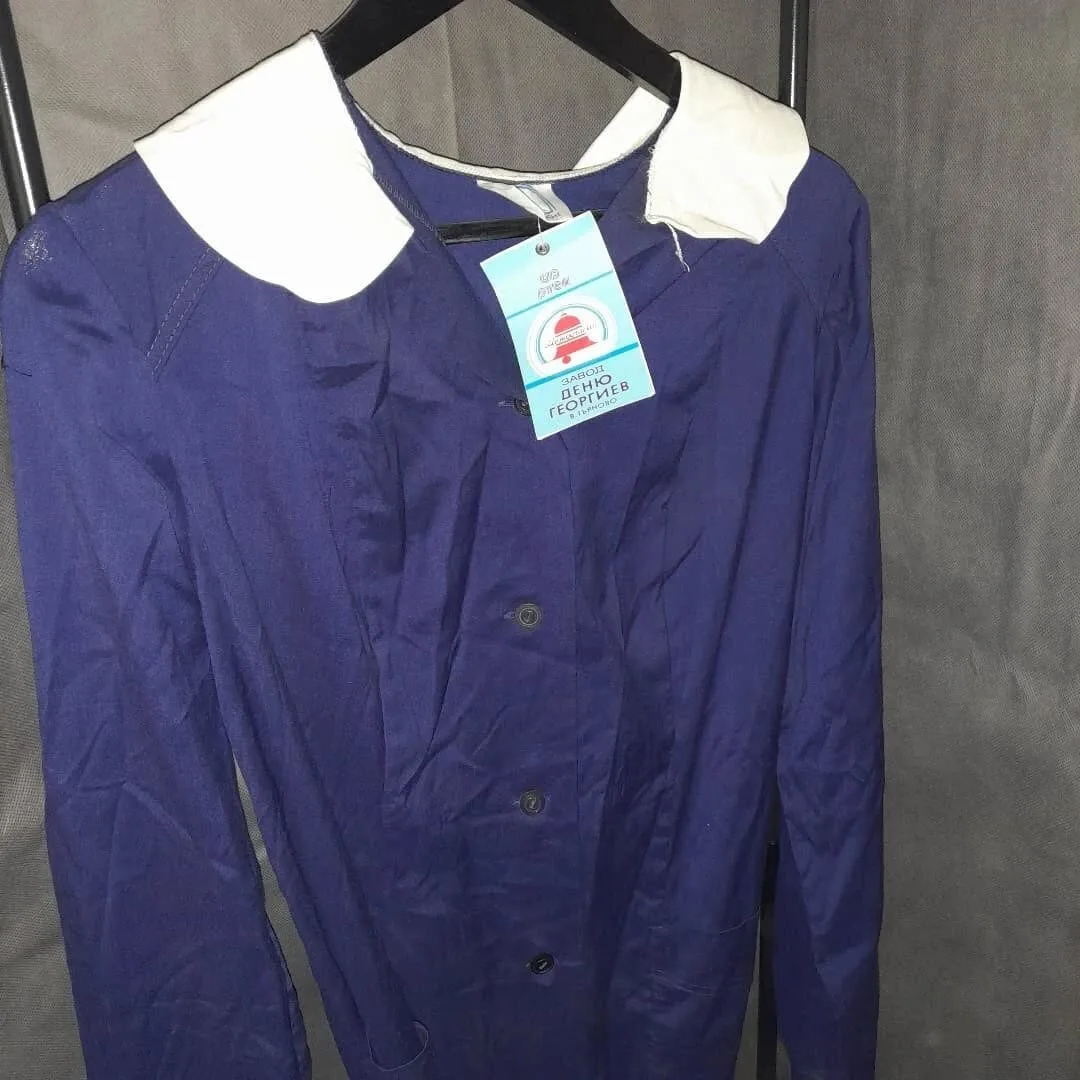 Girls' school uniform smock, never worn — Collection Cold War Bulgaria
This smock was never worn. It has come down to us without the crease of an elbow or the wear of a cuff, which makes it paradoxically more eloquent than a used piece: one sees in it the manufacturer's intention in its pure state, the silhouette intended before a child took hold of it.
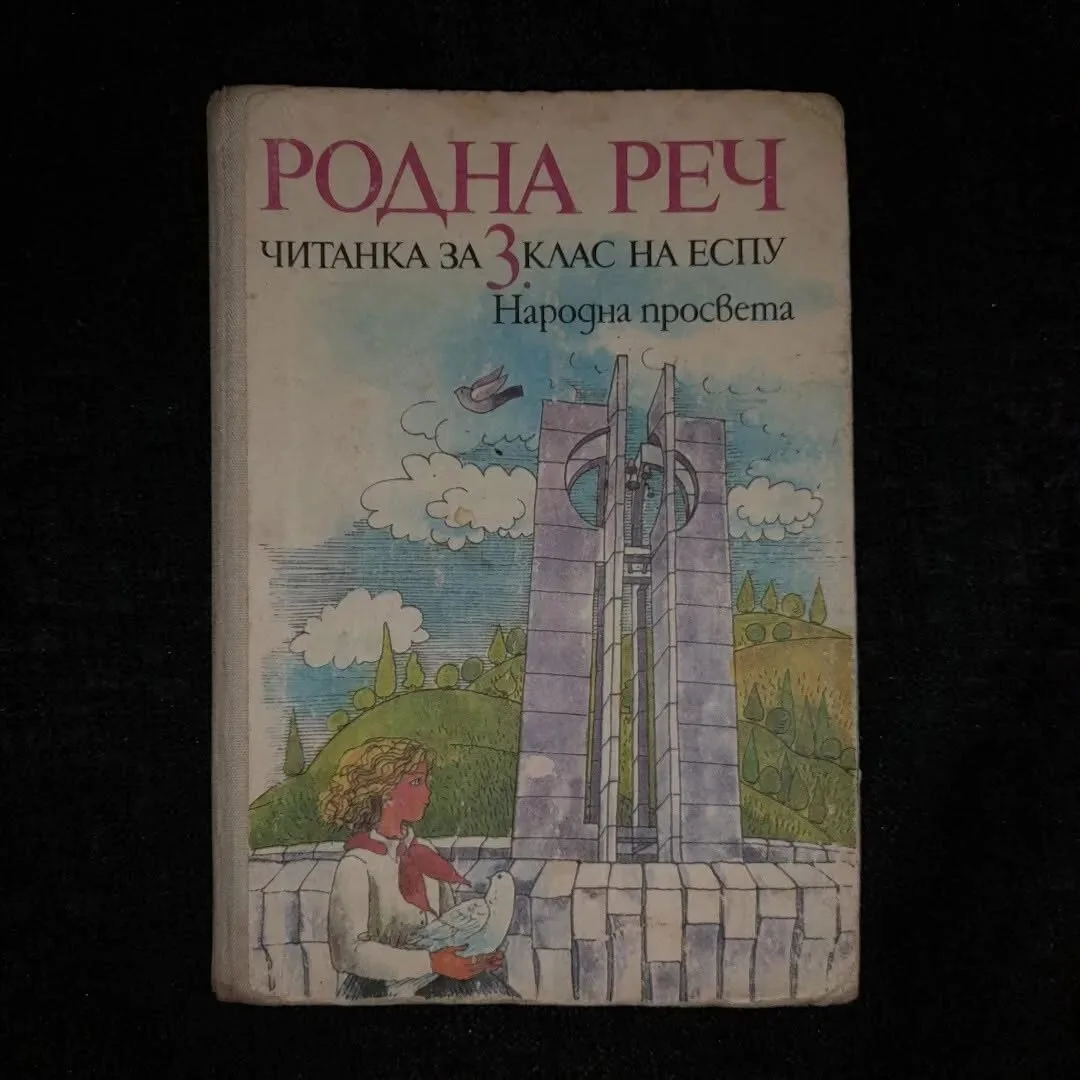 Third-year school reader, "Language of the homeland" — Collection Cold War Bulgaria
The title of this reader states its programme. One does not learn a language, one learns the language of the homeland: the subject and the belonging are named by the same word.
The age of fourteen
At fourteen, the path changes in nature. Members of "Septemvriche" entered the Dimitrov Communist Youth Union, the ДКМС, commonly called the Komsomol: a mass organisation directed straight by the Bulgarian Communist Party, which brought together secondary pupils, students, soldiers, young workers and employees. The official uniform became a light blue shirt and a red tie.
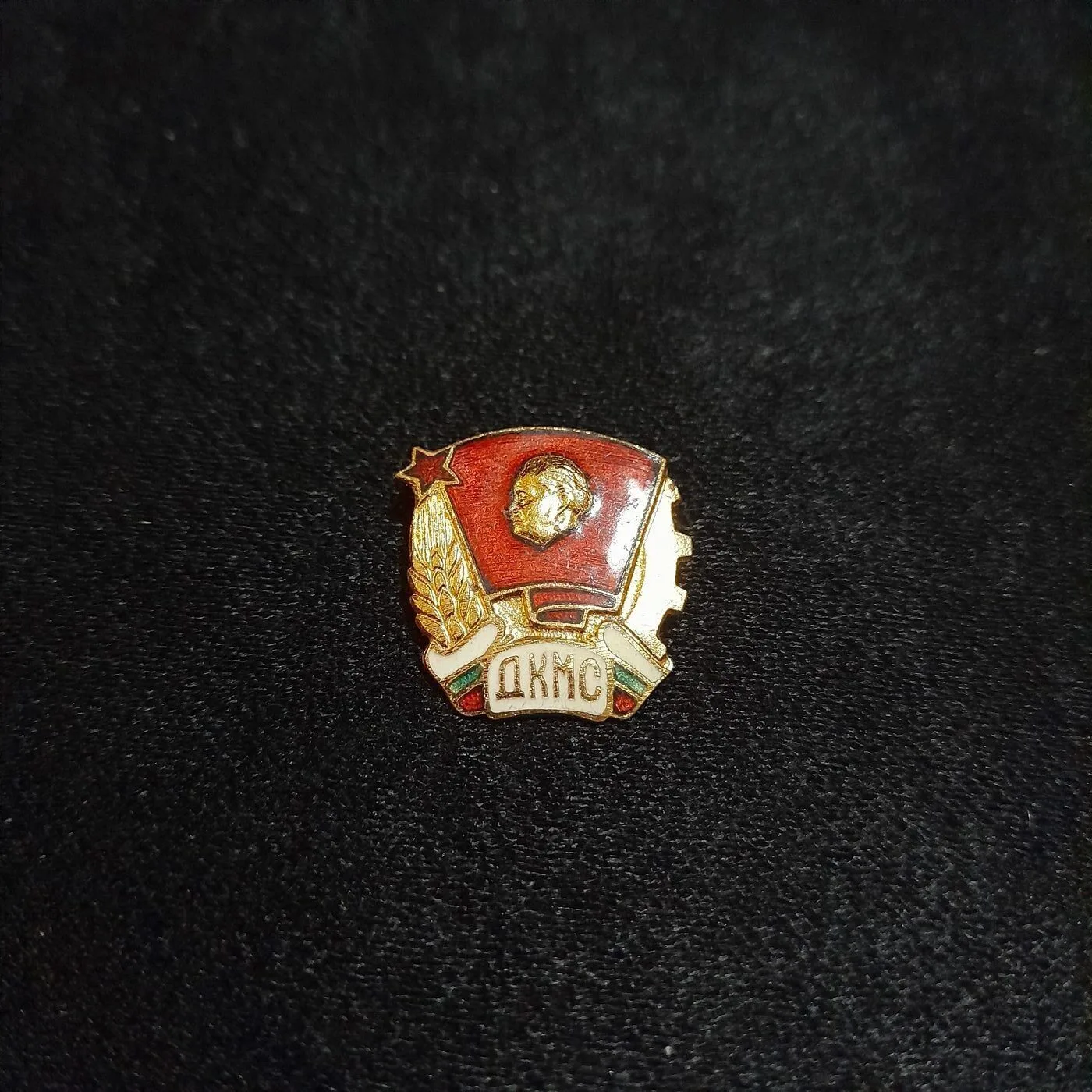 Badge of the Dimitrov Communist Youth Union — Collection Cold War Bulgaria
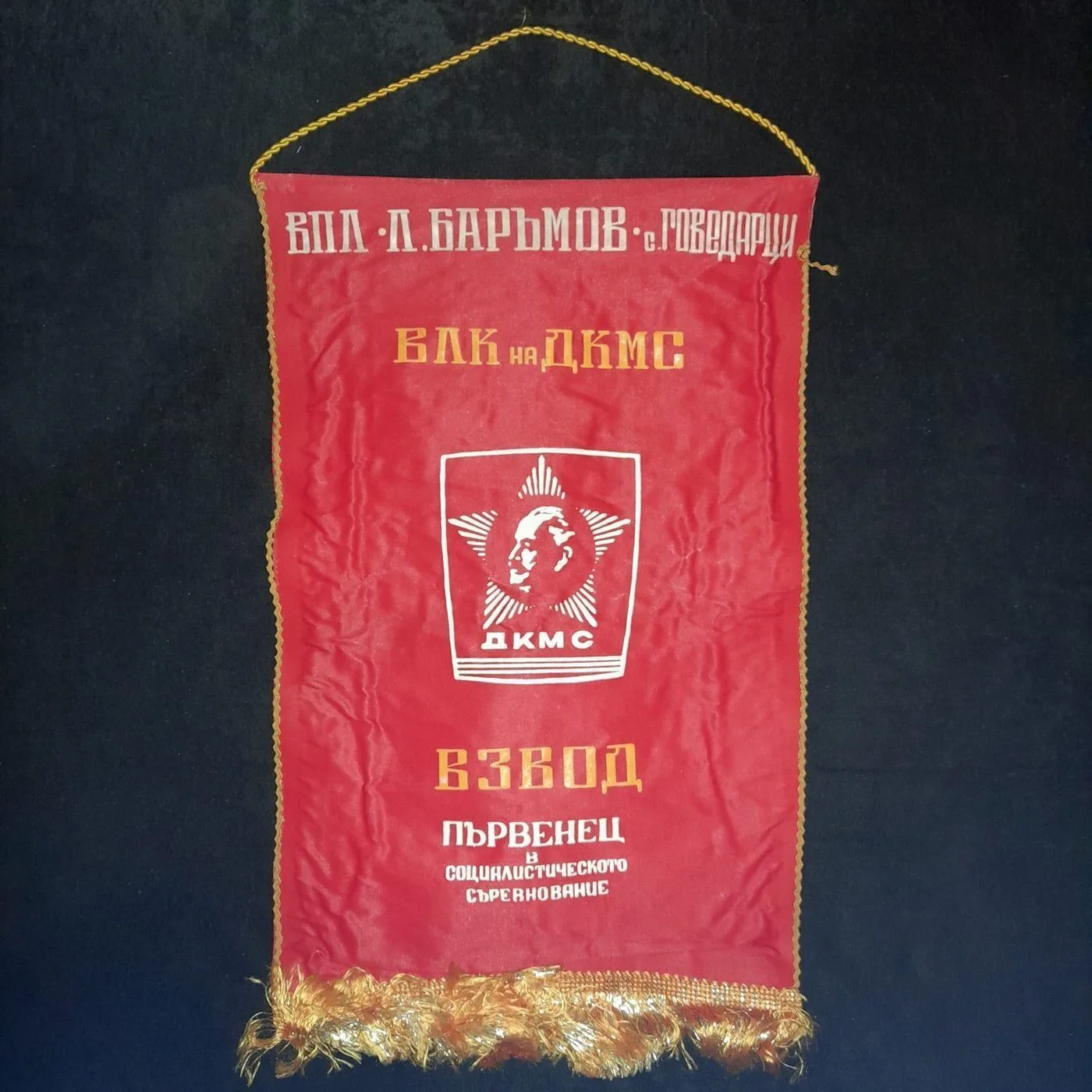 Pennant of the Dimitrov Communist Youth Union — Collection Cold War Bulgaria
Two details mark the break. The organisation had statutes, and candidates had to know them to be admitted: one no longer recites verses about politeness, one learns a regulatory text. And one of the Komsomol secretaries had specific charge of the pioneers: the chain was closed, the older supervising the younger.
There was a precedent for this architecture, and it is not a flattering one. Before 1944, Bulgaria had a youth organisation, "Brannik", modelled on the Hitler Youth. It was dissolved after 9 September and some of its leaders imprisoned. The ДКМС that replaced it was an almost complete copy of the Soviet communist youth organisation. A country emerging from one regimented youth entered another.
What a scarf carries
One must guard against two symmetrical errors in looking at these objects.
The first would be to see in them only regimentation. The songs, the camps, the summer colonies, the competitions, the friendships of the detachment were happy memories for many people who never subscribed to anything at all. Those who were eight years old in 1970 do not remember a mass organisation, they remember their childhood.
The second would be to see in them only nostalgia. This system was complete, compulsory and without alternative: there existed no competing youth organisation, no different history textbook, no other scarf. A child did not choose to enter it, he entered it.
These objects hold the two together. A chavdarche cap is at once the badge of a political apparatus and the headgear of a seven-year-old. The museum does not have to choose between the two readings. It has to show that they bore on the same cloth.
Facts verified against sources: the patronage of Chavdar Voivode and his status as protector of the poor in popular legend; the sky-blue scarf worn daily by the chavdarcheta and tied a few weeks after entry into the first year, at a ceremony often held before a monument to the fighters against Ottoman domination; membership of the "Septemvriche" organisation from the fourth to the eighth year and the distinction of the red scarf; the creation of the organisation by decision of the Politburo on 2 November 1944; a membership of some seven hundred thousand around 1967; the admission procedure by discussion in assembly and a show of hands by the pioneers, admission by majority; entry into the ДКМС at fourteen, direct leadership by the Bulgarian Communist Party, the composition of the organisation, the existence of statutes that candidates had to know, the light blue shirt and red tie uniform, and the presence of a secretary in charge of the pioneers; the existence of the "Brannik" organisation before 1944, modelled on the Hitler Youth, its dissolution and the imprisonment of some of its leaders, and the character of the ДКМС as a copy of the Soviet model. The exact age brackets vary slightly between sources, some giving "up to nine years" for the chavdarcheta and others a division by school year; both formulations are reproduced as they stand rather than settled. Resting on the collector's description of the object: the identification of the building photographed in cwb-199.