Ninety-nine point seven
Thematic dossier · Period: 1944–1991 · Reading time: 8 min
A constitution approved by referendum, elections with a single candidate, and a membership book that opened doors.
On 16 May 1971, Bulgarians were called to the polls to approve a new constitution. The result was 99.7% in favour, on a turnout of 99.7%. Six million one hundred and thirty-five thousand votes for, fifteen thousand four hundred and seventy-seven against.
A month later, on 27 June, the legislative elections were held. The Fatherland Front (Отечествен фронт) was the only organisation authorised to put forward candidates, and every list had to receive its approval. It presented one candidate per constituency: four hundred candidates for four hundred seats. Announced turnout: 99.85%. Votes against: one thousand four hundred and eighty-seven, or 0.02%.
This dossier concerns what it meant to engage in politics within that framework.
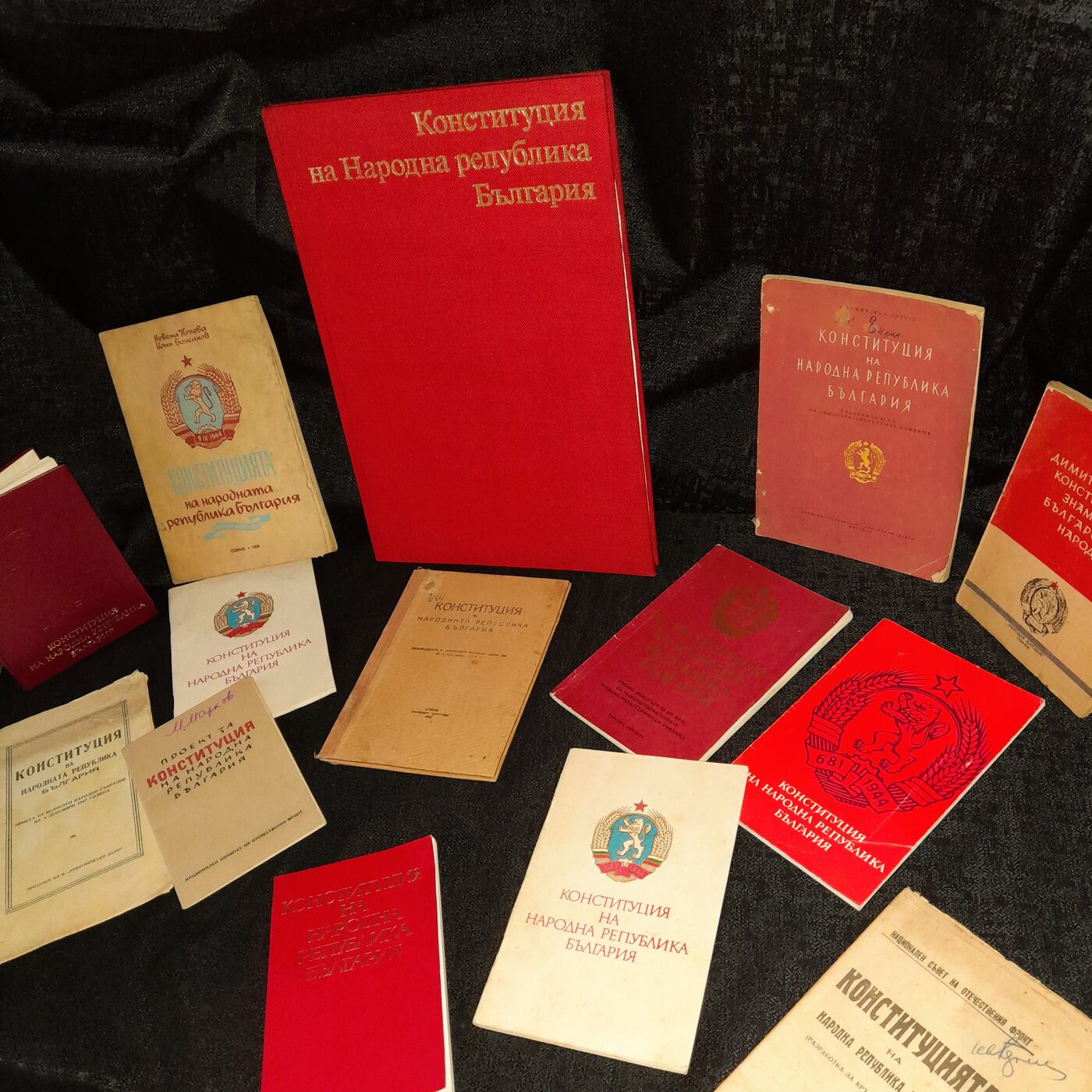 A set of editions of the Constitution of the People's Republic of Bulgaria: bound volumes, pamphlets, school textbooks and drafts submitted for consultation — Collection Cold War Bulgaria
Two constitutions, fifteen editions
The first constitution, adopted in 1947, is known as the "Dimitrov Constitution". It installed the regime.
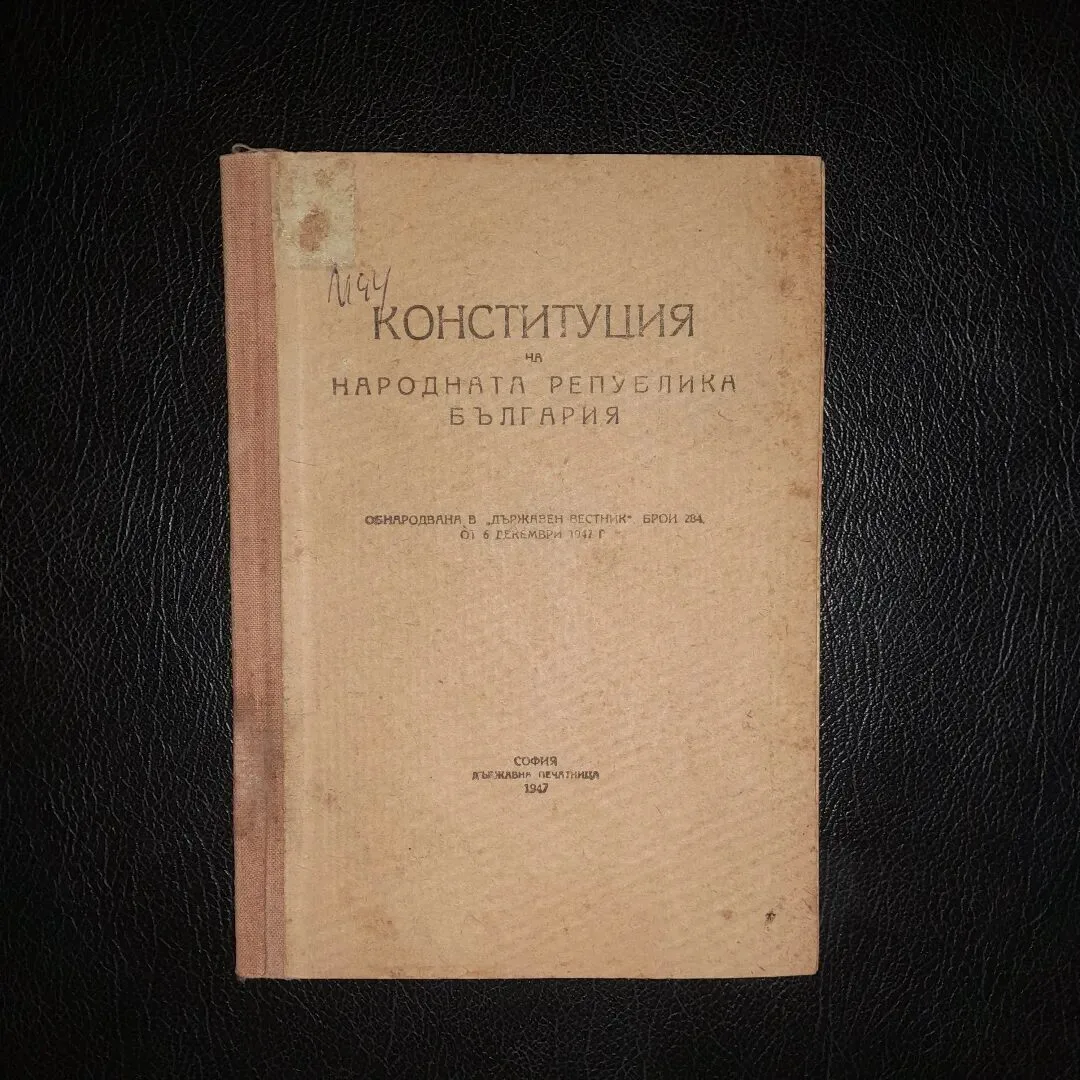 First Constitution of the People's Republic of Bulgaria — Collection Cold War Bulgaria
What strikes one on gathering these copies is their number and the diversity of their formats. Bound library volumes, cheap pamphlets, textbooks intended for schools, Fatherland Front editions: a single text declined for every readership. A constitution distributed to that extent is not merely a legal norm, it is an object of dissemination.
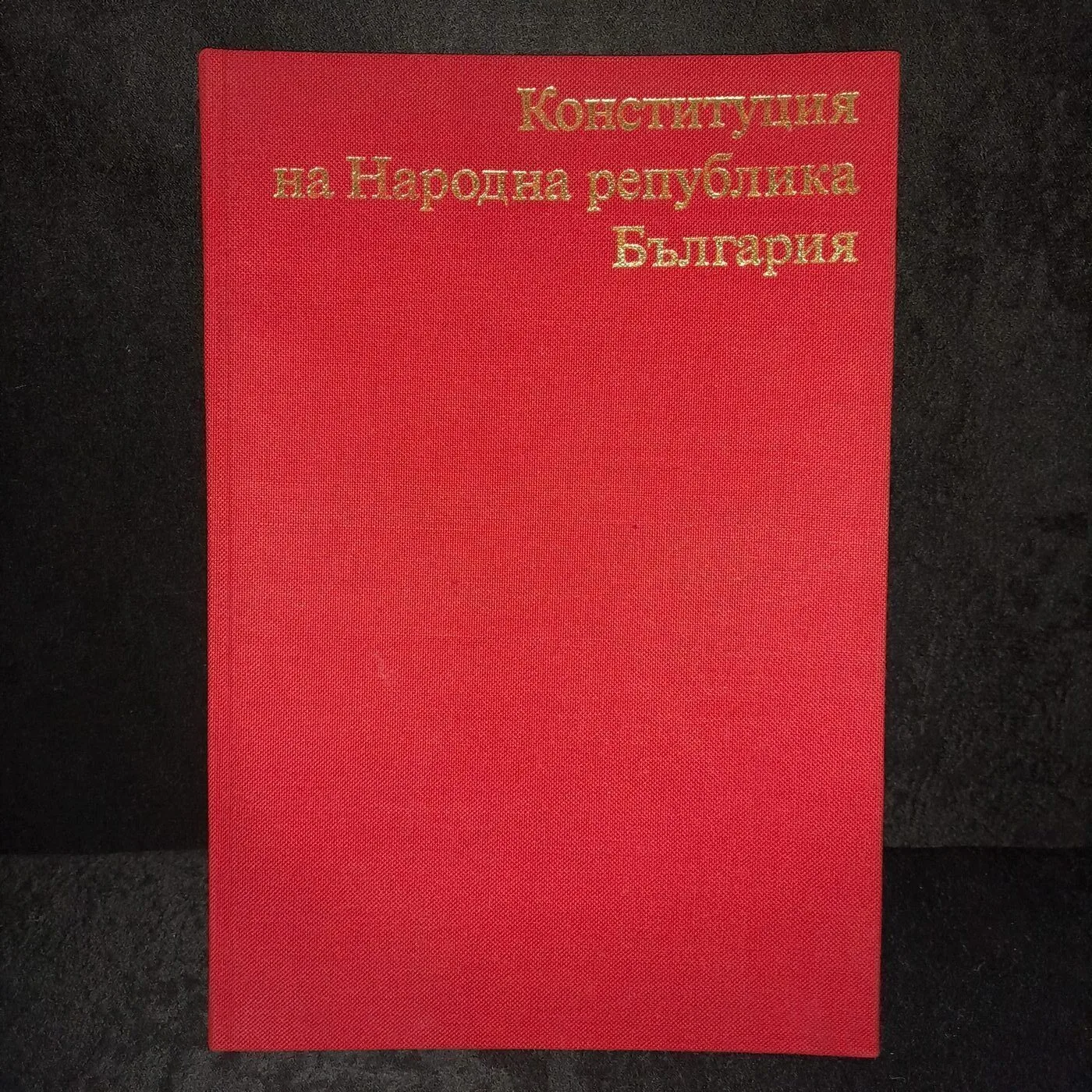 Constitution of the People's Republic of Bulgaria issuing from the constitutional referendum — Collection Cold War Bulgaria
The second, which came into force on 18 May 1971, is called the "Zhivkov Constitution". Its genesis deserves to be known: the Bulgarian Communist Party used the Prague Spring as a pretext for tightening its control over all social organisations and reasserting democratic centralism within itself. Zhivkov and his circle wanted to reassure the Soviets: there would be no Bulgarian version of the Prague Spring.
This text contains the article that has left the deepest mark on the country's memory. Its first article enshrines the leading role of the Bulgarian Communist Party as the guiding force of society and of the state. It is no longer a practice, it is a constitutional norm.
The same constitution created a State Council, a collective presidency of which Zhivkov took the head on 7 July 1971, leaving the post of prime minister he had held since 1962. He had already combined it with the leadership of the Party since 1954. He would keep both until November 1989.
The Fatherland Front
A word about this organisation, because it is poorly understood.
The Fatherland Front was not a party but a coalition, born of the seizure of power on 9 September 1944 and rapidly dominated by the Communist Party. Alongside it there survived a Bulgarian Agrarian National Union, formally a partner.
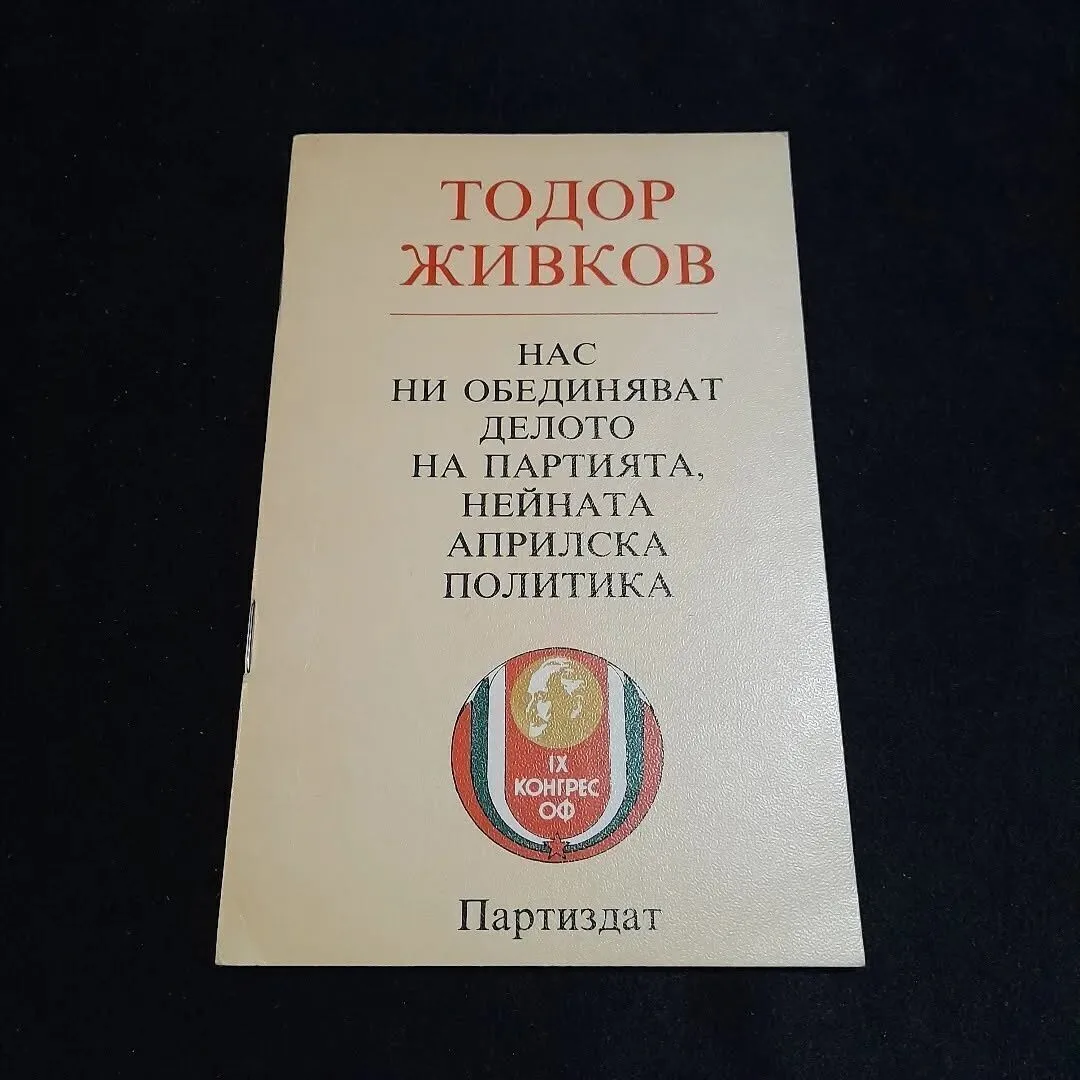 Political leaflet for the public for the ninth congress of the Fatherland Front — Collection Cold War Bulgaria
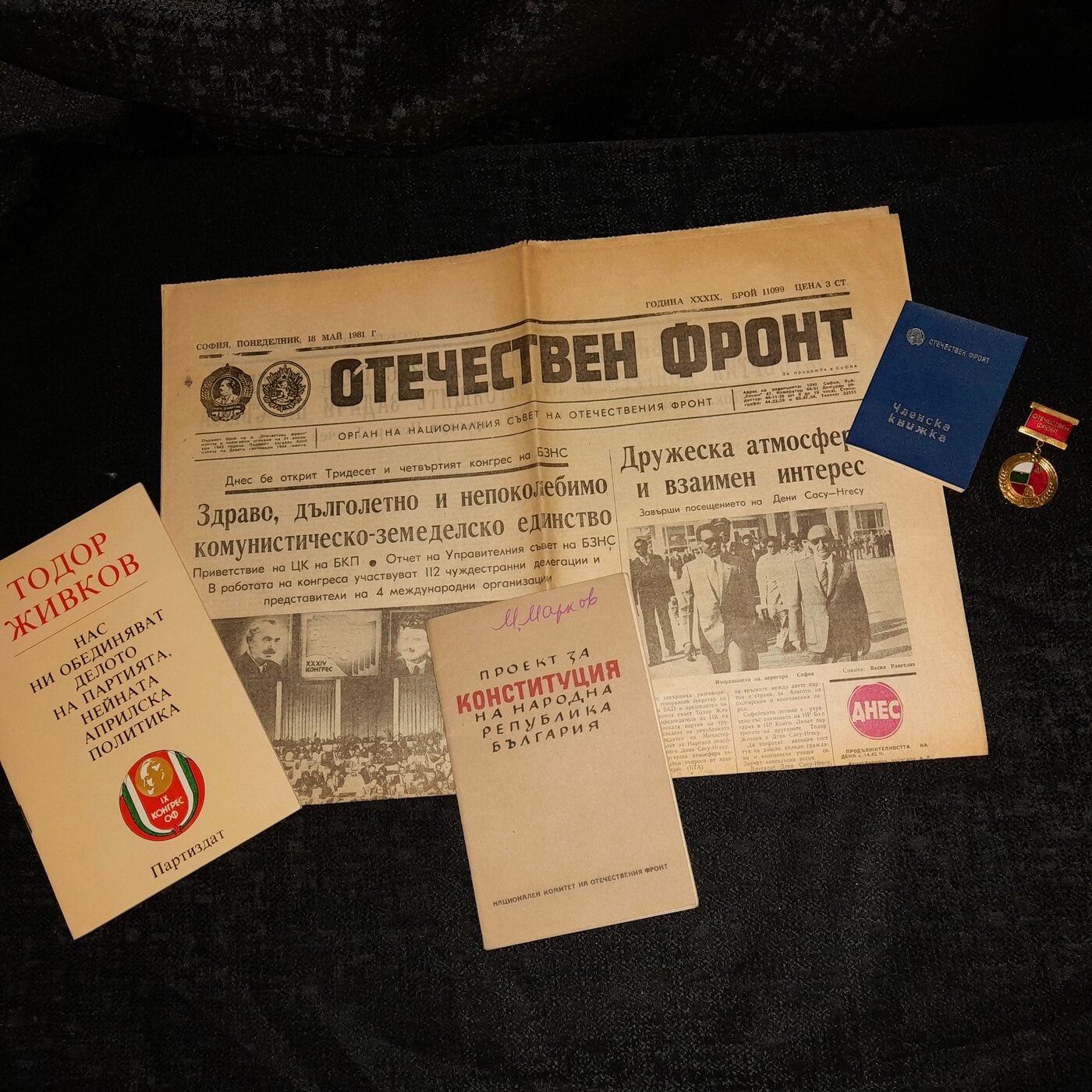 Fatherland Front newspaper of 18 May 1981, membership card, badge, pamphlet by Todor Zhivkov and draft Constitution — Collection Cold War Bulgaria
The issue of Otechestven Front reproduced here, organ of the Front's National Council, is dated 18 May 1981, ten years to the day after the Zhivkov Constitution came into force. Its front page covers the thirty-fourth congress of the Agrarian Union and proclaims a communist-agrarian unity that is sound, lasting and unshakeable. The vocabulary is enough: this is not talk of an alliance between two forces, but of a fusion celebrated.
The workings can be read in the composition of the Assembly elected in 1971: of four hundred deputies, two hundred and sixty-eight members of the Communist Party, one hundred members of the Agrarian Union, thirty-two unaffiliated. A distribution that gives the appearance of diversity, but every candidacy had been validated by the Front, and no competing list existed.
It was not a single-party system in the strict sense. It was better: a system of several organisations, all held in the same hand.
The membership book
Now comes the most important object in the dossier, and the most discreet.
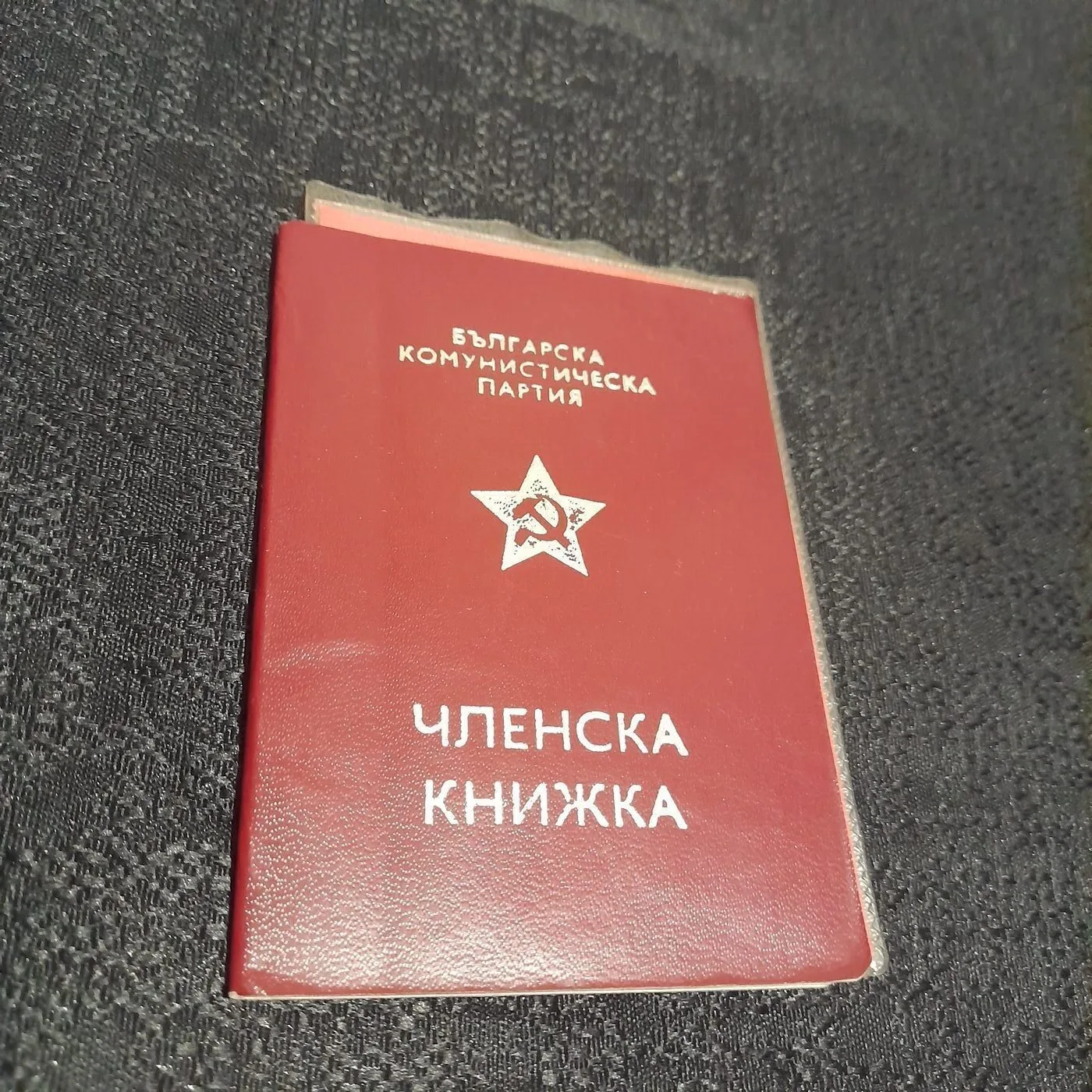 Membership book of the Bulgarian Communist Party — Collection Cold War Bulgaria
Joining the Party was not a gesture of opinion. It was a step that opened or closed doors: certain posts, certain schools for one's children, certain journeys, certain flats. One entered by sponsorship, with a candidate period, and one paid dues.
Two simplifications must be resisted. Not all members were opportunists: many joined out of conviction, especially in the early decades. And not all non-members were opponents: the vast majority of the population never joined and got on with their lives.
But between the two stood a mass of people for whom the book was a calculation, a document one took because it was better to have it. It is this grey area, neither adherence nor resistance, that this little booklet best represents.
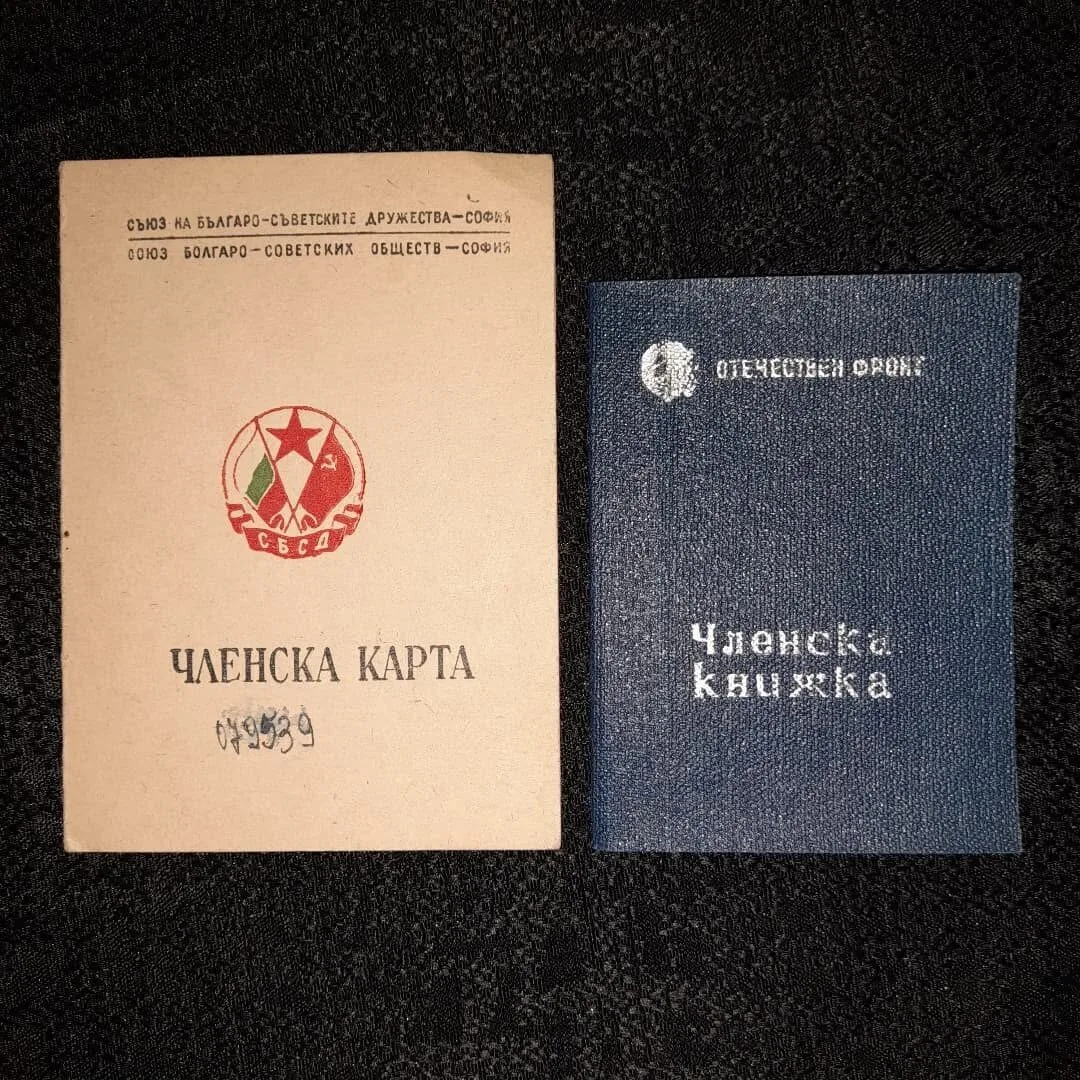 A grouping of documents belonging to one person, including a membership card — Collection Cold War Bulgaria
Printed doctrine
The Party also produced its own reference literature.
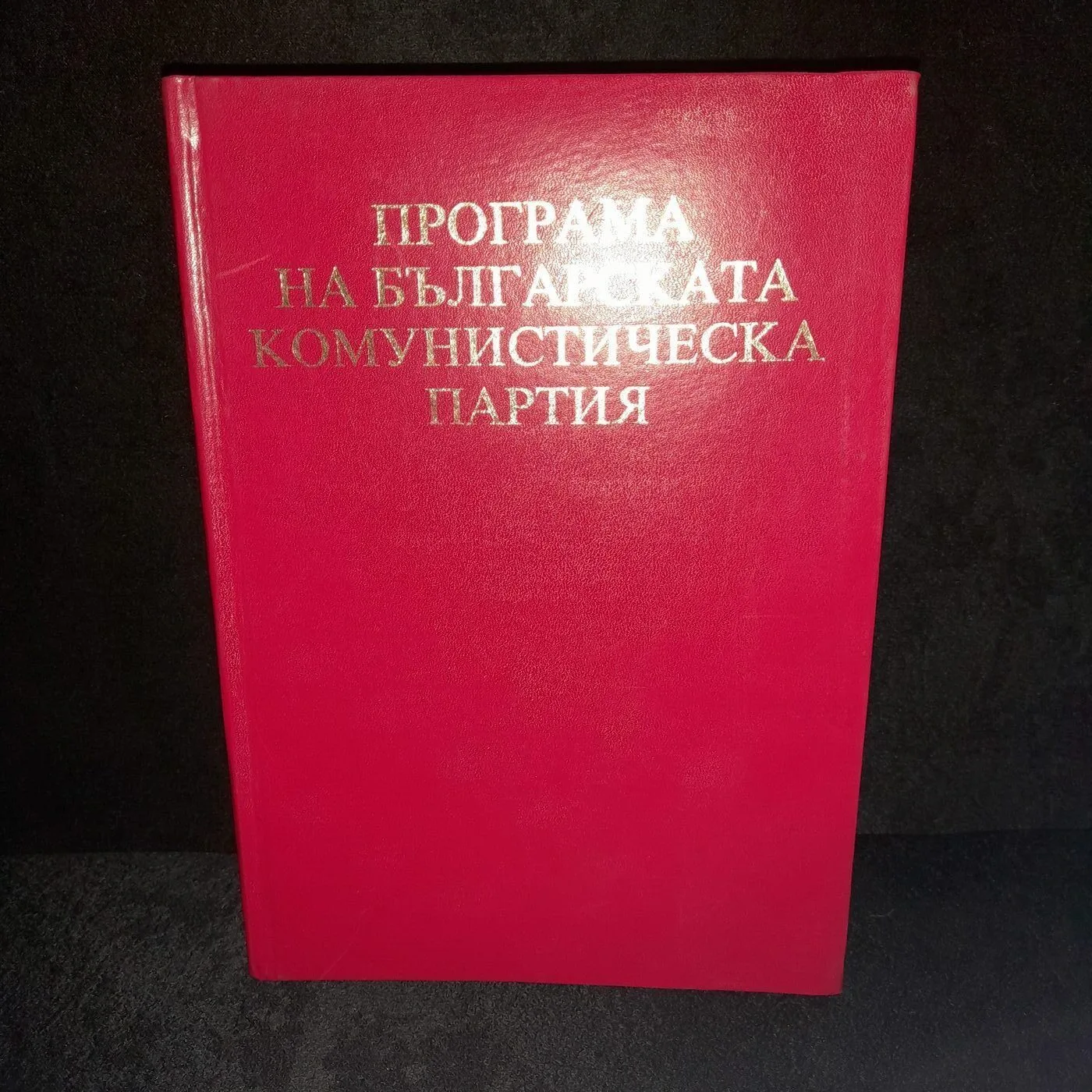 Programme of the Bulgarian Communist Party, 1974 edition — Collection Cold War Bulgaria
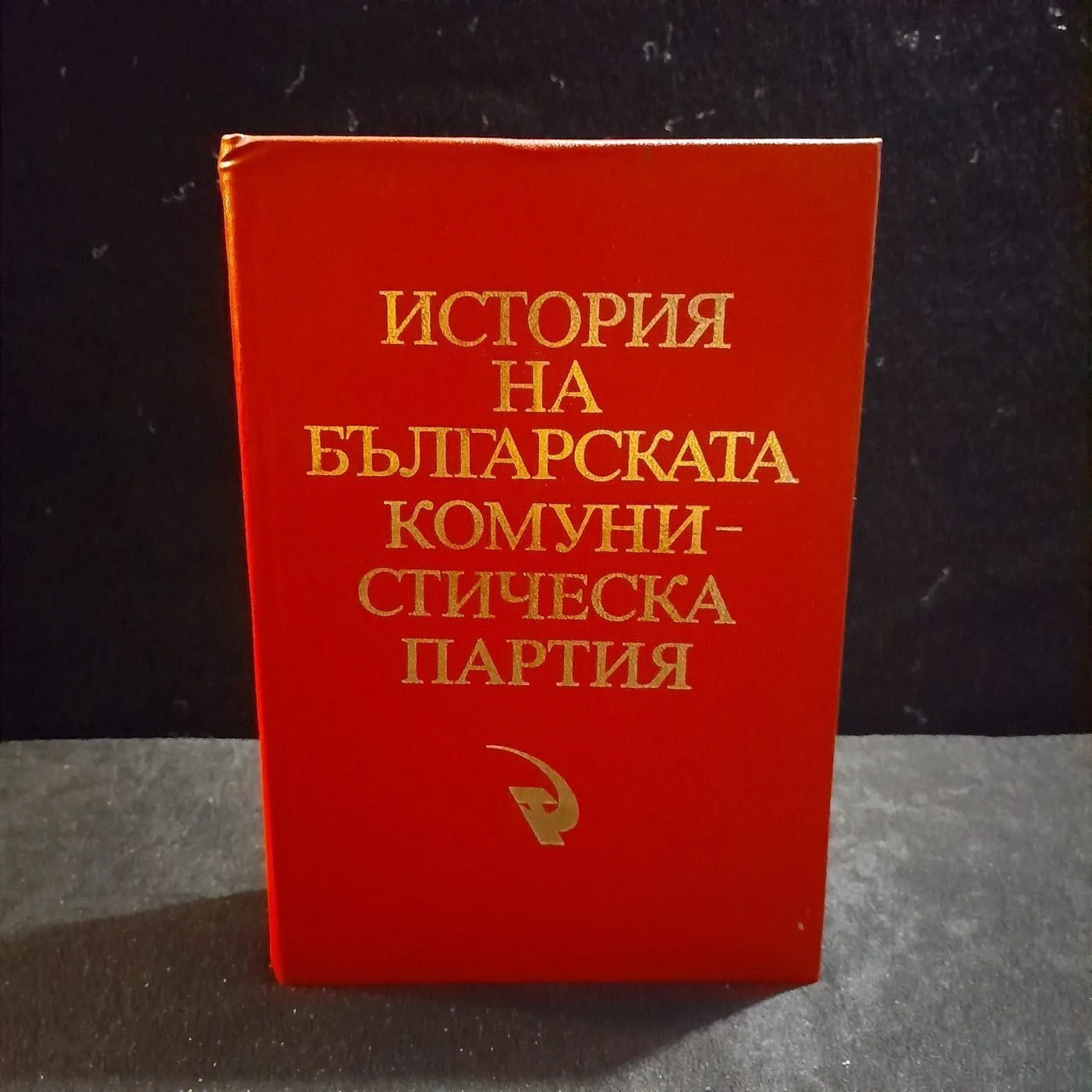 History of the Bulgarian Communist Party, 1984 edition — Collection Cold War Bulgaria
A programme and an official history: the first says where one is going, the second says where one comes from. In a country with a single publisher, a "History of the Party" is not a historian's book among others, it is the available version.
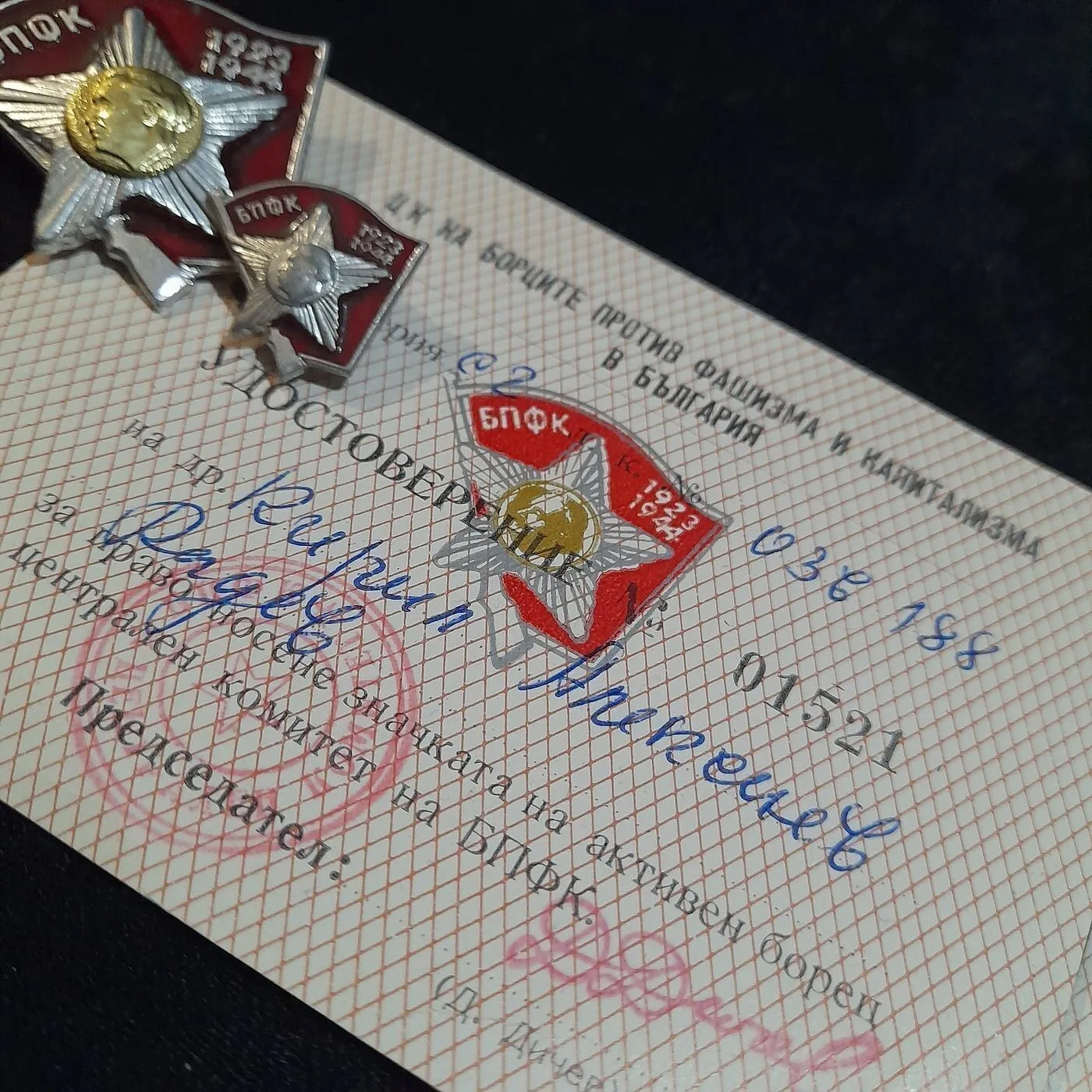 Badge of the Central Committee of the fighters against fascism and capitalism — Collection Cold War Bulgaria
This badge points to the regime's source of legitimacy: the anti-fascist resistance. It was on this that the authorities founded their right to govern, and it was this that was commemorated relentlessly for forty-five years.
The congress
There remains the great liturgy of the system.
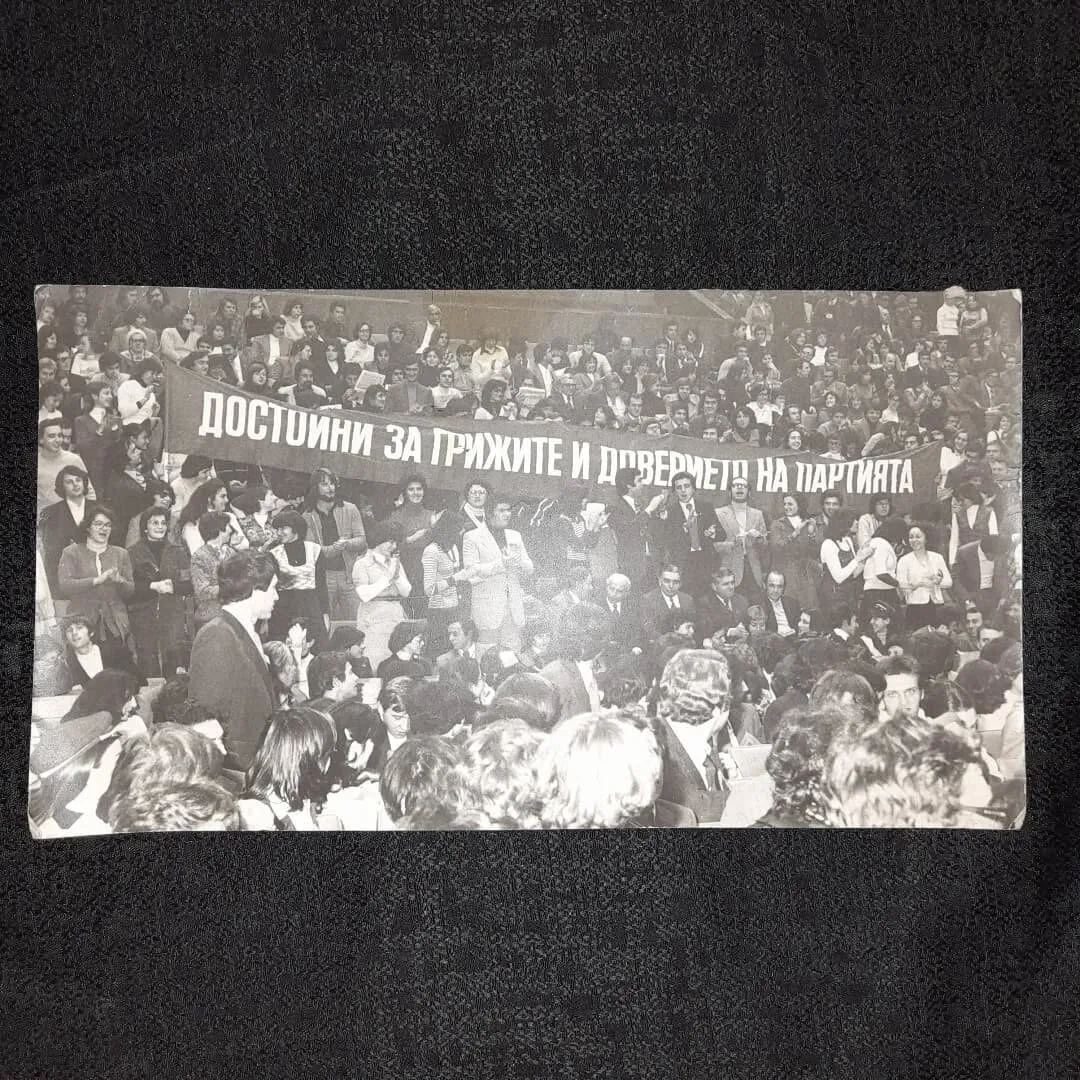 Photograph of what appears to be a congress of the Bulgarian Communist Party — Collection Cold War Bulgaria
A Party congress was not a place of deliberation in the sense we understand. Decisions were announced there more than they were taken. But the event structured the political calendar, served as a chronological marker, and produced objects of its own.
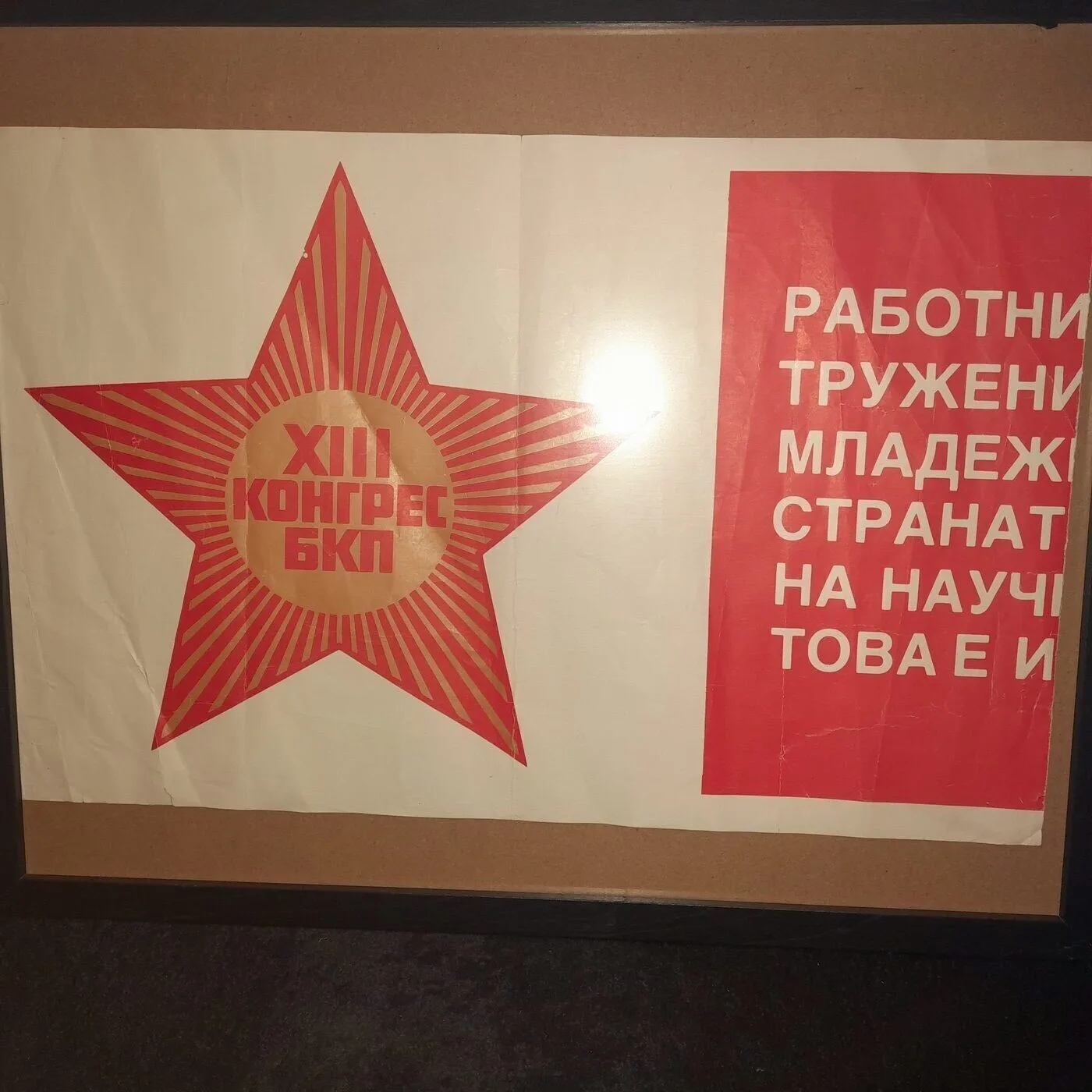 Poster of the thirteenth Congress of the Bulgarian Communist Party — Collection Cold War Bulgaria
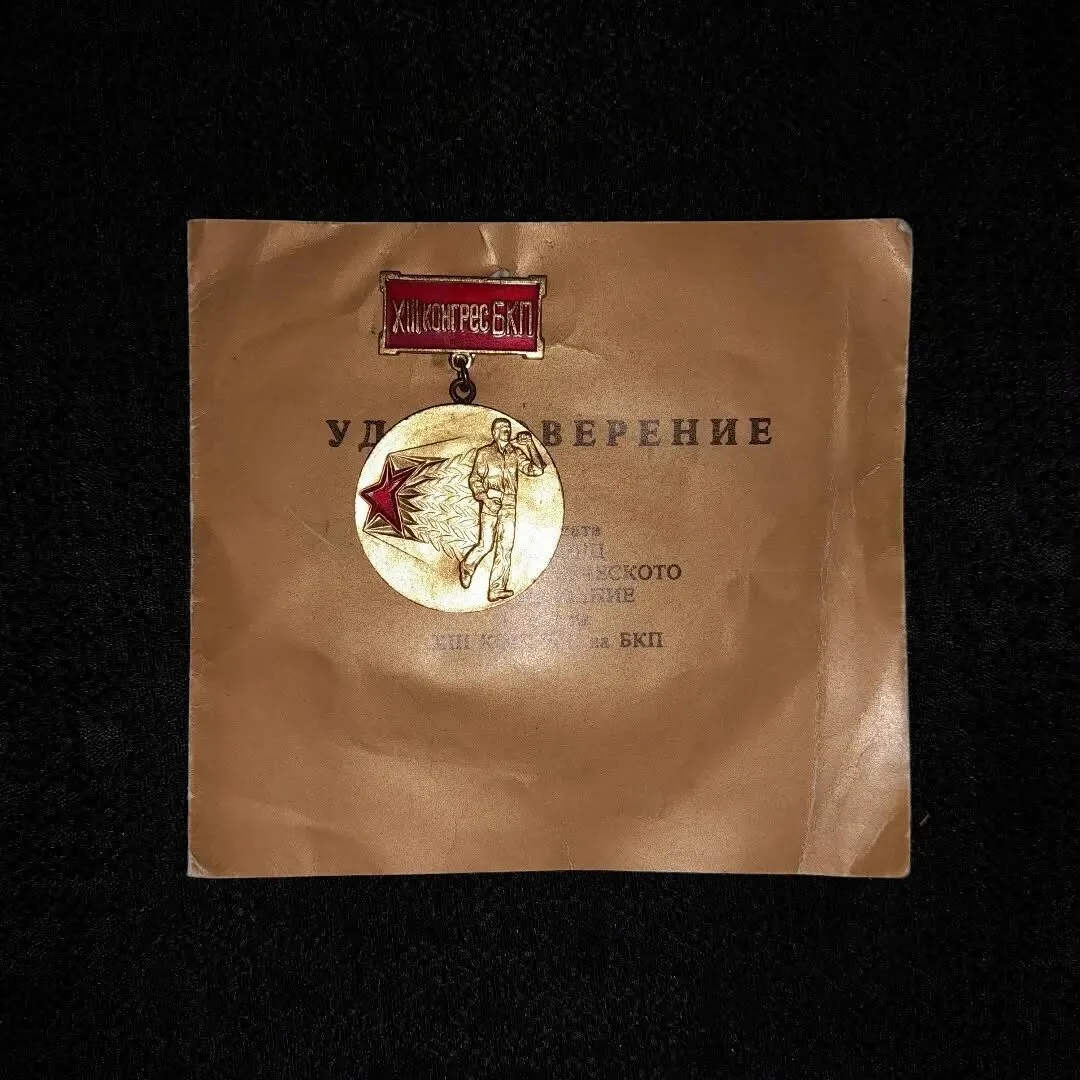 Medal of the thirteenth Congress of the Bulgarian Communist Party, with its booklet — Collection Cold War Bulgaria
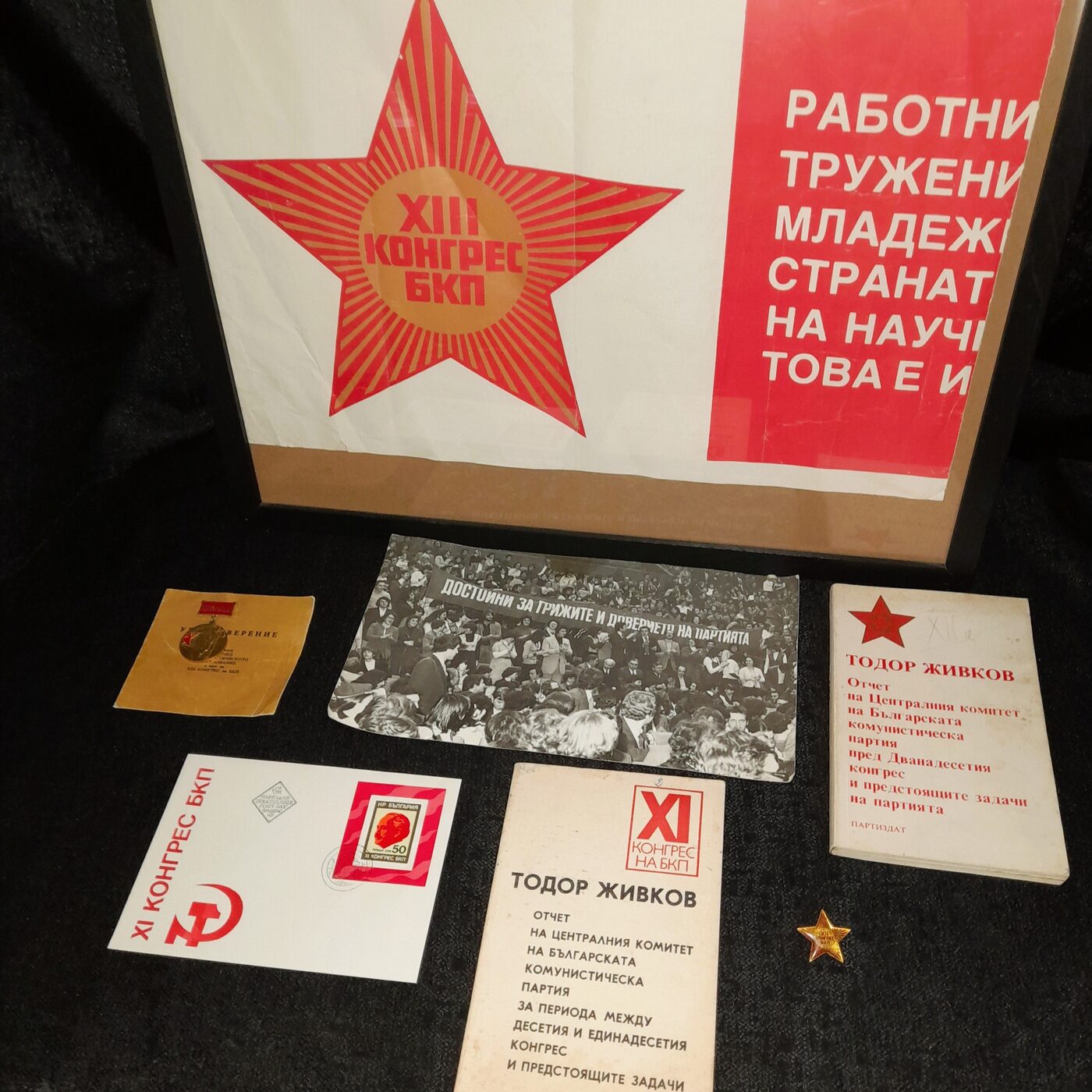 Objects of the thirteenth Congress: poster, medal in its award envelope, photograph of delegates, first-day cover and Central Committee reports — Collection Cold War Bulgaria
Around the poster unfolds the whole apparatus: the medal and its certificate, a philatelic first-day cover issued for the eleventh Congress, the Central Committee reports presented by Zhivkov before the eleventh and twelfth congresses, and a photograph of delegates applauding beneath a banner declaring them worthy of the Party's care and confidence.
A hall applauding beneath a banner reminding it that it is worthy: the scene sums up the relationship between the congress and those who sat in it.
A medal for a congress. The object says clearly what this institution had become: less an assembly than a commemoration of itself.
What 99.7% is worth
A score of 99.7% is not read as an electoral result. It is read as a declaration.
Nobody was supposed to believe that ninety-nine point seven per cent of Bulgarians sincerely approved a constitutional text. The figure did not serve to convince: it served to show that the question did not arise. An election with one candidate per seat is not a rigged ballot, it is a ballot whose result is not the point.
That is why the membership book is more revealing than the congress poster. The poster addresses everyone and asks nothing. The book addresses one person and commits them.
There remains, nonetheless, in this collection, one object that escapes the round figures. Among the copies of the Constitution is a "Draft Constitution" published by the National Committee of the Fatherland Front, whose cover bears a name written by hand: M. Markov. The same name appears on a second copy.
Someone therefore received this text before its adoption, marked it with his name, and kept it. We do not know what he thought of it. But in a ballot announced at 99.7%, a working copy bearing a handwritten signature is exactly what the percentage erases: one person, at one moment, with a text in their hands.
In December 1989, a few weeks after Zhivkov's fall, the Central Committee of the Bulgarian Communist Party proposed the repeal of the first article of the 1971 constitution. The guiding force of society and of the state was withdrawing itself from the text that enshrined it.
Facts verified against sources: the constitutional referendum of 16 May 1971, a result of 99.7% in favour on a turnout of 99.7%, six million one hundred and thirty-five thousand two hundred and eighteen votes for and fifteen thousand four hundred and seventy-seven against; the legislative elections of 27 June 1971, the Fatherland Front as the only authorised organisation, the validation of all lists by the Front, one candidate per constituency, a distribution of two hundred and sixty-eight communists, one hundred agrarians and thirty-two unaffiliated across four hundred seats, a turnout of 99.85% and one thousand four hundred and eighty-seven votes against; the entry into force of the Zhivkov Constitution on 18 May 1971 and its repeal on 12 July 1991; the use of the Prague Spring as a pretext for tightening control over social organisations and reasserting democratic centralism; the first article enshrining the leading role of the Communist Party as the guiding force of society and of the state; the creation of the State Council, Zhivkov's taking office on 7 July 1971, his leadership of the Party since 1954, his tenure as prime minister from 1962 to 1971, his departure in November 1989; the origin of the Fatherland Front in the seizure of power of 9 September 1944 and the presence of the Bulgarian Agrarian National Union as a partner; the proposed repeal of the first article by the Central Committee in December 1989. Resting on a reading of the objects photographed: the date and front-page content of the Otechestven Front issue of 18 May 1981, the identification of the membership card and the Fatherland Front badge, the reading of the handwritten name borne on the draft Constitutions, and the identification of the thirteenth Congress items. Resting on the collector's description of the objects: the dating of the constitutions, the programme and the history of the Party, the identification of the leaflet for the ninth congress of the Fatherland Front, and that of the congress photograph, which the collector himself flags as probable and not certain. The concrete effects of Party membership on careers, studies and travel are described from a general knowledge of Eastern bloc regimes, and not from a Bulgarian source consulted here.