From the street to the file
Thematic dossier · Period: 1944–1990 · Reading time: 8 min
The Bulgarian Ministry of the Interior, from the traffic officer to foreign intelligence.
Between 1944 and 1989, Bulgaria had no police. The word itself had left the official vocabulary, too closely bound to the pre-war regime. The day after the coup of 9 September 1944, the Council of Ministers created by its decree no. 1 the People's Militia (Народна милиция). The same text placed two departments under a single directorate: the People's Militia and State Security. From the first day, public order and the political police shared the same roof.
This dossier follows that house from the bottom up, from the crossroads to foreign intelligence. The objects presented follow the same ascent, but dwindling: abundant on the ground floor, rare on the upper storeys, absent at the top. This thinning out is not a failing of the collection. What is preserved are the objects that were shown: uniforms, badges, decorations. The apparatus's real work produced no objects. It produced paper.
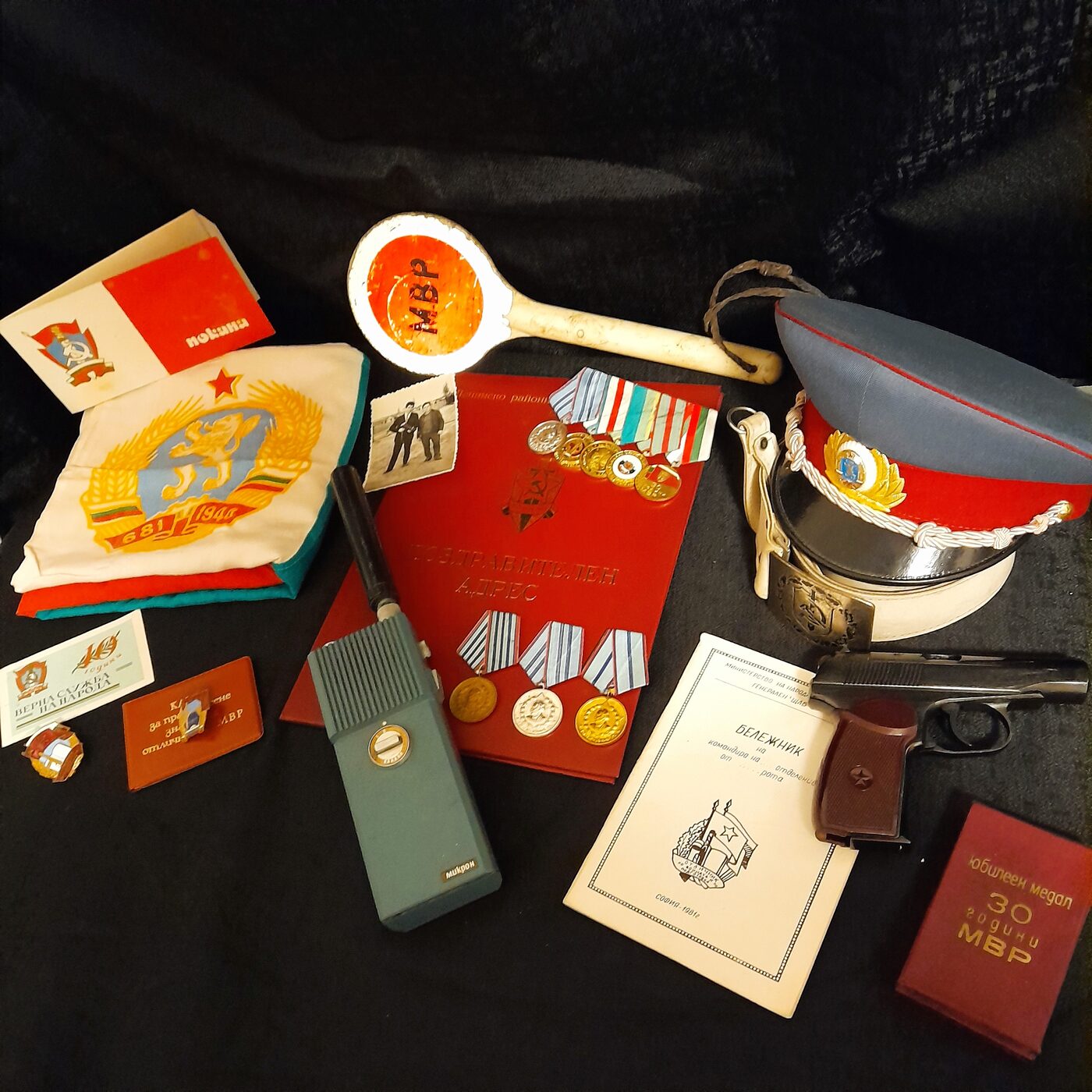 A set of Ministry of the Interior objects: People's Militia officer's cap, traffic paddle, parade belt, Makarov pistol, portable radio set and service decorations — Collection Cold War Bulgaria
A house of two storeys
The structure settled quickly. On 1 April 1947, a Main Directorate of the People's Militia formally united the Directorate of State Security and that of the Militia. In 1963, State Security left the Ministry of the Interior to be attached to the Council of Ministers and took the name Committee for State Security (Комитет за държавна сигурност). It then had seven directorates: foreign intelligence, counter-espionage, military counter-espionage, surveillance, protection of leaders, political police (the Sixth) and information work.
These two corps did not do the same job. The militiaman dealt with thefts, brawls, accidents. State Security dealt with opinions. But for the citizen, the distinction was rarely legible: the blue-grey uniform with its red band was the only thing visible of either.
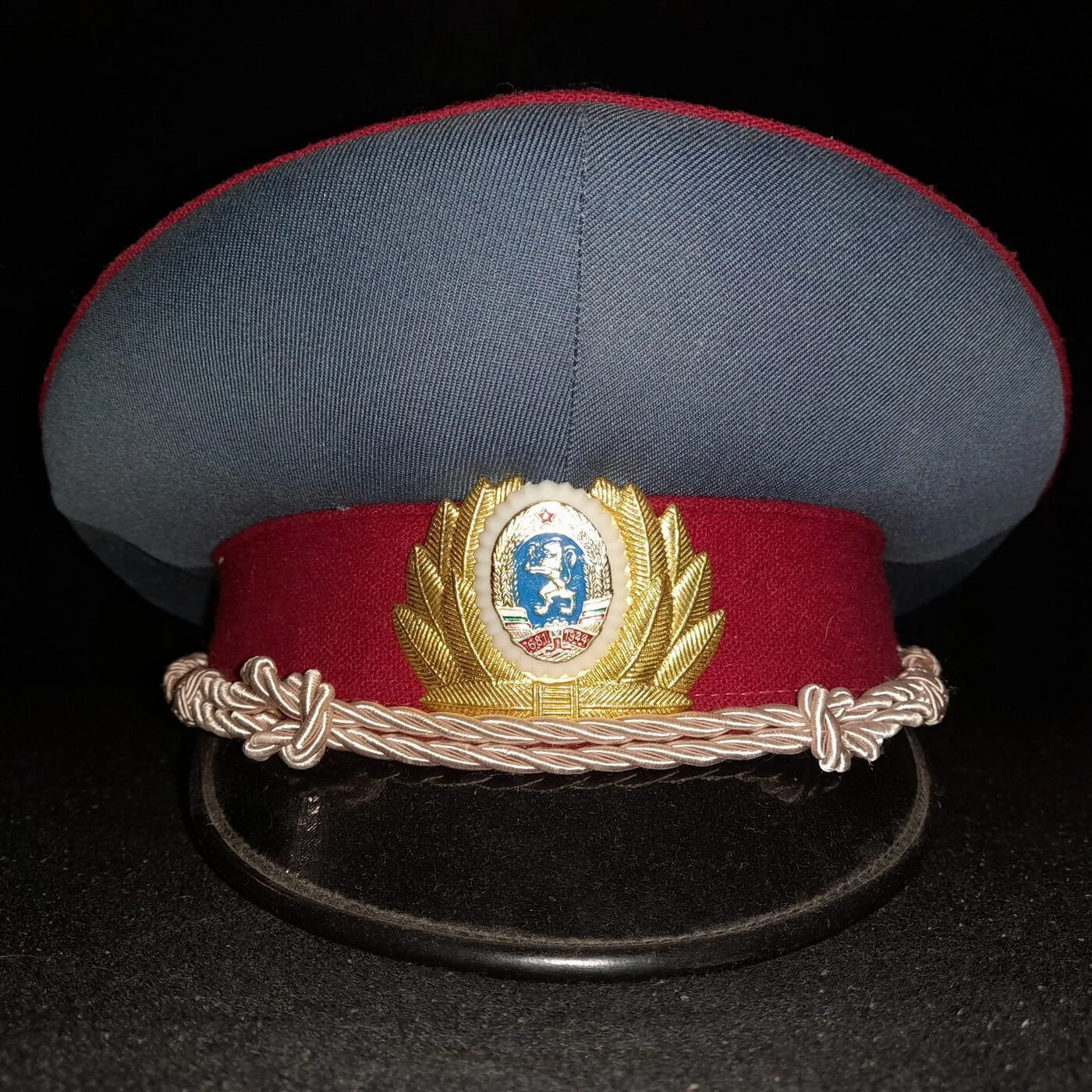 Cap of the Ministry of the Interior, People's Militia — Collection Cold War Bulgaria
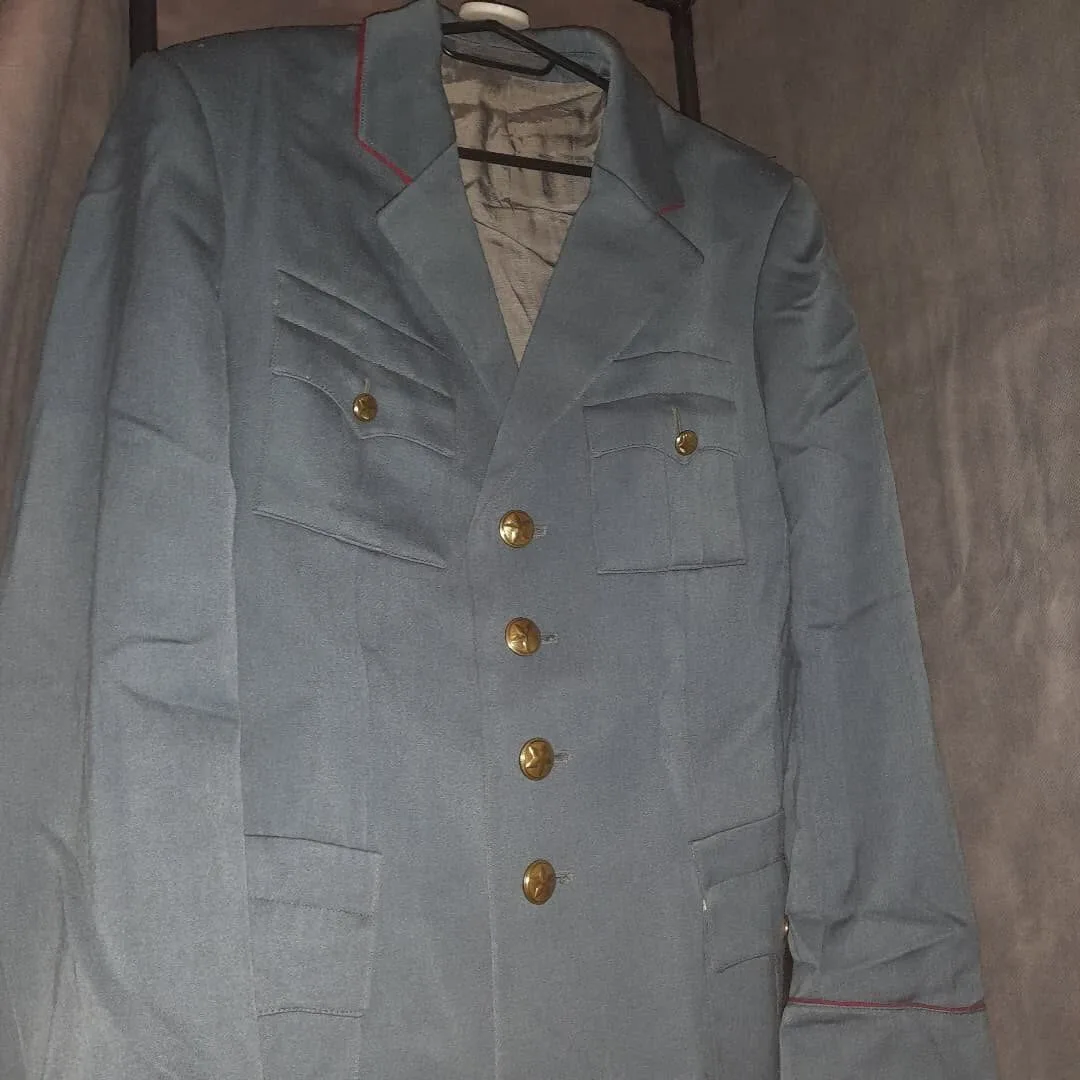 Uniforms of the Ministry of the Interior, People's Militia, never issued — Collection Cold War Bulgaria
Visible order
On the ground floor, the work was ordinary and it was seen. Motor transport control regulated traffic; the white paddle with its red disc, raised at arm's length, stopped vehicles. It is probably the ministry object Bulgarians had before their eyes most often.
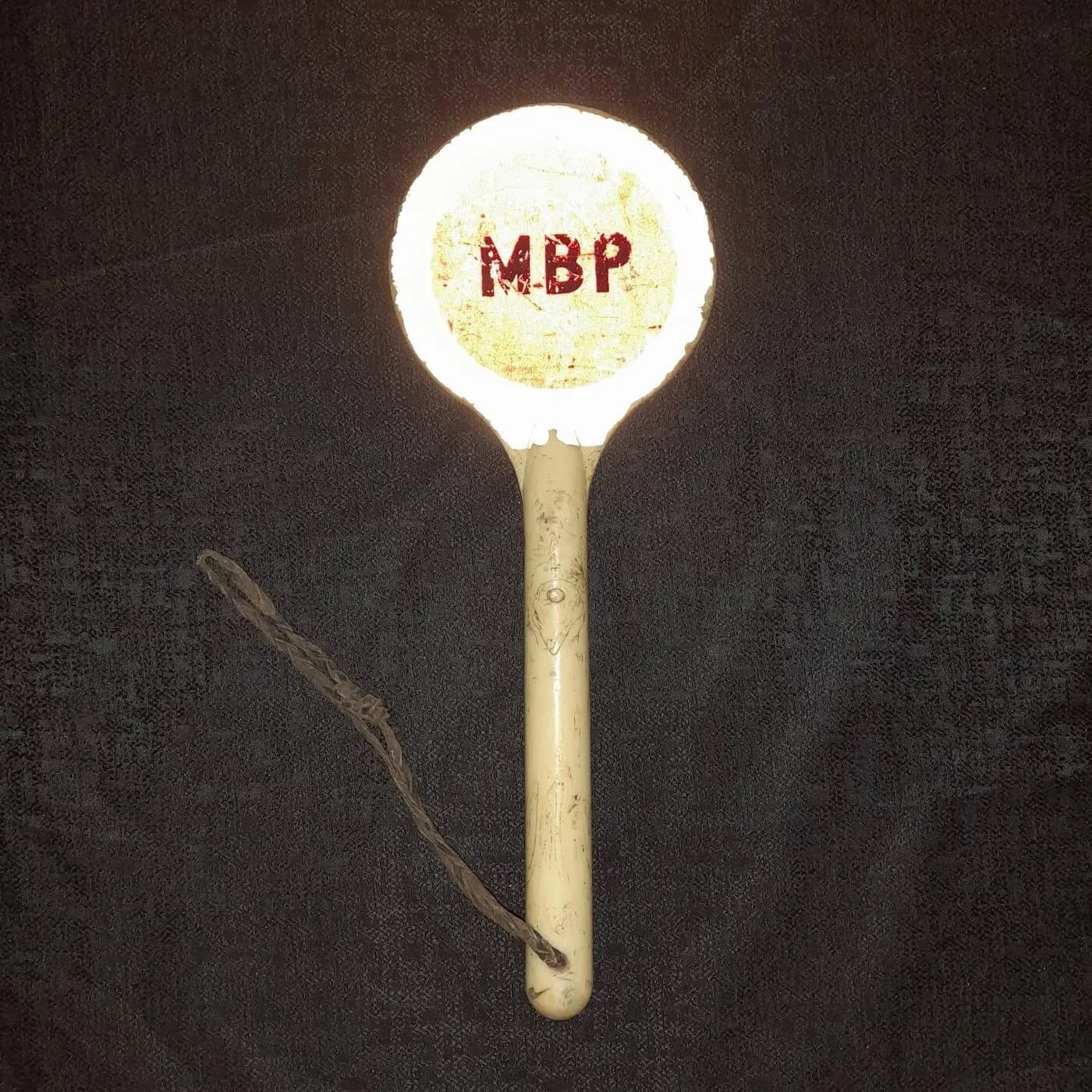 Stop paddle of the People's Militia for road traffic — Collection Cold War Bulgaria
Driving required a document issued by the ministry. The licence was not an instrument of surveillance: it was ordinary administration. But it entered an ordinary citizen into the Interior's records, and it is precisely this mixture, the banal and the political managed by the same house, that makes the system distinctive.
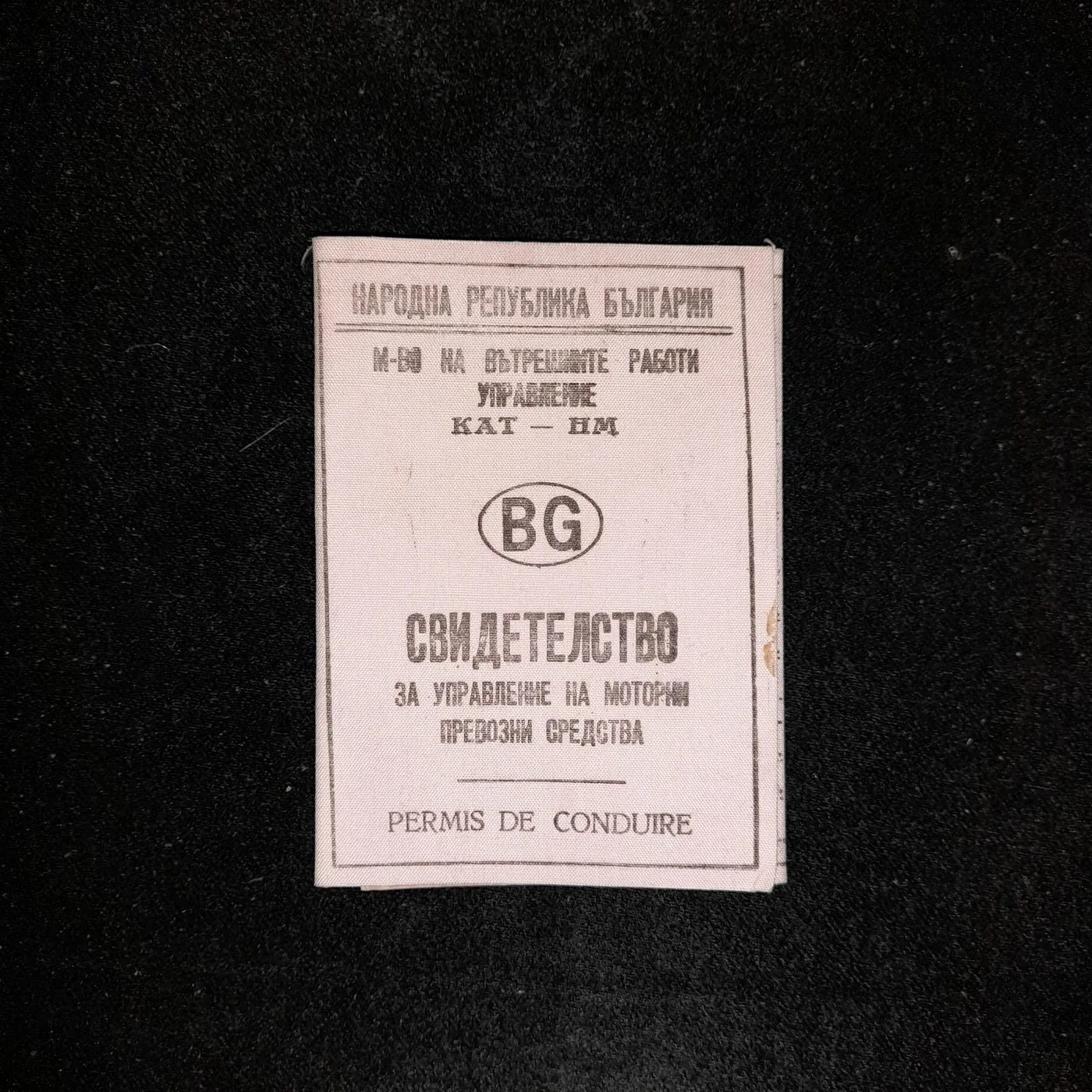 Driving licence issued in 1974, valid until 1976 — Collection Cold War Bulgaria
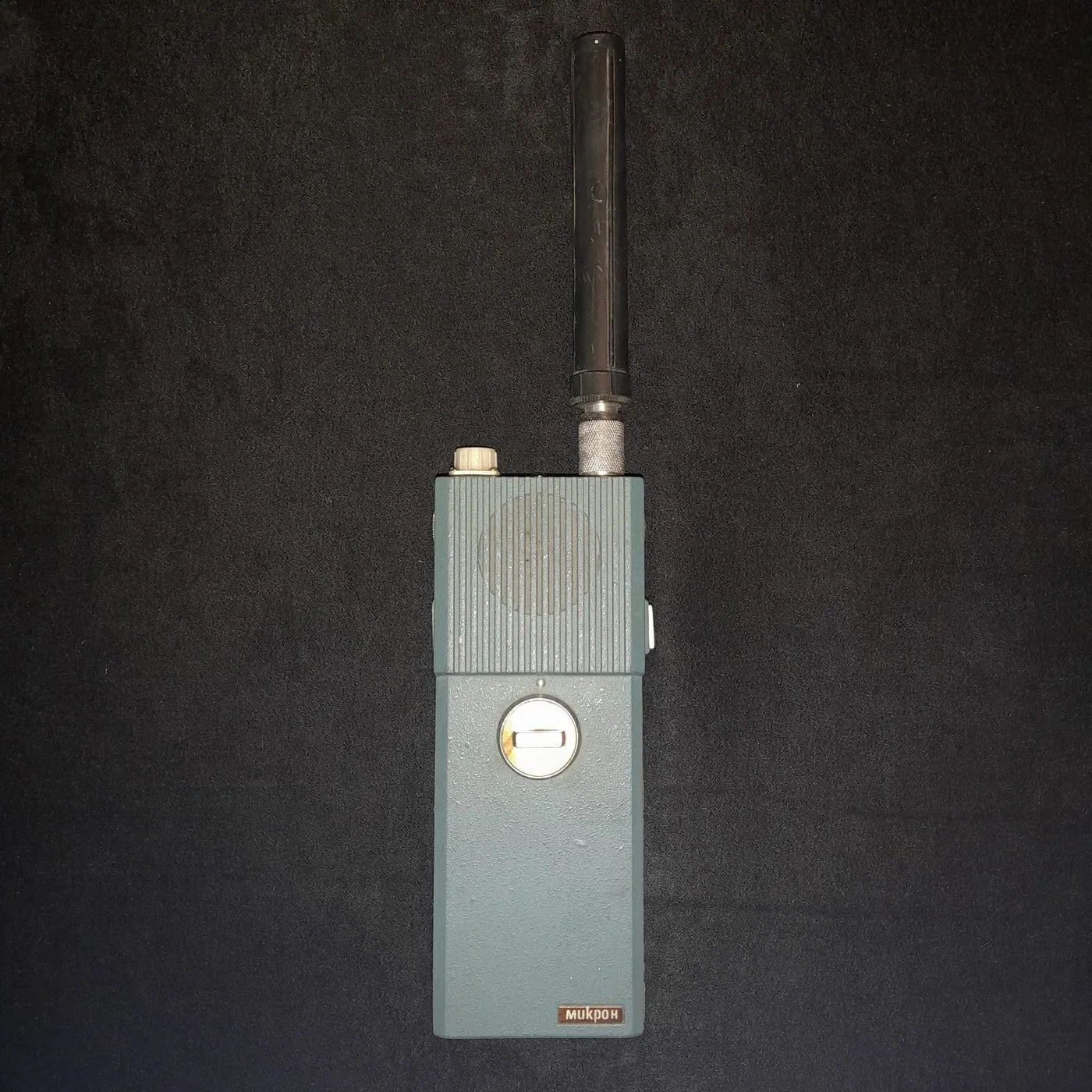 Electron RSD 67 portable radio set used by the People's Militia — Collection Cold War Bulgaria
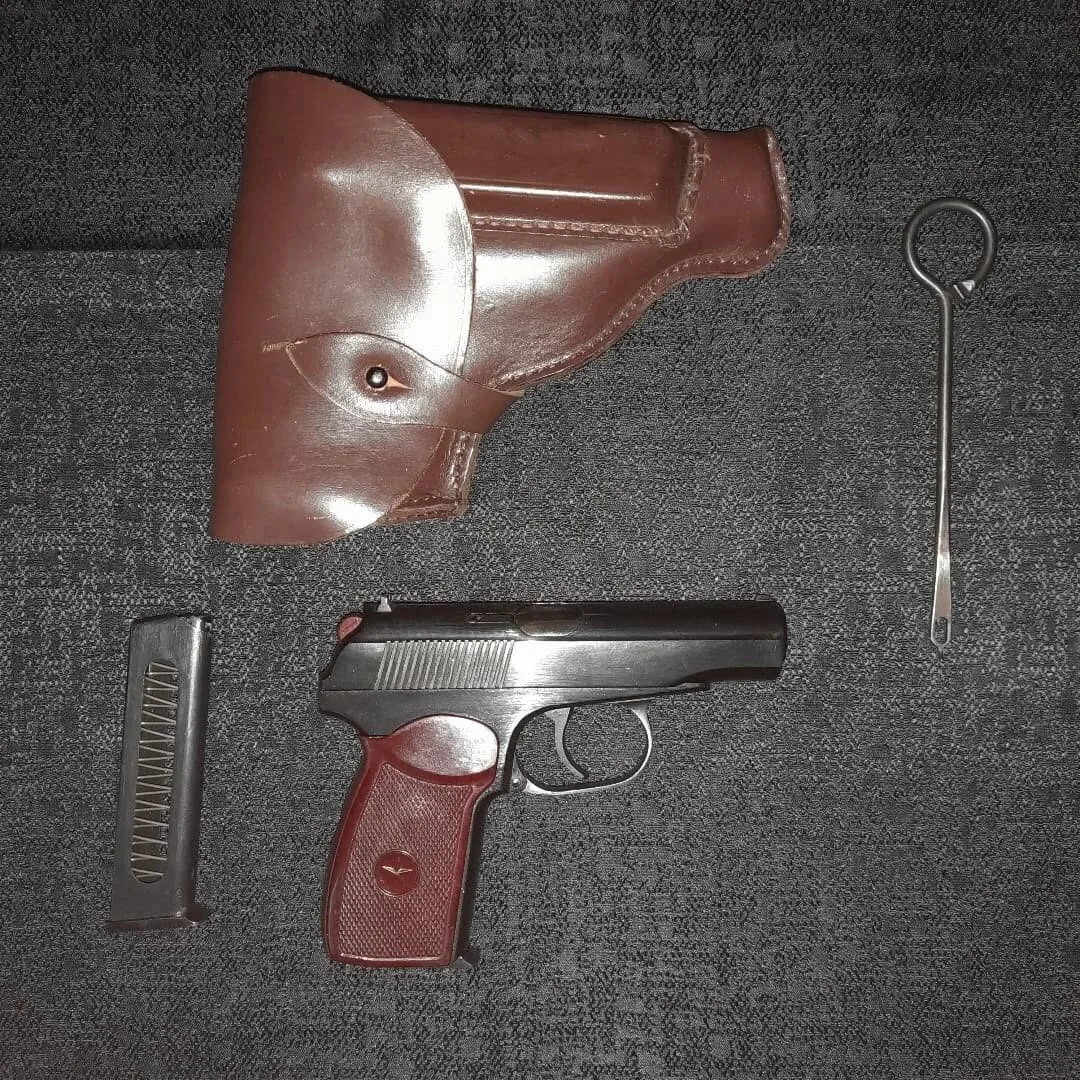 Makarov 9x18 mm pistol of Bulgarian manufacture, deactivated — Collection Cold War Bulgaria
The armed neighbour
The ministry did not work alone, and it is here that the matter becomes darker than it appears.
After the Budapest uprising in 1956, the leadership of the Bulgarian Communist Party created Armed Workers' Groups and Detachments, renamed in 1960 Voluntary Detachments of the Working People (Доброволни отряди на трудещите се), the ДОТ. Their declared mission was to crush any attempt at counter-revolution in the bud. Their members, chosen from among the most loyal, received automatic weapons and uniforms, trained, and paraded publicly, demonstrations whose deterrent effect was acknowledged. The organisation operated until 1990.
In the early 1960s, a Politburo decision widened the participation of what was called "socialist society" in the maintenance of order, on the model of the Soviet people's brigades instituted in March 1959. The detachments were recruited by neighbourhood and by village: Party members, Komsomol members, retired servicemen, sportsmen.
The meaning of this must be taken in. Neighbourhood surveillance was entrusted not to discreet professionals, but to identifiable, armed neighbours, who went home in the evening to the building they had patrolled that afternoon. The merit medal they received is a modest object. It rewards the most effective thing a regime can obtain: that people watch themselves, and take pride in it.
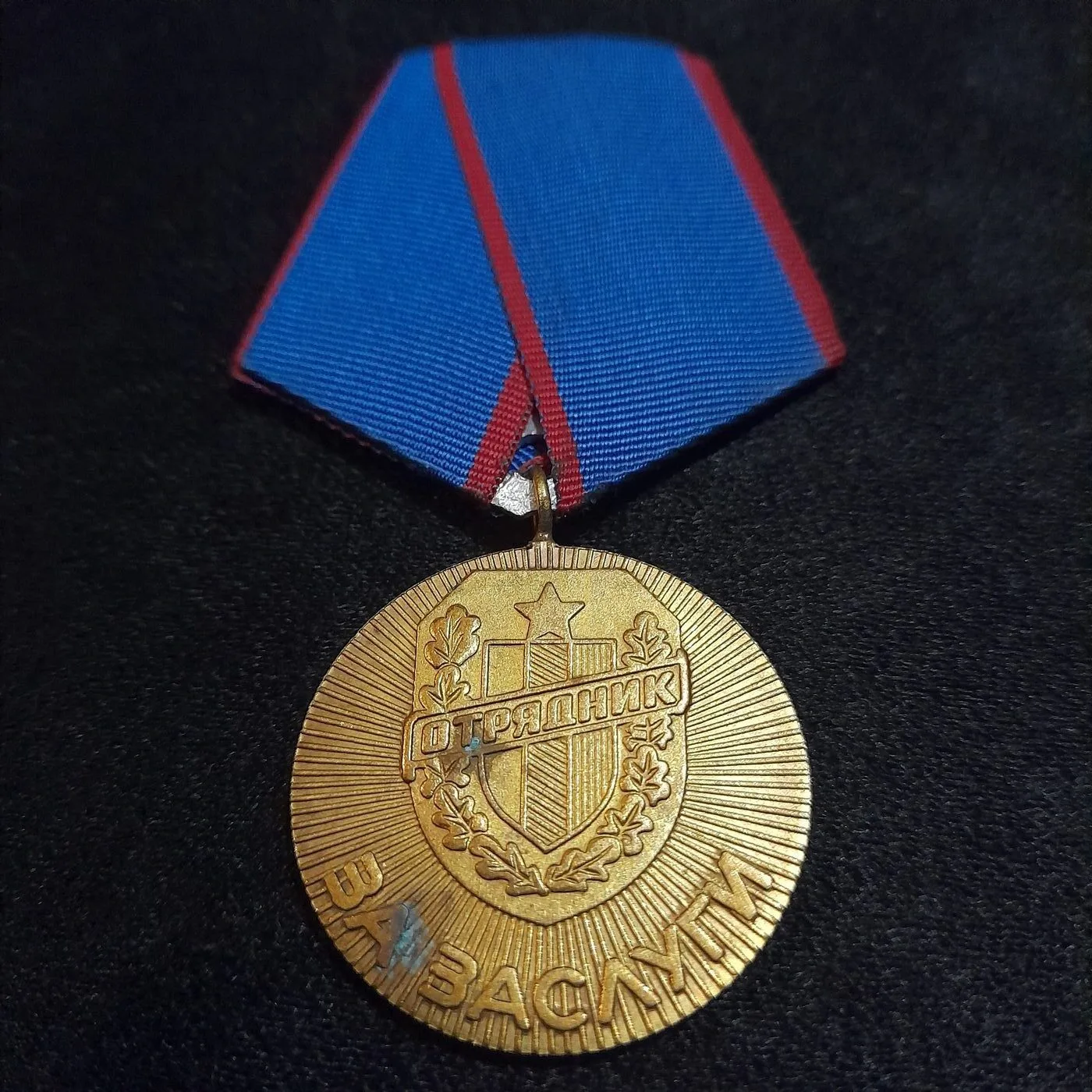 Merit medal of the Voluntary Detachments of the Working People — Collection Cold War Bulgaria
The citizen in separate parts
One storey up, control leaves the officer's body and passes into the document. Identity card, registration of residence, work book, service book, membership card: every stage of life produced a document, and every document left a trace consultable elsewhere.
Gathered in the name of a single person, the ensemble is eloquent. An entire life (school, military service, employment, organisations) can be reconstructed from a few booklets, without any investigation having been necessary. The individual was already written.
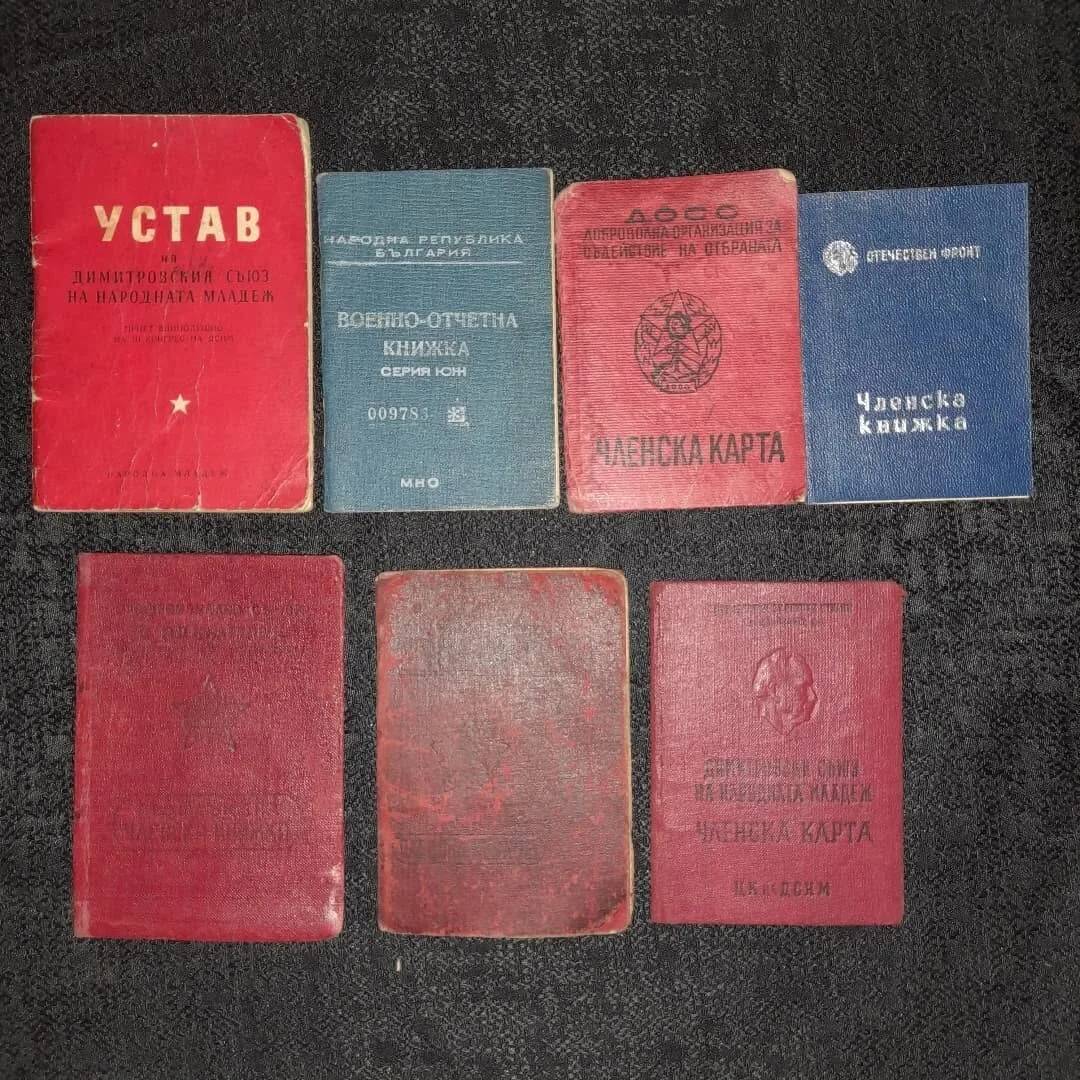 A set of six booklets belonging to one person — Collection Cold War Bulgaria
Control extended to celebrations. Attending the official ceremonies of 9 September required a personal accreditation: the national holiday itself was a space of regulated access.
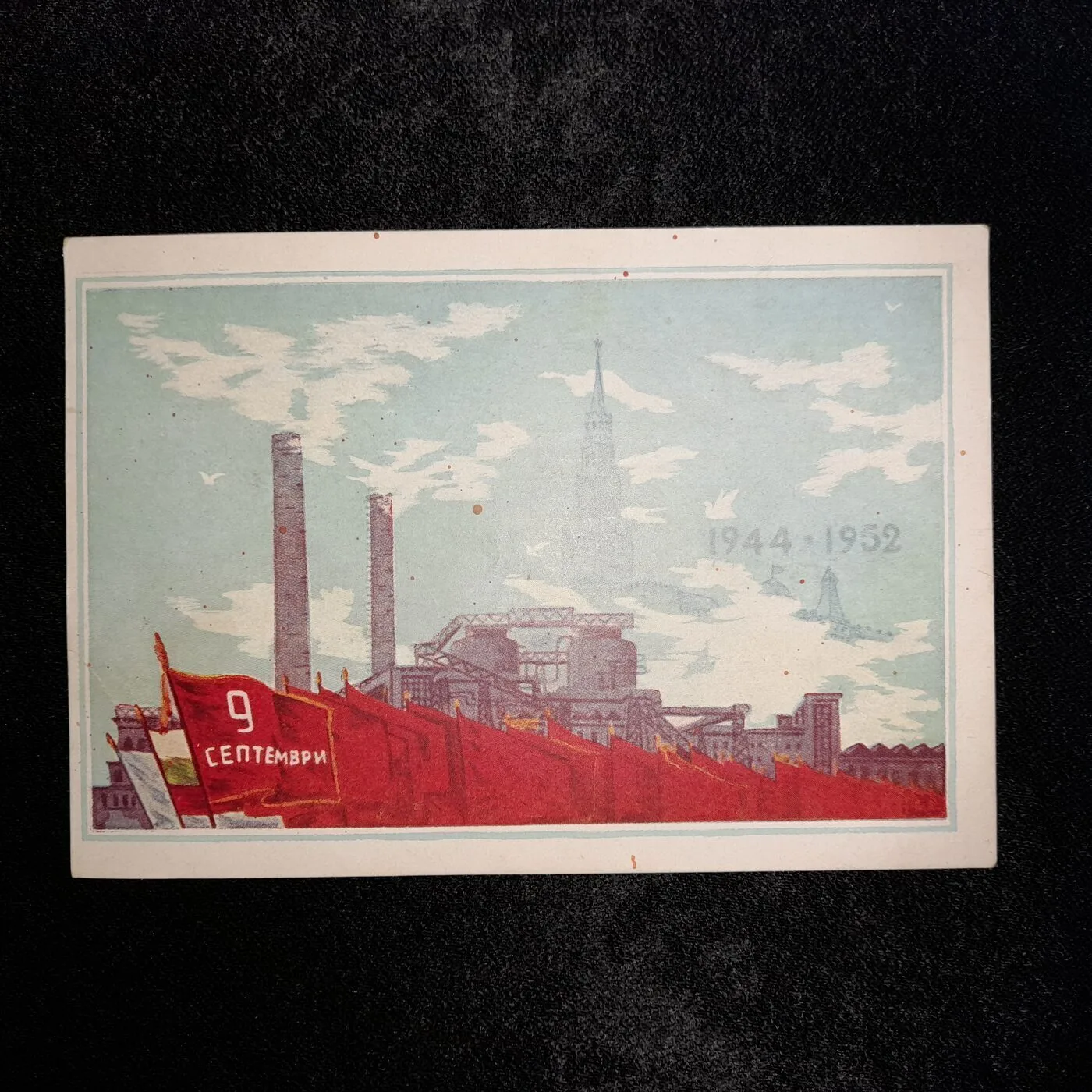 Personal pass for the celebrations of 9 September — Collection Cold War Bulgaria
A house that decorates itself
The ministry was also an employer, a corps, a milieu. One made a career there, and that career was marked by objects.
Medals for irreproachable service at ten, fifteen and twenty years. "Excellent of the Ministry" badges with their award booklets. Commemorative plates, bound addresses of congratulation, jubilee medals for the institution's twenty-fifth and thirtieth years. All this apparatus of recognition was intended for no one but those within the fold.
That is why a private collection can today gather so many of them. These objects survived because they were made to be kept, shown, handed down in a family. What we display here is the ministry's official self-portrait, the version of itself it wished to leave behind.
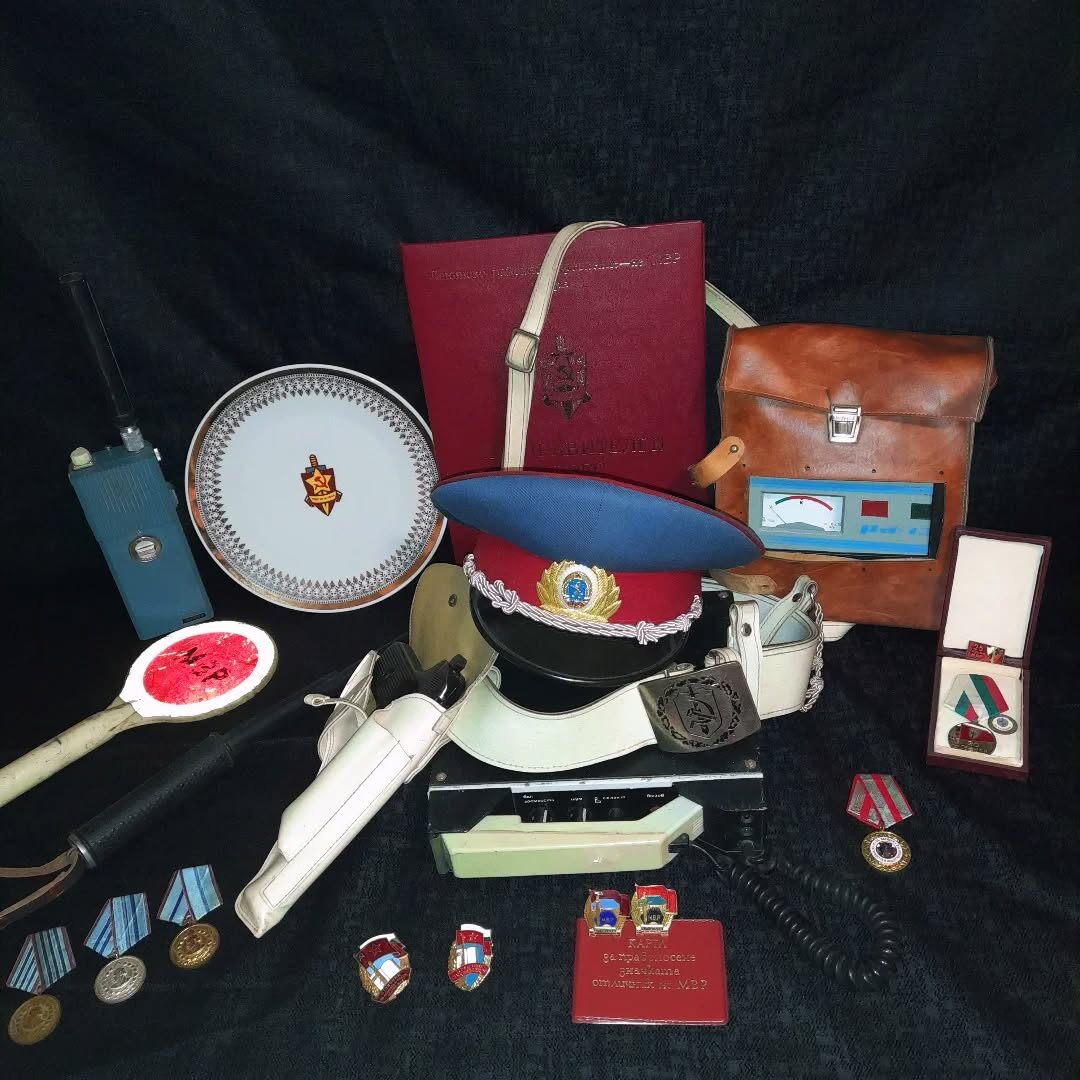 Decorations and commemorative objects of the Ministry of the Interior: medals for irreproachable service, "Excellent" badges, commemorative plate and address of congratulation — Collection Cold War Bulgaria
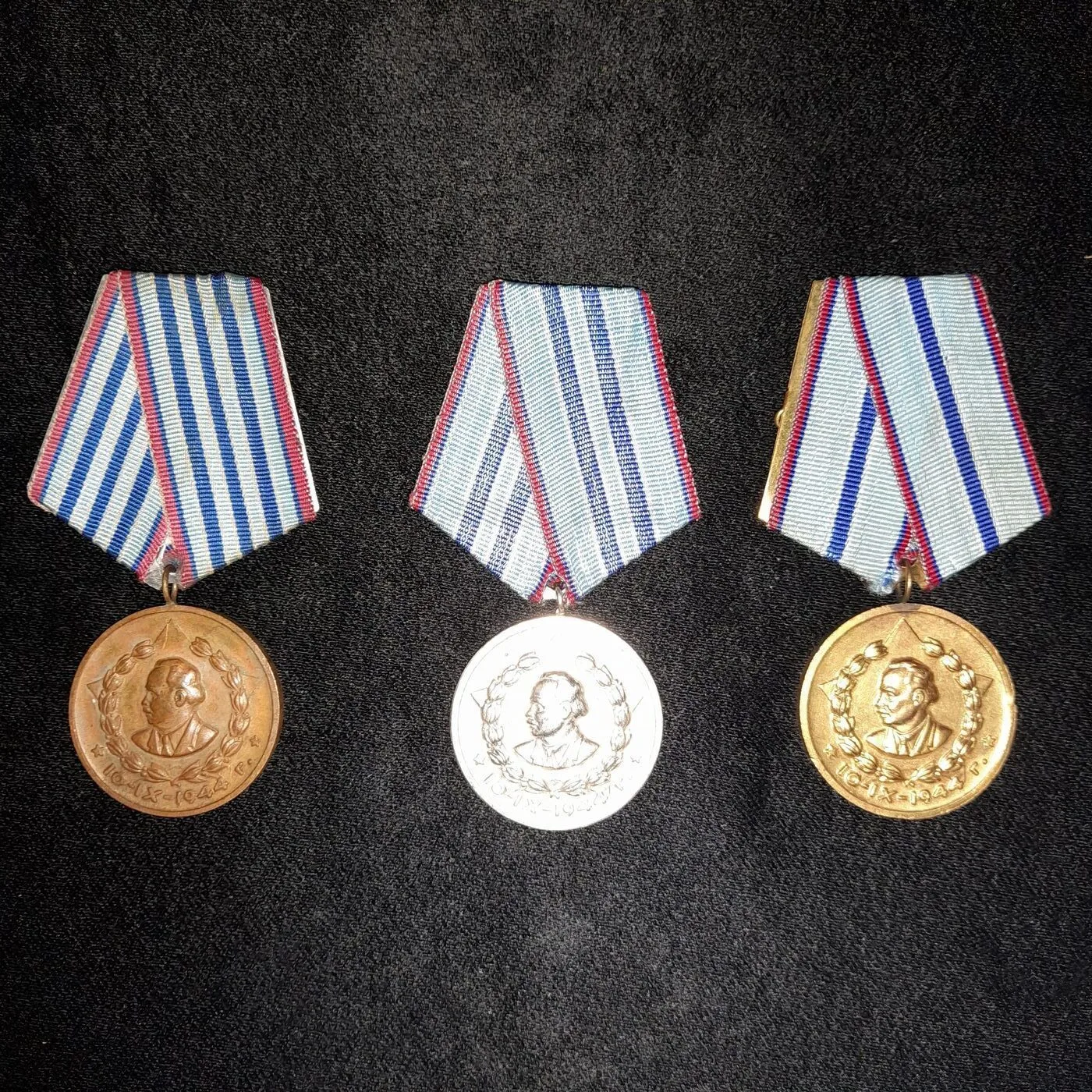 Medals for irreproachable service in the Ministry of the Interior, ten, fifteen and twenty years — Collection Cold War Bulgaria
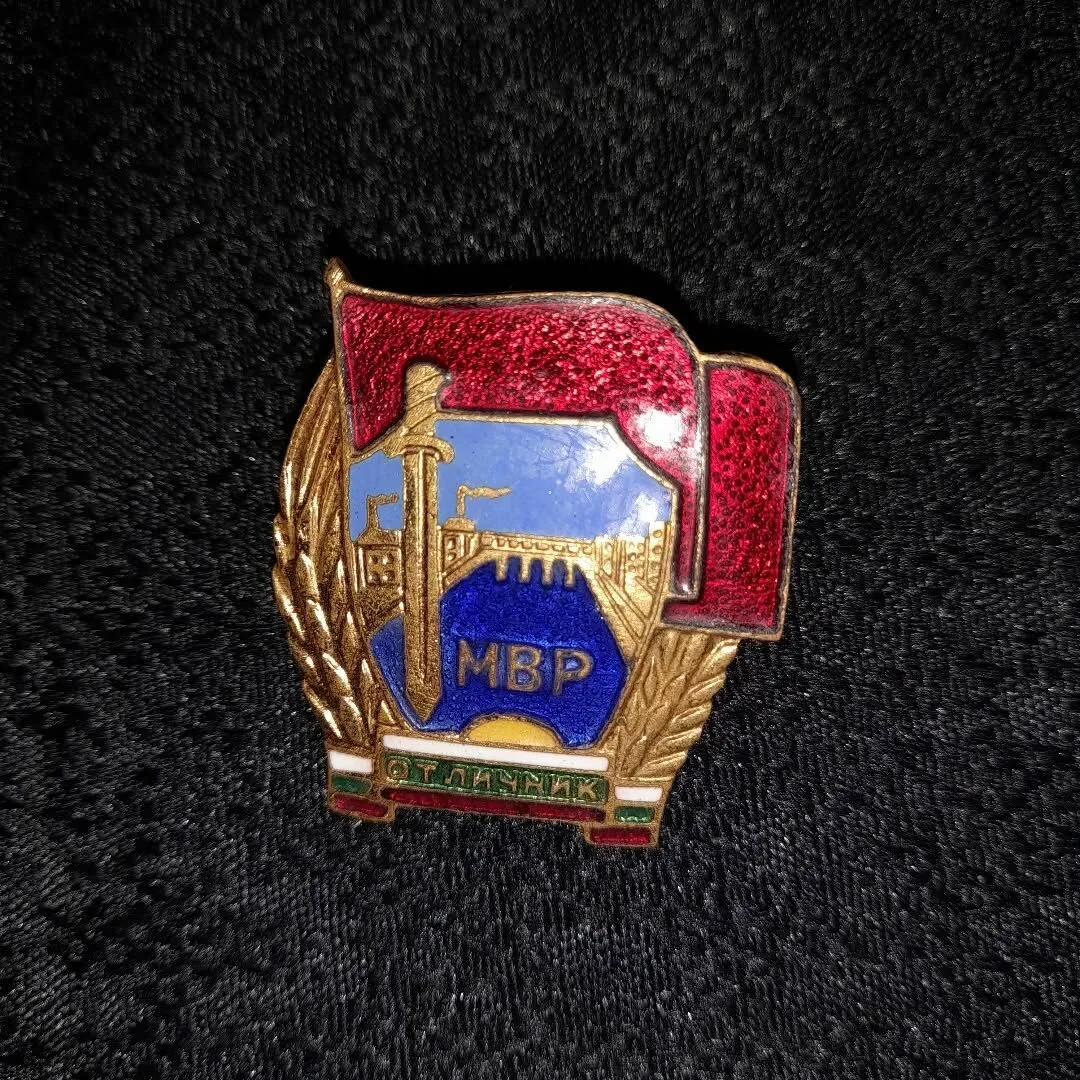 "Excellent of the Ministry of the Interior" badge, first model — Collection Cold War Bulgaria
The instruments of the gaze
Of State Security's work, almost nothing survives. One object is the exception, and it suffices.
The Zenit FS-12 Photosniper combined a reflex body with a 300 mm telephoto lens mounted on a shoulder stock, with a trigger release in the grip. The device is no photographer's curiosity: it was designed from the outset for military use. The first system, the FS-1, was developed from 1937 in Leningrad by the State Optical Institute, followed by the FS-2 intended for service in the Soviet forces: the point was to allow an operator to take reconnaissance shots from a position, without moving. Only much later were versions of the Photosniper sold freely, to amateurs and to wildlife photographers.
Form follows function. Stock, grip, trigger, focusing by a wheel beneath the barrel: the whole object is built on the gestures of shooting, because the problem to be solved was the same: to hold a long tube steady, to aim far, to release without moving.
The packaging says the rest. A metal case with moulded compartments, a second 58 mm lens in its recess, screwdrivers held by clips, a leather strap: this is not the packaging of a camera one buys, it is that of a piece of equipment one is issued, returns, and answers for.
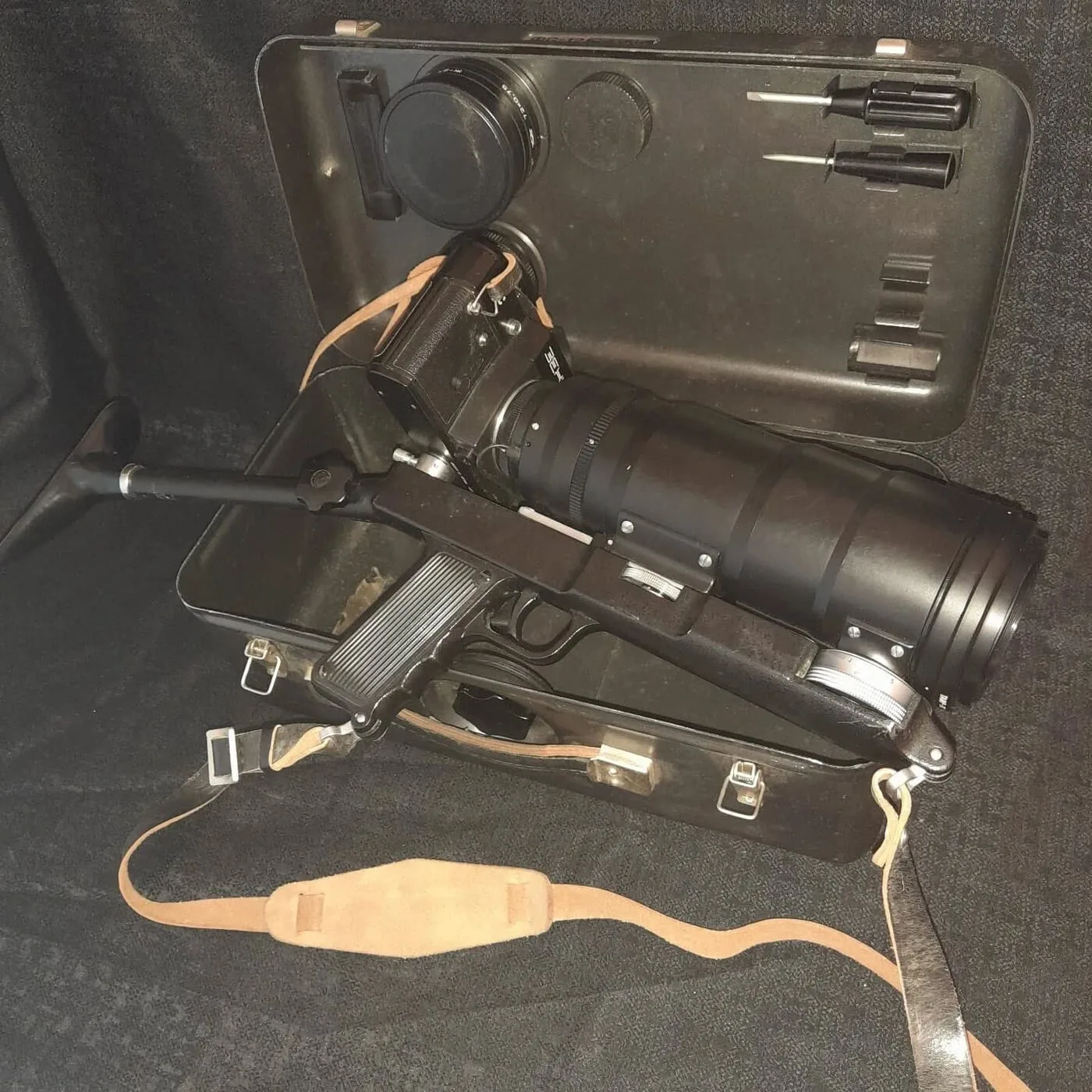 The Zenit FS-12 assembled on its open metal case, with 300 mm telephoto lens, trigger grip, telescopic stock, leather strap, second lens and screwdrivers stowed in their compartments — Collection Cold War Bulgaria
And here is the same equipment in use. Two operators of the Ministry of the Interior, very probably from State Security, in training. It is the only image in this dossier where the device is seen at work, and it shows men learning how to look.
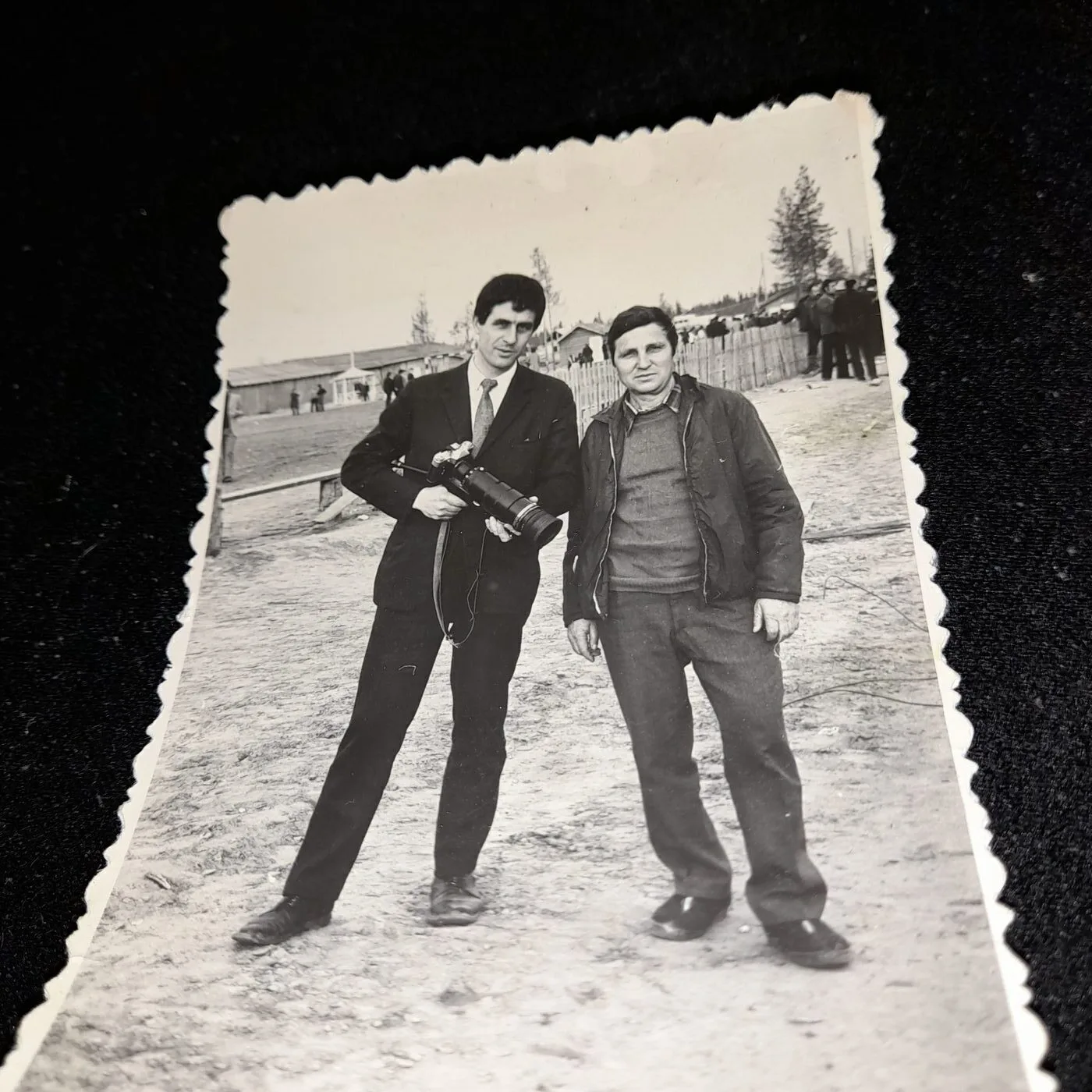 Two operators of the Ministry of the Interior, very probably from State Security, training with a Zenit FS-12 Photosniper — Collection Cold War Bulgaria
What cannot be collected
At the top, nothing left to show.
In 1964, State Security formed a specialised unit, Service 7, dedicated to operations against Bulgarian émigrés: assassination, abduction, disinformation. Its actions targeted dissidents in Italy, the United Kingdom, Denmark, West Germany, Turkey, France, Ethiopia, Sweden and Switzerland. The documents describing its activity were declassified in 2010. The best-known case remains the death of the writer Georgi Markov in London in 1978.
Of this storey, the display case is empty. No uniform, no badge, no exhibitable medal. It is the logical conclusion of the ascent: the more effective the apparatus became, the fewer material traces it left.
For its true artefact was not an object. It was a file. And unlike the caps and the medals, that file did not become a museum piece: it remained an active document. The Bulgarian Parliament passed in December 2006 a law on access to the State Security archives, and the commission charged with applying it has been at work since 2007. It has made public thousands of names of people who belonged to the service or collaborated with it: political figures, ambassadors, journalists, trade union leaders, senior religious officials.
That is perhaps what these objects say best. One can put a uniform in a display case, a traffic paddle, a service medal. The museum stops exactly where the archive begins, and the archive has not finished speaking.
Facts verified against sources: decree no. 1 of 10 September 1944 creating the People's Militia and its two-department directorate; the reorganisation of 1 April 1947; the transformation of 1963 into the Committee for State Security and its seven directorates; the creation of the armed workers' groups in 1956, their transformation into Voluntary Detachments of the Working People in 1960, their arming and their dissolution in 1990; the creation of Service 7 in 1964 and the declassification of its documents in 2010; the law of December 2006 and the dossier commission active since 2007; the original military design of the Photosniper, the FS-1 developed from 1937 by the State Optical Institute in Leningrad and then the FS-2 intended for the Soviet forces, later models having been released to the public. Resting on a reading of the objects and not on a documentary source: the attribution of photograph cwb-139 to State Security, which remains probable without being established, and the exact use of the Zenit FS-12 in the Bulgarian services. The number of State Security informers circulates under widely divergent estimates; no figure is advanced here.