The medal and the book
Thematic dossier · Period: 1944–1989 · Reading time: 11 min
A country that decorated its workers, and where the right to strike did not exist.
A regime that claims to speak for the working class must reward labour. Communist Bulgaria did so with remarkable abundance: national orders in three classes, red banners, communist labour badges, factory anniversary medals, distinctions for irreproachable service. The collection is full of them.
But a regime that claims to speak for the working class must also organise labour. And there the objects tell another story: a board of instructions, a book that follows its bearer from job to job, a trade union calendar. This dossier holds the two together: the medal and the book, what was given and what was demanded.
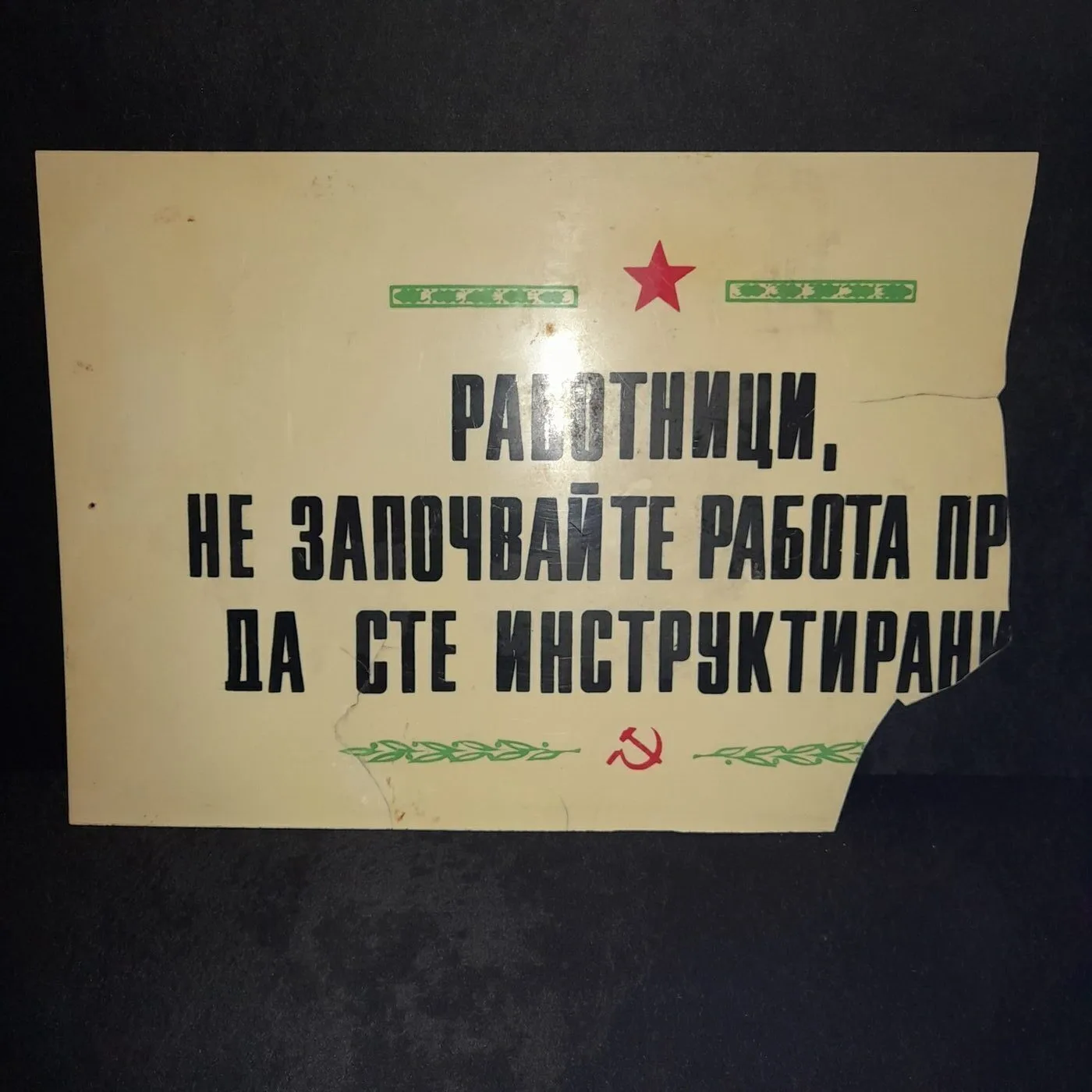 Plastic board bearing work instructions for the use of workers — Collection Cold War Bulgaria
One union, and no strike
We must begin with the framework, because it determines all the rest.
There existed only one trade union organisation, the Central Council of Bulgarian Trade Unions. It was not a counterweight. Researchers who have studied the period describe it as a transmission belt charged with passing on government policy, coupled with a role as provider of social benefits and declared protector of employees' interests. The ruling party maintained a strict monopoly and tolerated no workers' organisation other than those it sponsored.
As for the right to strike, it was subject to no legal regulation in Bulgaria before 1990. It was recognised for the first time only in that year, by the law on the settlement of collective labour disputes, adopted under trade union pressure. The independent trade union Podkrepa (Подкрепа), formed in February 1989 by a group of dissident intellectuals, had constituted itself outside that framework, and more or less at the end of it.
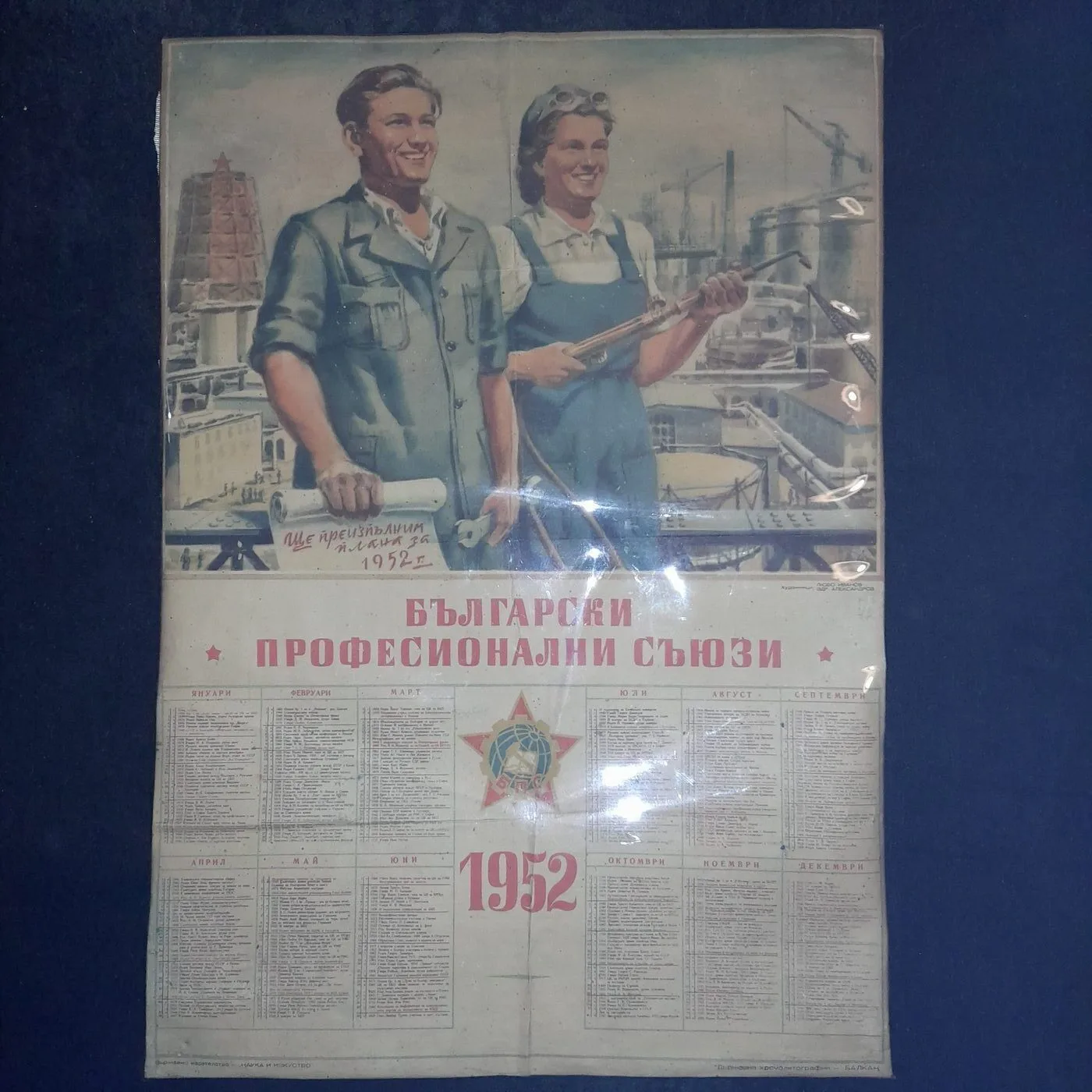 Calendar for the year 1952 of the Bulgarian professional unions — Collection Cold War Bulgaria
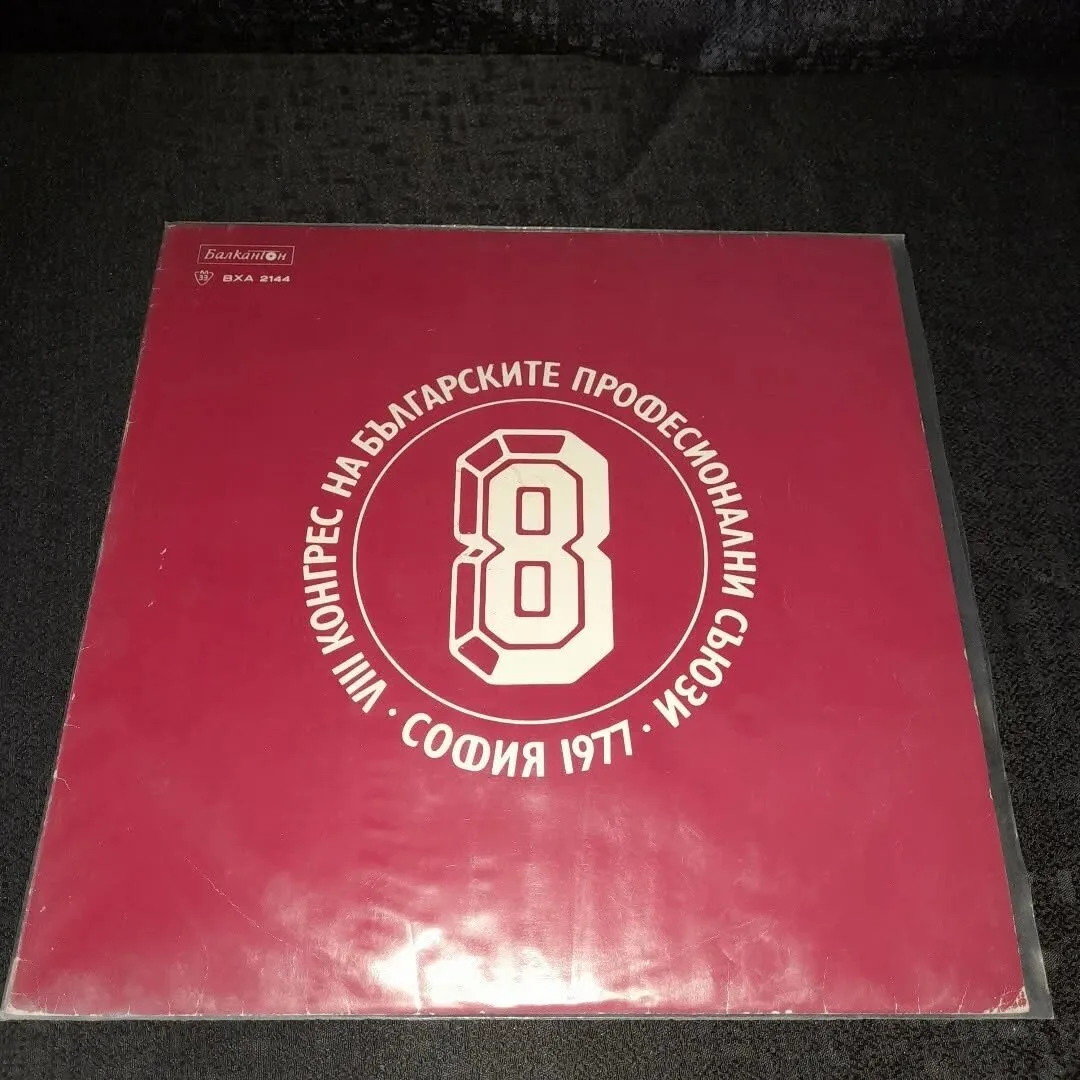 Vinyl recording of the eighth Congress of Bulgarian Trade Unions — Collection Cold War Bulgaria
The rate of unionisation under the regime approached one hundred per cent. The figure seems impressive until one remembers that there was nothing else to join.
The book that follows you
The central object of ordinary work is neither a medal nor a union card. It is a booklet.
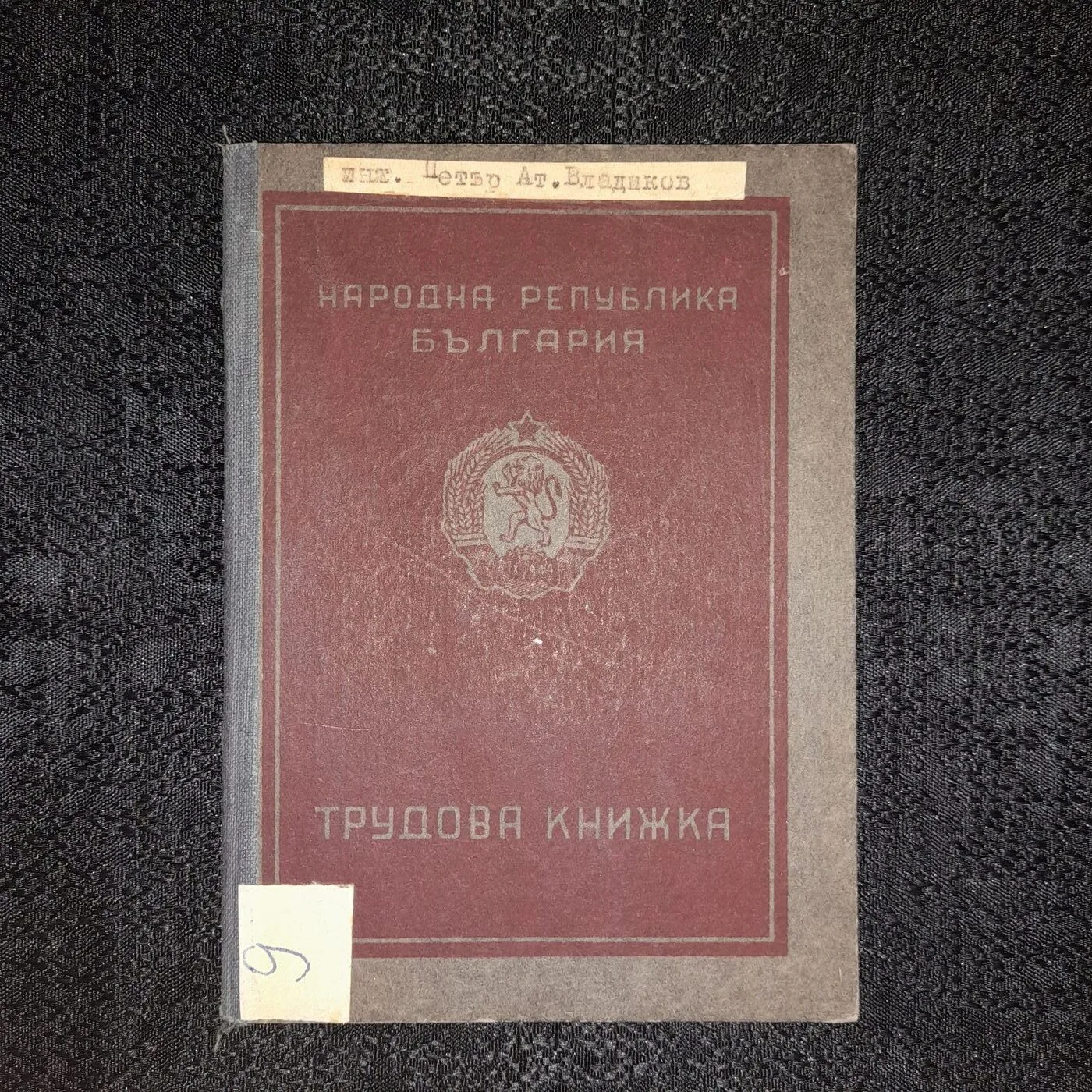 Work book from the late 1940s and early 1950s — Collection Cold War Bulgaria
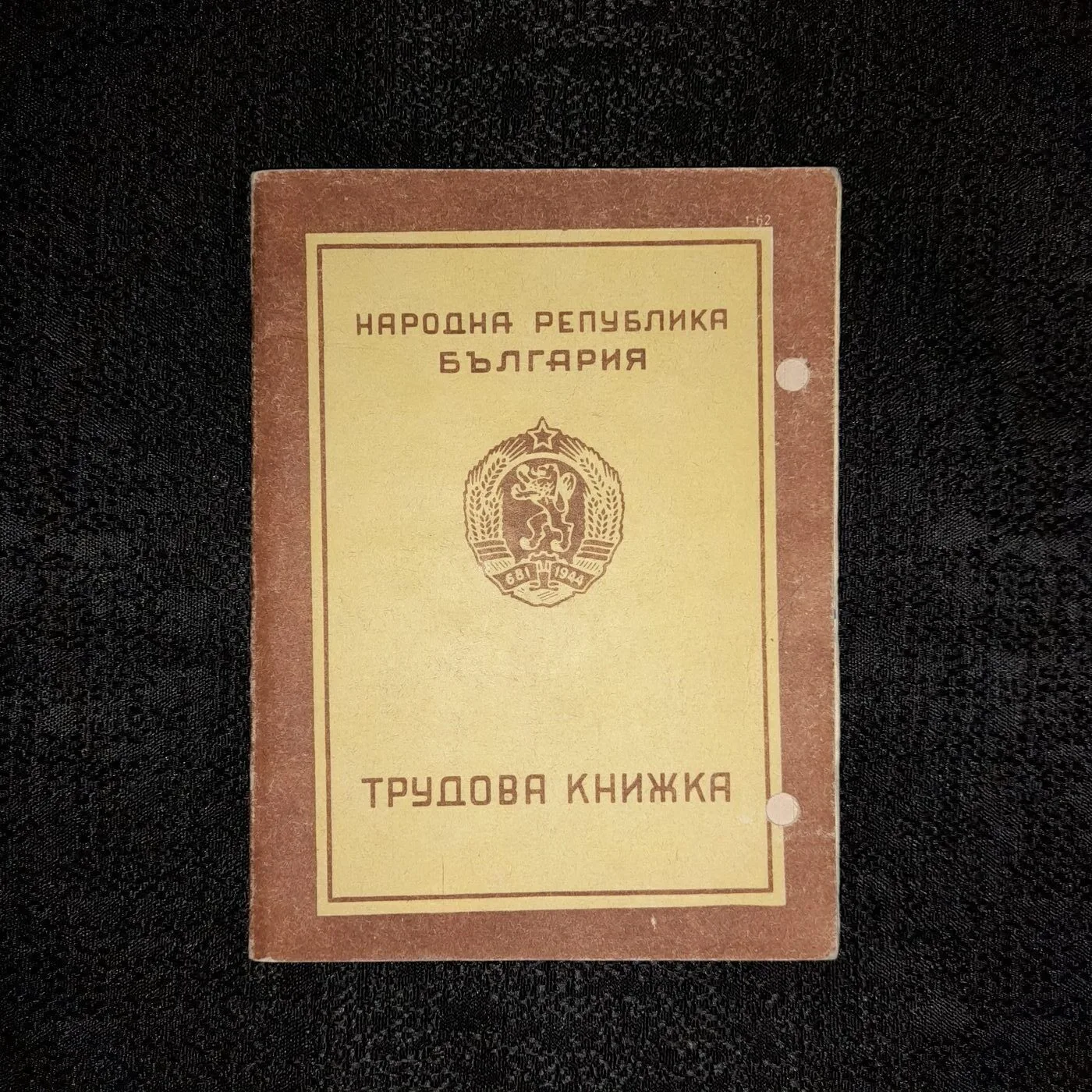 Work record book from the late 1980s — Collection Cold War Bulgaria
The work book recorded the posts held, the dates of entry and departure, the qualifications, sometimes the assessments. It accompanied its bearer from one job to another and was presented at every hiring. Without it, a working life did not exist administratively.
Forty years separate these two copies, and the principle has not moved. It is the sign of an arrangement that worked: one does not replace what does its job.
The work book was moreover only one piece of a set.
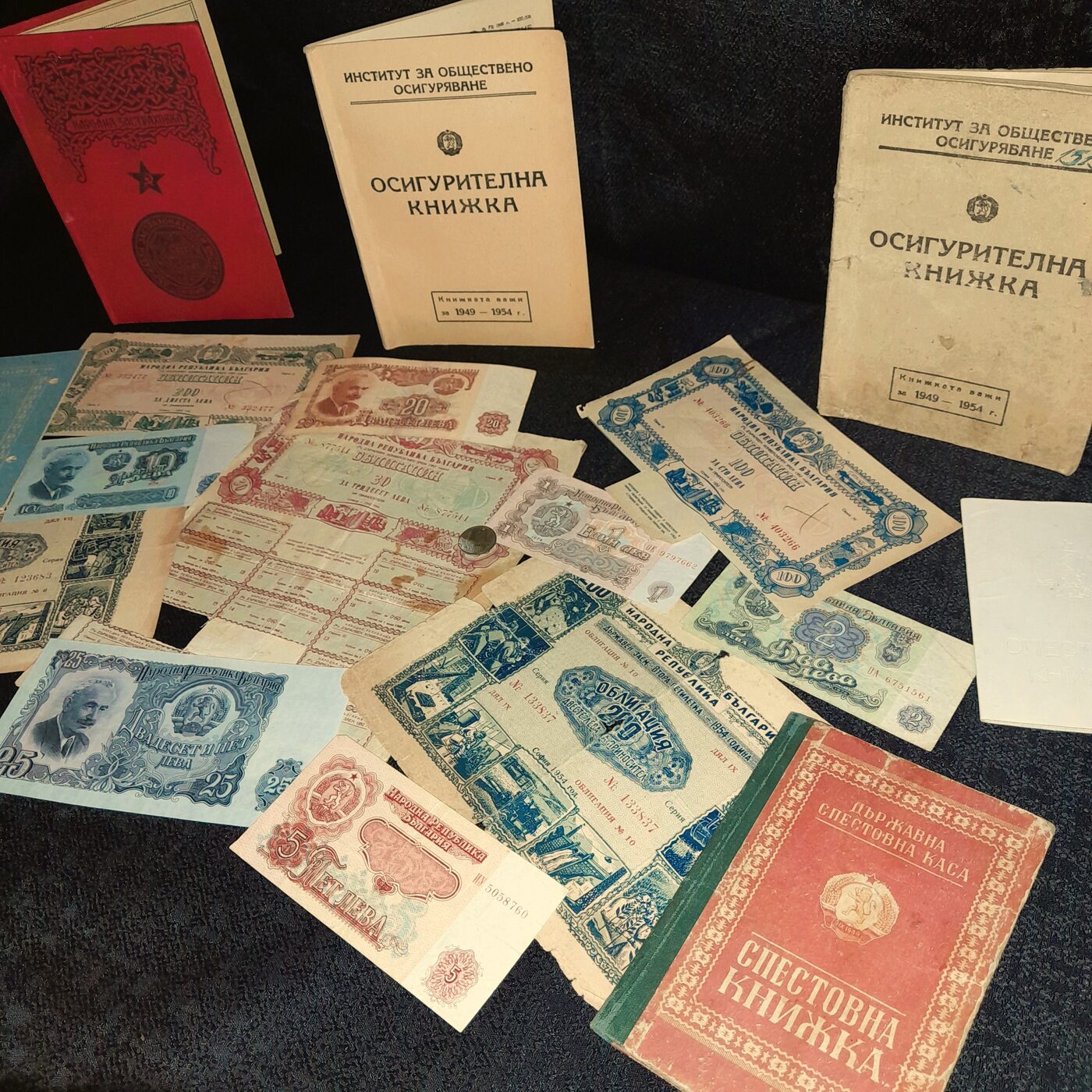 Social insurance books, State Savings Bank passbook, state loan bonds and banknotes in leva — Collection Cold War Bulgaria
Social insurance books issued by the Social Insurance Institute and valid from 1949 to 1954, a State Savings Bank passbook, loan bonds of thirty, one hundred and two hundred leva, notes bearing the likeness of Georgi Dimitrov: the entire economic relationship between a worker and the state fitted into a handful of booklets.
The state did indeed borrow from its citizens, in the form of bonds subscribed by wage earners. The certificate is modest, printed without ceremony; it is nonetheless a commitment of the state towards a private individual, in a system where savings and credit alike passed through a single bank.
The most eloquent object is the bond of 1954. Its vignette shows factory scenes, a dam, a harvest, that is to say, exactly the objectives of the five-year plan then in force. The wage earner who subscribed to this certificate saw printed on his savings what those savings served to finance.
We build for the homeland
There existed another form of labour, and it appeared in no work book.
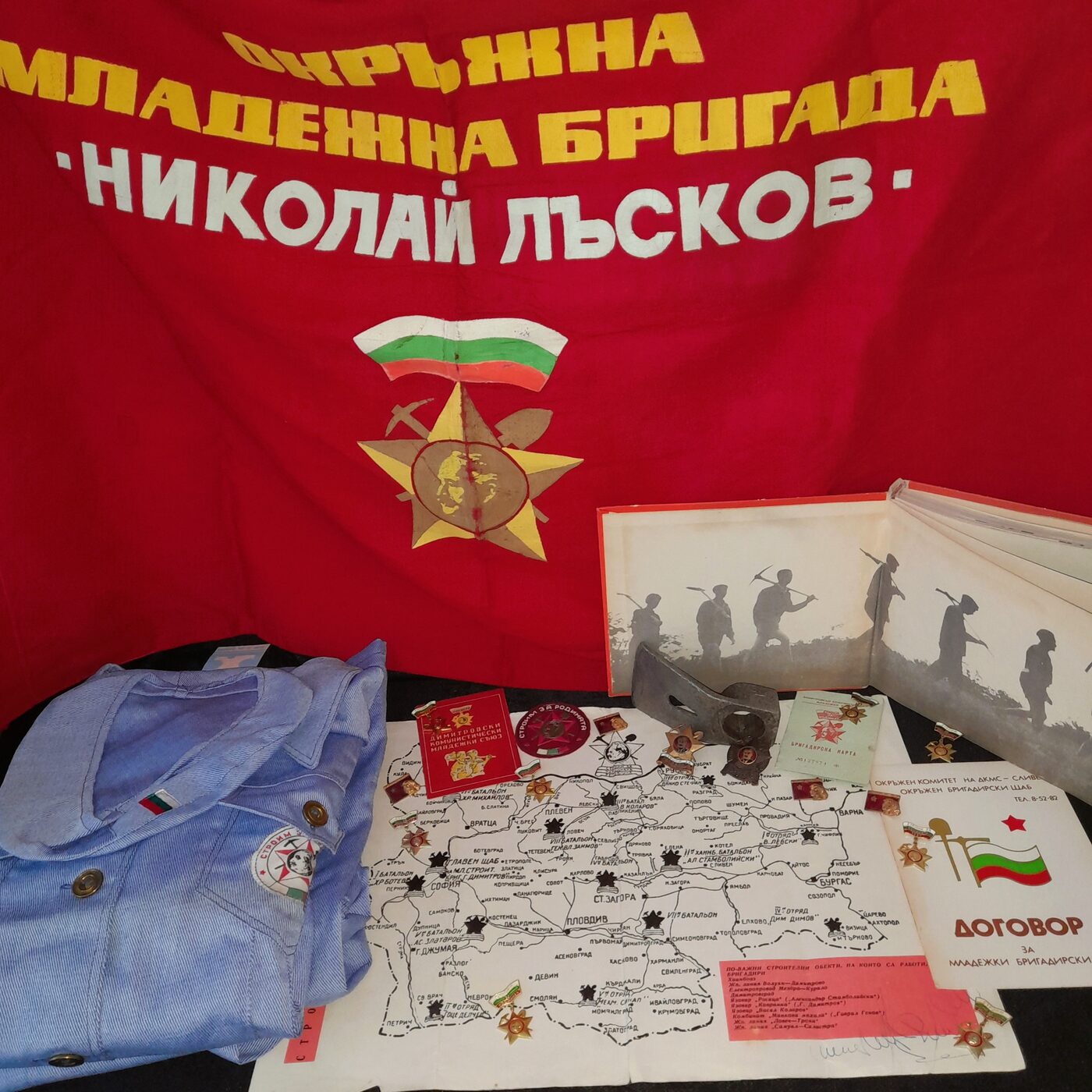 Flag of the district youth brigade "Nikolai Laskov", brigade member's shirt, brigade member's card, map of the national construction sites, badges and brigade work contract — Collection Cold War Bulgaria
On 5 August 1946, two thousand young people began work at the Hainboaz pass — today the Pass of the Republic — within the first national construction brigade, named "Georgi Dimitrov". This was the beginning of the brigade movement.
The movement's motto is inscribed on the patch of this work shirt: Строим за родината, "We build for the homeland".
The principle was voluntary, and the work provided was not initially paid. Young brigade members would later be remunerated, and workers and employees seconded from their posts would keep their usual wages. The direct organisers were the successive youth organisations, under the Party's leadership: the committees of democratic youth first, then the Dimitrov Union of People's Youth after Dimitrov's death, and finally the ДКМС.
What these brigades built appears on the map shown here: the road over the Pass of the Republic, the Levski-Lovech-Troyan, Pernik-Voluyak and Samuil-Silistra railway lines, the "Alexander Stamboliyski" and "Georgi Dimitrov" dams, the Maritsa dyke, and the town of Dimitrovgrad with its chemical works.
The printed contract, issued by the Sliven district committee of the ДКМС, states the exact nature of the commitment. The word "voluntary" is to be read here with caution: a movement organised by the single youth organisation, in a country where membership of that organisation was the norm, leaves little room for individual refusal.
Yet one must also listen to what those who were there say of it. A brigade member from the Vitinya site summed up his memory thus: the best part was feeling that one was useful.
The land held in common
The other great transformation of Bulgarian labour took place in the fields.
The law on labour cooperative agricultural farms, the TKZS (ТКЗС), was adopted in 1945. On paper, membership was voluntary and members were guaranteed a share of the profits. In fact, the results of this voluntary phase were modest: in 1947, only 3.8% of arable land was collectivised, and 12% in 1949.
Everything then changed. Between 1950 and 1953, the Stalinist regime of Valko Chervenkov used threats, violence and discrimination in supplies to produce the fastest rate of collectivisation in Eastern Europe. In 1955, Khrushchev sent the Bulgarian authorities a secret letter enjoining them to complete collectivisation within two or three years, in order to demonstrate to the West the appeal of the socialist system to the peasantry. By the end of 1957, 86.5% of the land was in the TKZS.
Resistance was real, particularly in the north-west of the country, and repression struck anyone designated a kulak.
In September 1969, a plenum of the Central Committee decided to recast the TKZS into agro-industrial complexes. Concentration was to bring economic stability to the villages; the project had opponents even within the Party's ranks.
Merit in three classes
Next comes the apparatus of reward, and its scale is surprising.
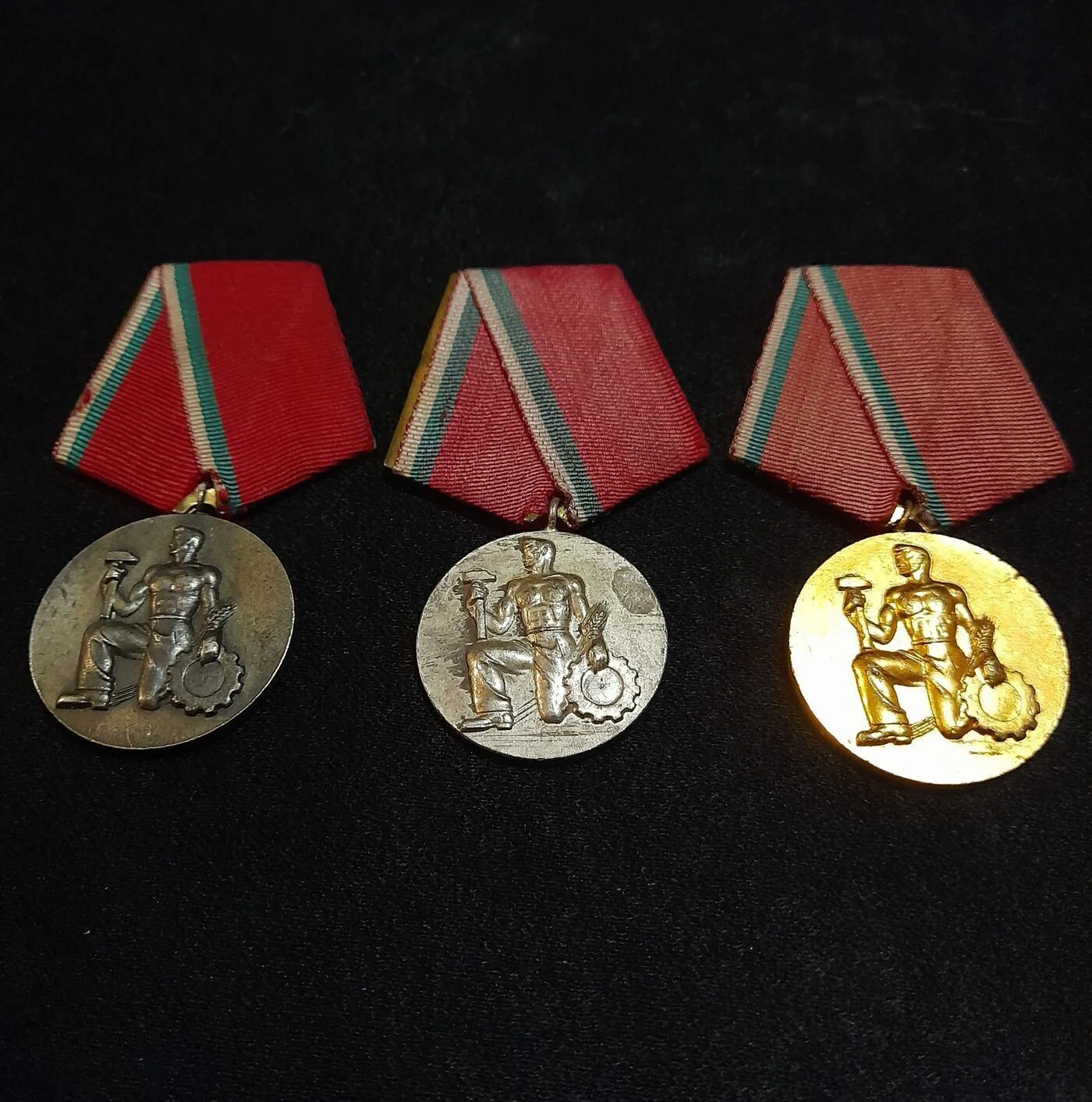 National Order of Labour, bronze, silver and gold classes — Collection Cold War Bulgaria
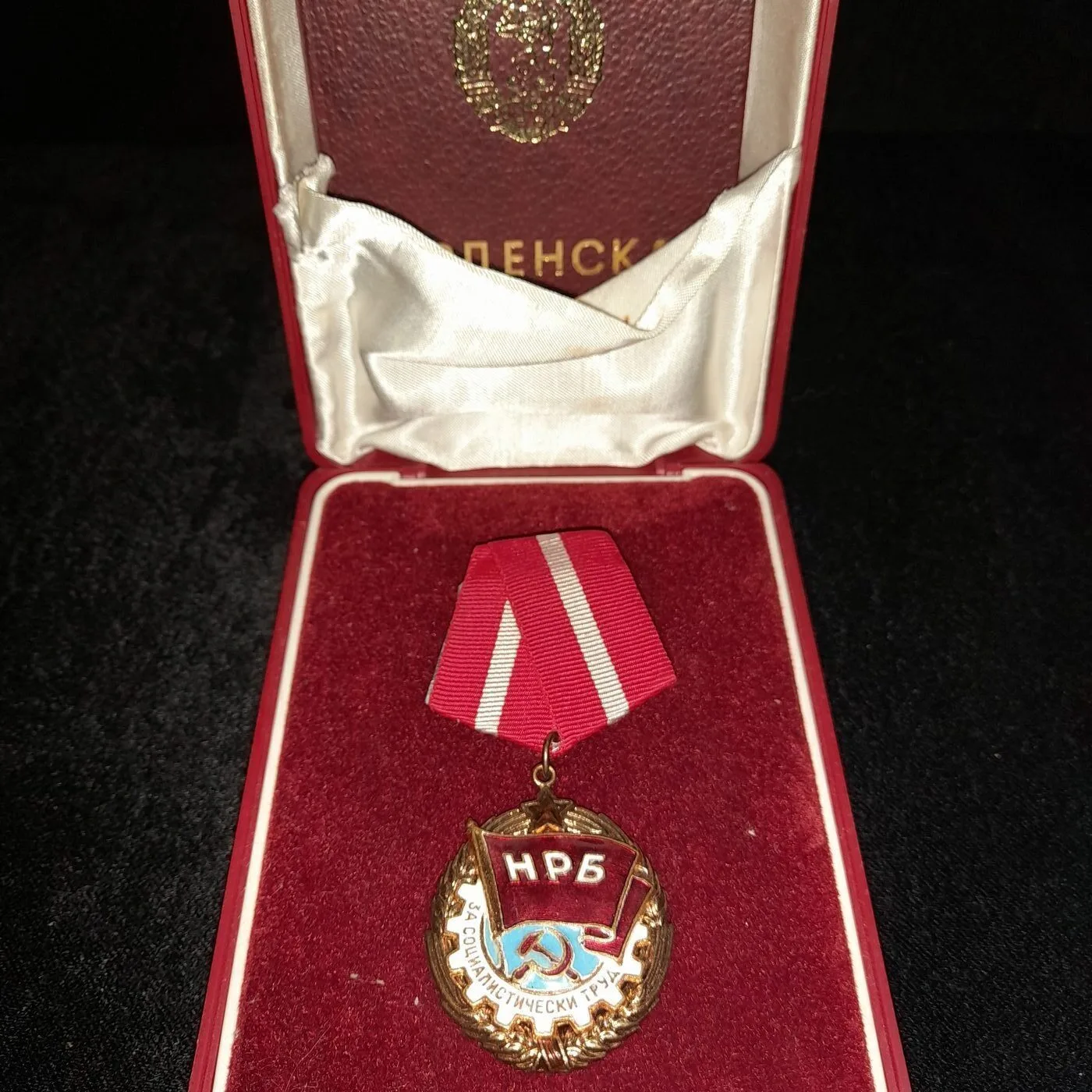 Red Banner of Labour with its box and its booklet — Collection Cold War Bulgaria
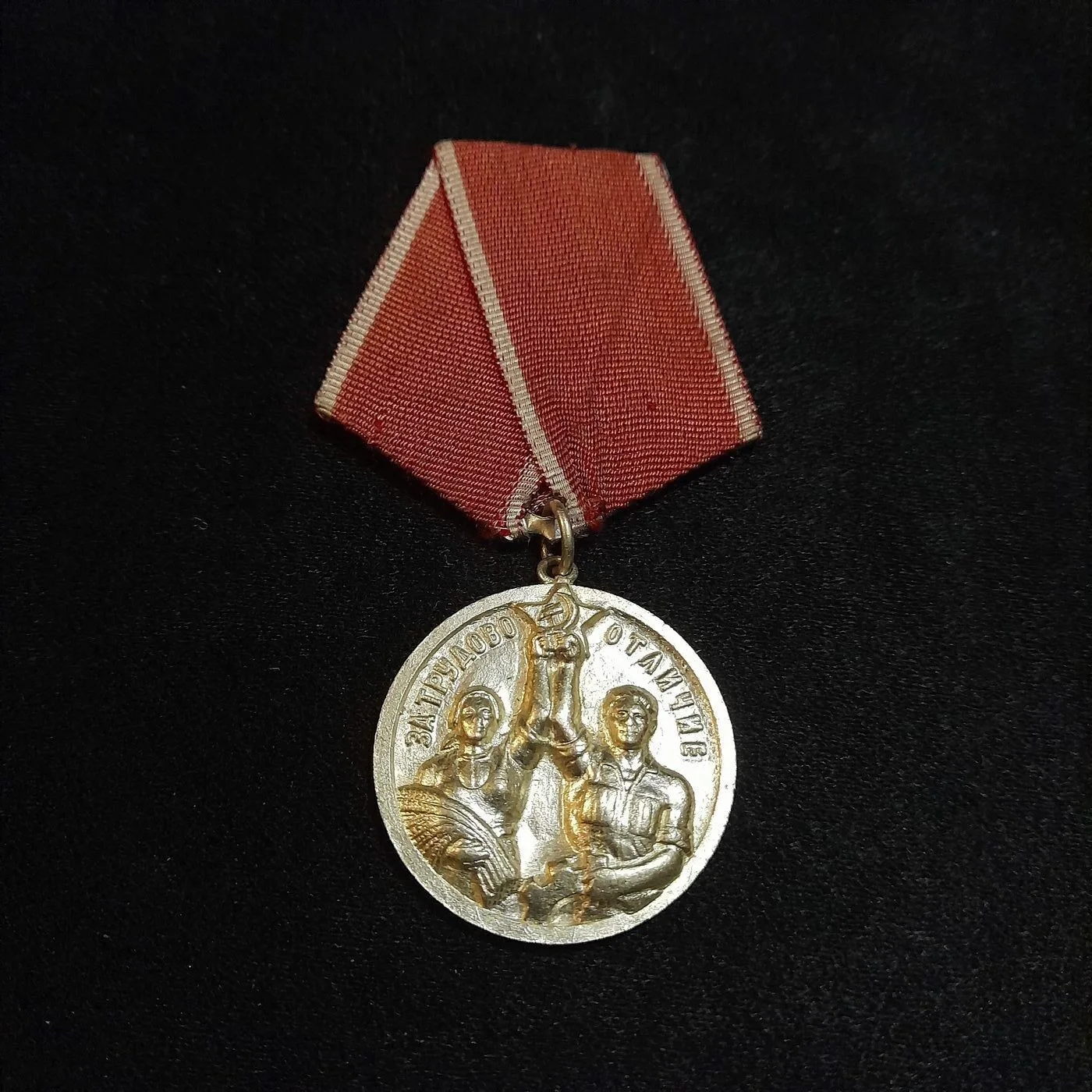 Medal for distinction at work — Collection Cold War Bulgaria
These distinctions belonged to a precise hierarchy. At the summit, the honorific title of Hero of Socialist Labour (Герой на социалистическия труд), instituted on 15 June 1948 under the name Hero of Labour and then renamed on 13 December 1950. It rewarded exceptional achievements in agriculture, science, education, culture and the arts, as well as contributions to technical progress.
Receiving this title automatically entailed the award of the Order of Georgi Dimitrov, the country's highest distinction, instituted on 17 June 1950 and conferred some four thousand five hundred times. This order imitated the general design of the Soviet Order of Lenin. Just below came the Order of the Red Banner of Labour.
Labour therefore had its summit within the same honorific arrangement as the defence of the homeland. An exceptional worker and an exceptional soldier arrived at the same decoration.
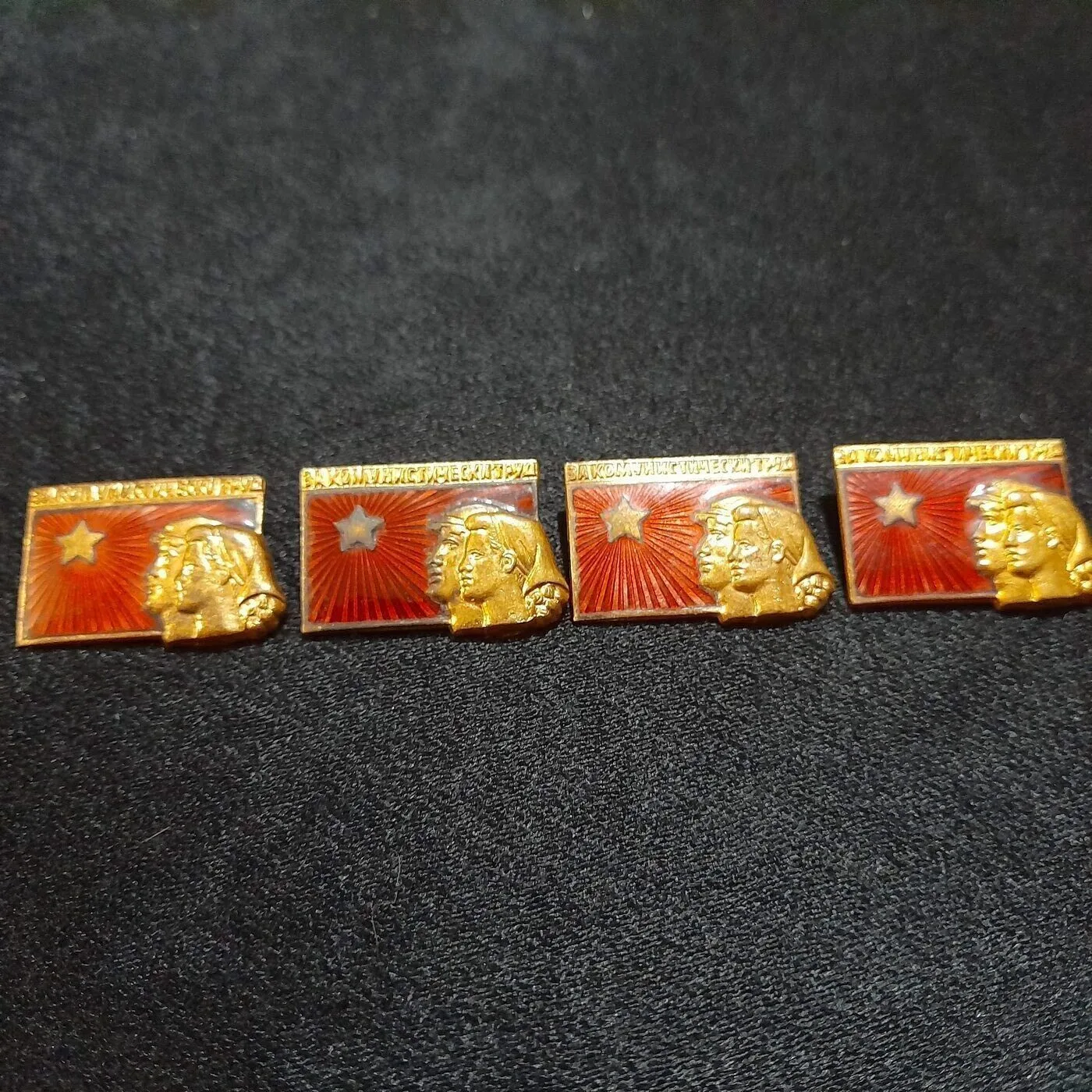 Badges for communist labour — Collection Cold War Bulgaria
The factory as a place of belonging
Below the state orders lay another layer of recognition, closer at hand and doubtless more effective: that of the establishment itself.
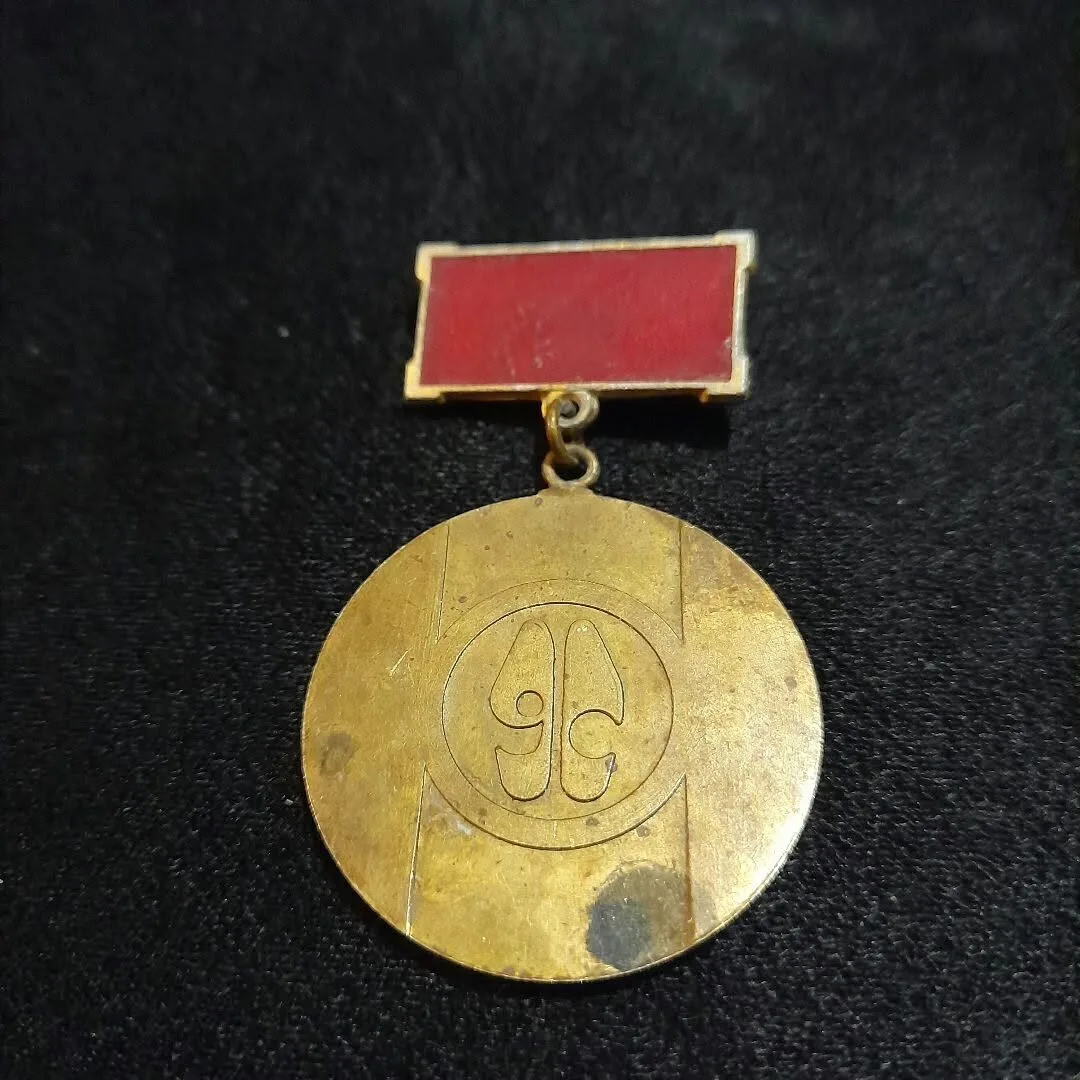 Medal for the fortieth anniversary of the "9 September" shoe factory in Sofia — Collection Cold War Bulgaria
A shoe factory that strikes a medal for its fortieth anniversary, and that bears the name of the date power was seized: the enterprise is not merely a place of production, it is an entity that commemorates, that distributes distinctions, and of which one is a part.
This is a point poorly grasped today. The socialist factory organised holidays, housing, children's summer camps, festivities, sport. To work there was not a contract, it was a belonging, with all that implies of real advantages and of difficulty in leaving.
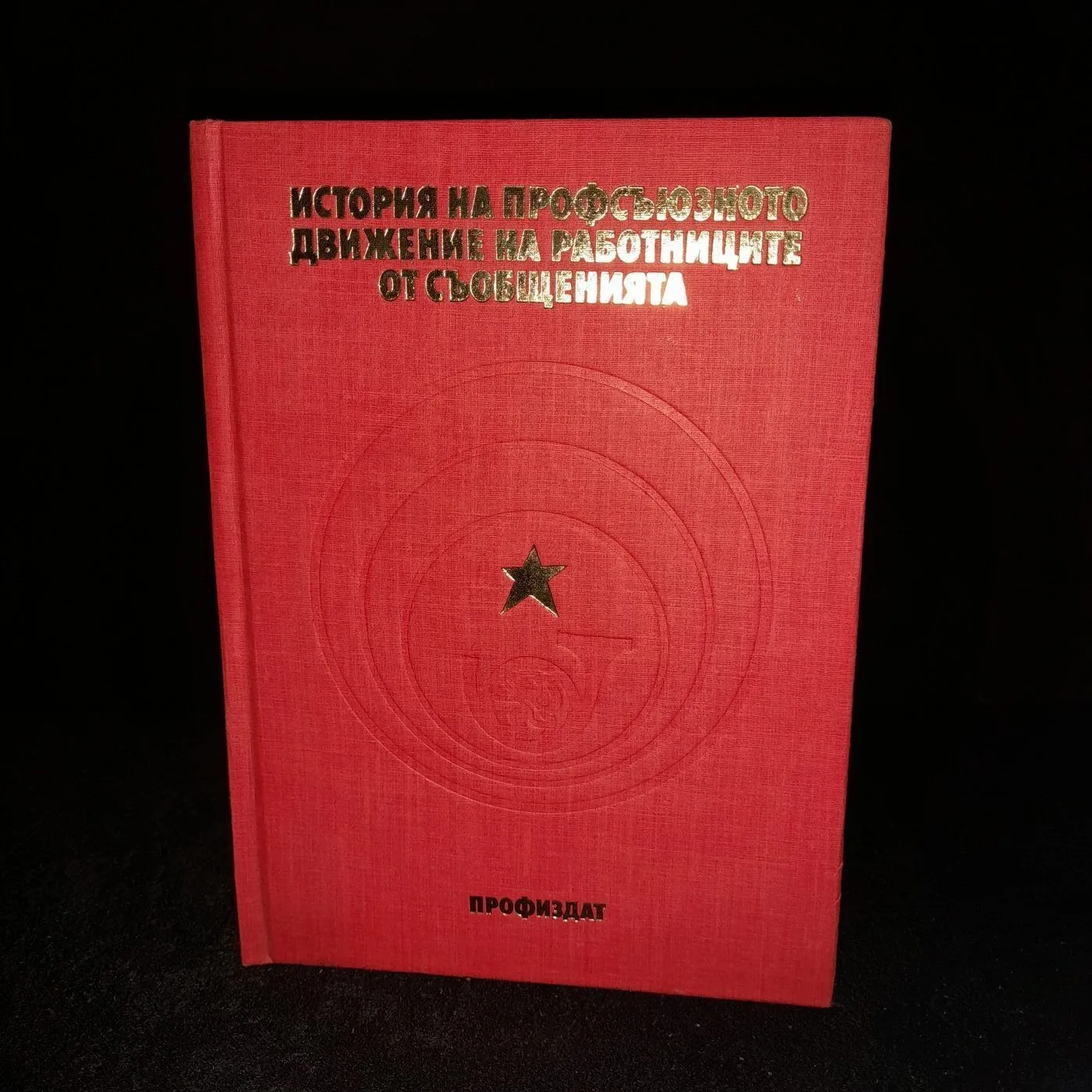 Book of 1984, history of the workers' trade union movement — Collection Cold War Bulgaria
What a medal rewards
It would be easy to mock this profusion of distinctions. That would be to miss the essential.
In a system where wages were fixed within limits, where promotion depended on criteria that were not all professional, and where one did not change employer at will, the medal and the badge were among the few currencies available. One could not earn much more. One could be distinguished.
That is what makes these objects ambiguous, and interesting. An Order of Labour in three classes is an instrument of government: it grades, it directs, it rewards conformity as much as competence. But it was also, for many, the sincere recognition of a life of real work: people who built, produced, trained apprentices, and who were honoured for it.
The book and the medal were the two faces of the same relationship. One recorded what you owed, the other attested to what was granted you. Neither really belonged to you.
Facts verified against sources: the party's monopoly over workers' organisations and the prohibition of any unsponsored organisation; the description of the Central Council of Bulgarian Trade Unions as a transmission belt for government policy, a provider of social benefits and a declared protector of employees' interests; a rate of unionisation close to one hundred per cent under the regime; the absence of legal regulation of the right to strike before 1990 and its recognition by the law on the settlement of collective labour disputes adopted that year under trade union pressure; the formation of the independent trade union Podkrepa in February 1989 by dissident intellectuals; the institution of the title of Hero of Labour on 15 June 1948 and its renaming as Hero of Socialist Labour on 13 December 1950, and its fields of award; the institution of the Order of Georgi Dimitrov on 17 June 1950, its status as the country's highest distinction, its automatic award to holders of the Hero titles, its total of some four thousand five hundred awards, and its imitation of the design of the Order of Lenin; the position of the Order of the Red Banner of Labour immediately below. On the brigades and collectivisation: the start of the brigade movement on 5 August 1946 at the Hainboaz pass with two thousand young people of the "Georgi Dimitrov" brigade; the motto "Строим за родината"; the principle of unpaid work at the outset, the later remuneration of young brigade members and the retention of wages by seconded workers; successive organisation by the committees of democratic youth, the Dimitrov Union of People's Youth and then the ДКМС, under the Party's leadership; the list of sites cited; the testimony of a brigade member from Vitinya on the feeling of being useful; the adoption of the TKZS law in 1945, nominally voluntary membership and a guaranteed share of profits; 3.8% of arable land collectivised in 1947 and 12% in 1949; the use of threats, violence and discrimination in supplies between 1950 and 1953 under Valko Chervenkov, producing the fastest rate in Eastern Europe; Khrushchev's secret letter of 27 October 1955 calling for collectivisation to be completed within two or three years to demonstrate to the West socialism's appeal to the peasantry; 86.5% of the land in the TKZS by the end of 1957; marked resistance in the north-west and repression targeting people designated as kulaks; the September 1969 plenum's decision to group the TKZS into agro-industrial complexes and the existence of opponents within the Party. Resting on a reading of the still lifes: the identification of the social insurance books and their period of validity, of the State Savings Bank passbook, of the bonds and of the vignette of the 1954 one, as well as of the "Nikolai Laskov" brigade flag, the brigade member's shirt and its patch, the map of the sites, the contract issued by the Sliven district committee and the badges. Resting on the collector's description of the objects and not on a documentary source: the dating of the work books, the content of the board of instructions and the identification of the communist labour badges. The social role of the socialist enterprise (holidays, housing, summer camps) is described from a general knowledge of the period and not from a Bulgarian source consulted here.