Occupying every space
Thematic dossier · Period: 1944–1989 · Reading time: 8 min
The wall, the living room, the record player, the lapel of a jacket: where propaganda passed when it was not through the newspaper.
State propaganda has a familiar face, and it is that of the newspaper kiosk.
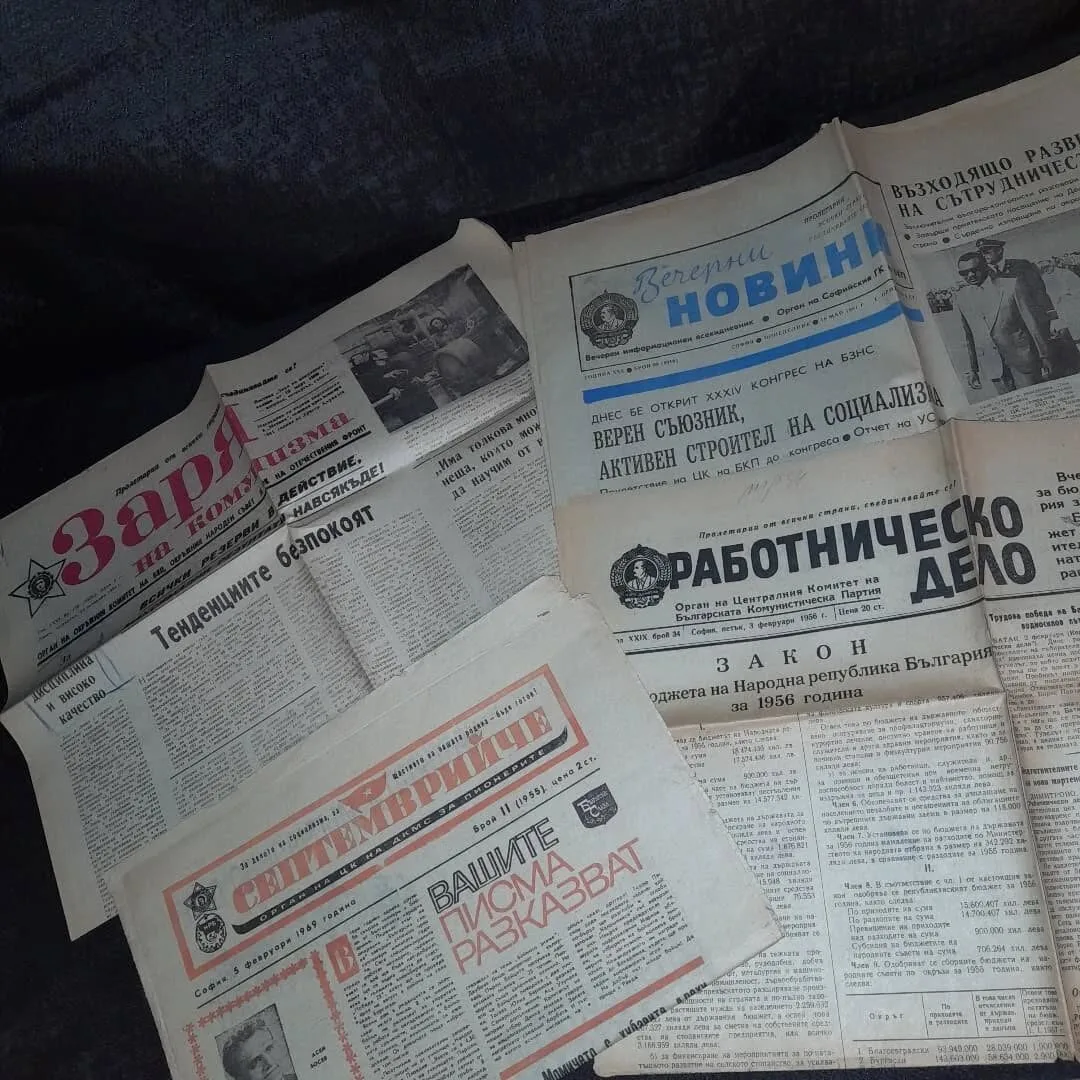 Various newspapers available in the People's Republic of Bulgaria — Collection Cold War Bulgaria
Another section of this museum deals with that printed paper and the way it circulated. But to stop there would be to miss the essence of the arrangement, because a newspaper folds up and a textbook closes.
This dossier follows propaganda where it does not close: on the wall, in the living room, on the record player, on the lapel of a jacket, on a corner of a desk. The principle is always the same: to leave no space empty.
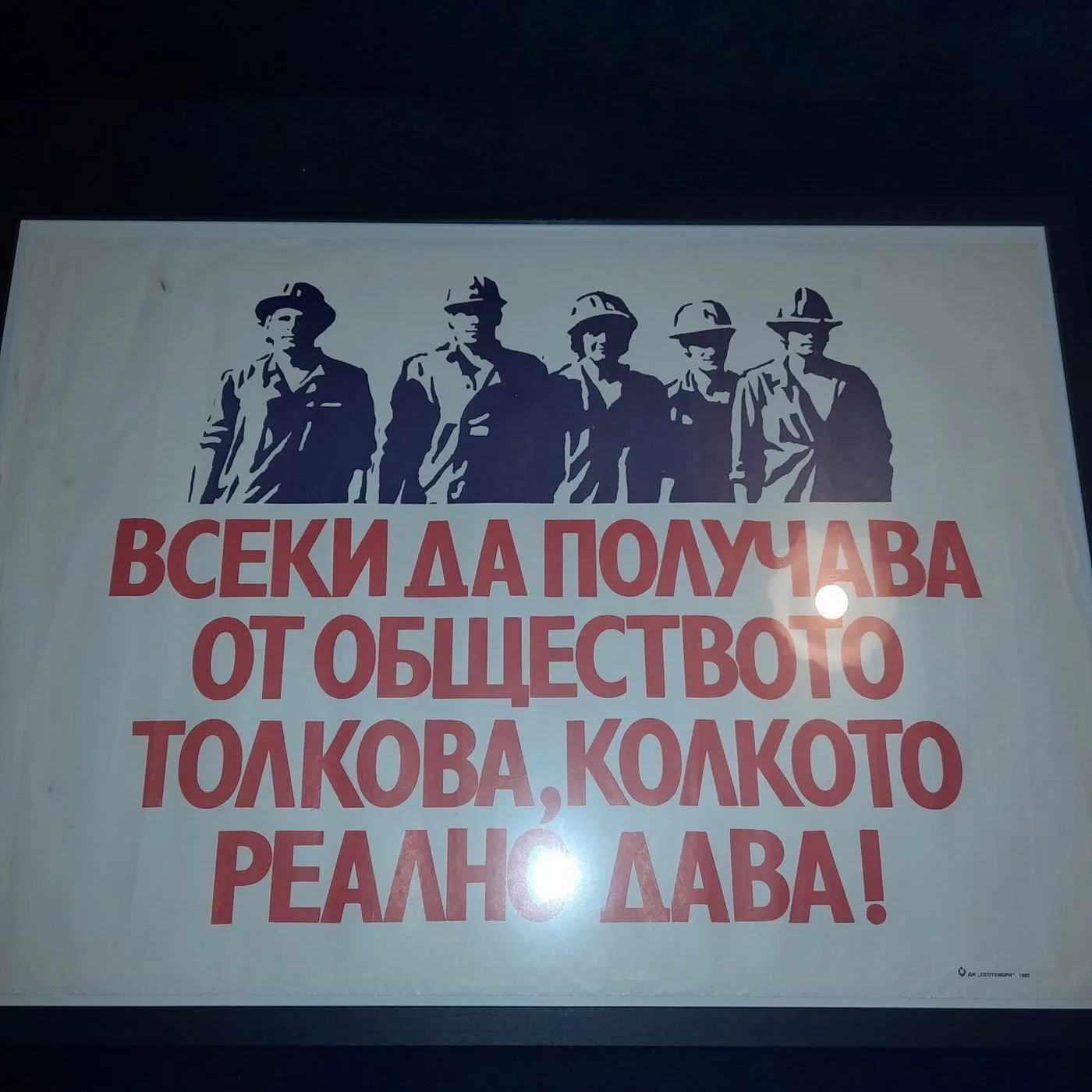 Poster setting out the principle of payment according to work performed — Collection Cold War Bulgaria
The wall poster is the simplest form of this occupation. A sentence, no interlocutor, no answer expected. It does not address a reader: it is there, on a wall, and one walks past it.
The living room wall
Let us begin with the most revealing object in the collection.
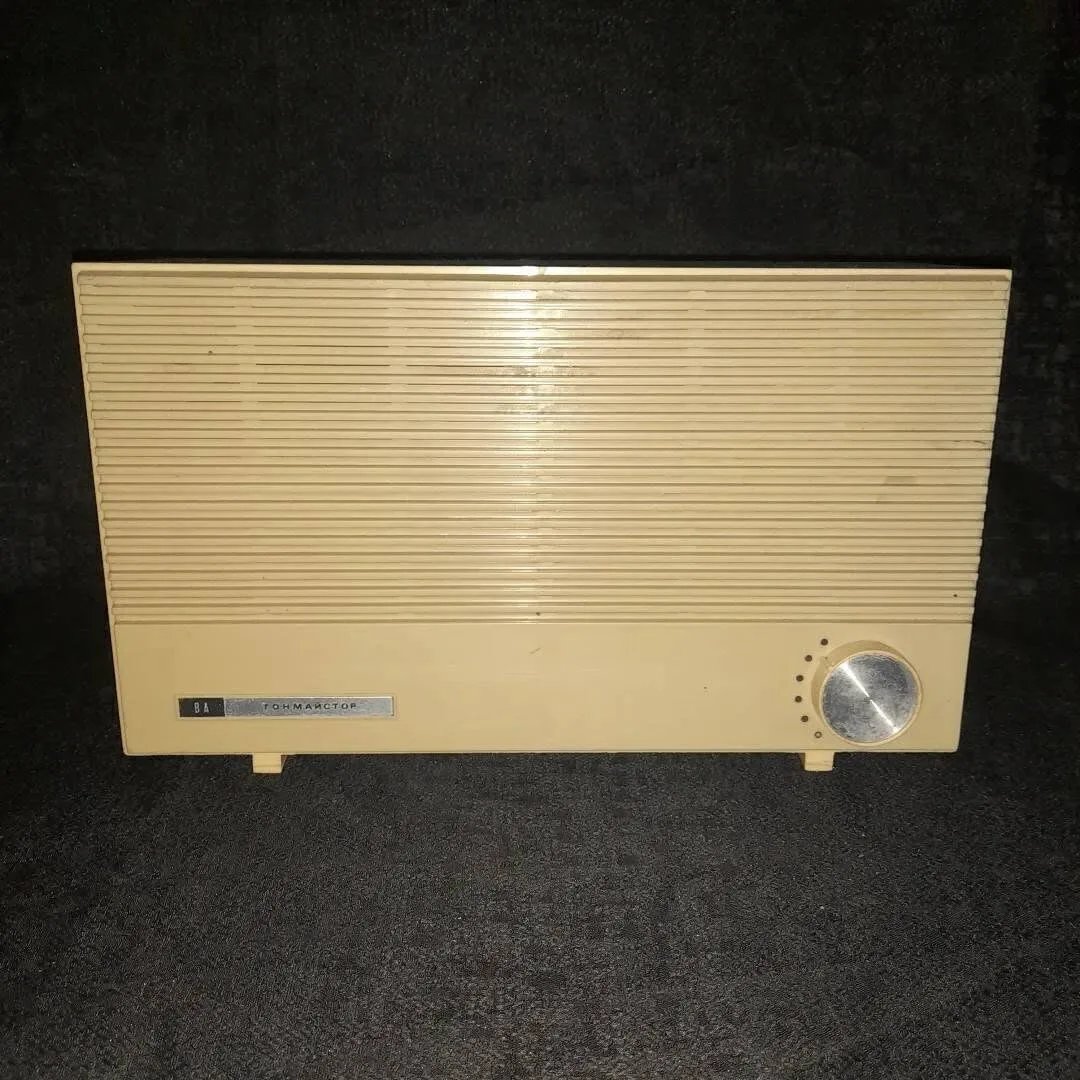 Single-channel radio of Bulgarian manufacture, TONMASTER brand — Collection Cold War Bulgaria
This is not a radio. It is what Bulgarians called a radiotochka (радиоточка), literally a "radio point", officially a subscriber's loudspeaker. The device receives nothing: it is connected by a wire to a cable network that sends it a single programme. The only thing the user can do is turn a volume knob with six positions.
No dial, no frequency, no tuning. A single voice, the one broadcast on the wire.
This mode of distribution was strongly favoured by the Bulgarian communist authorities before 1990, because it allowed people to hear only what was judged appropriate. Some political works even report that people feared being listened to through their radiotochka. The fear was probably unfounded technically, but it says a great deal about what that box on the wall represented.
The device sums up on its own a conception of information: not a choice offered to a listener, but a stream distributed to a subscriber.
Two generations, the same wire
It was not an isolated object. The collection contains a second, older one, in Bakelite.
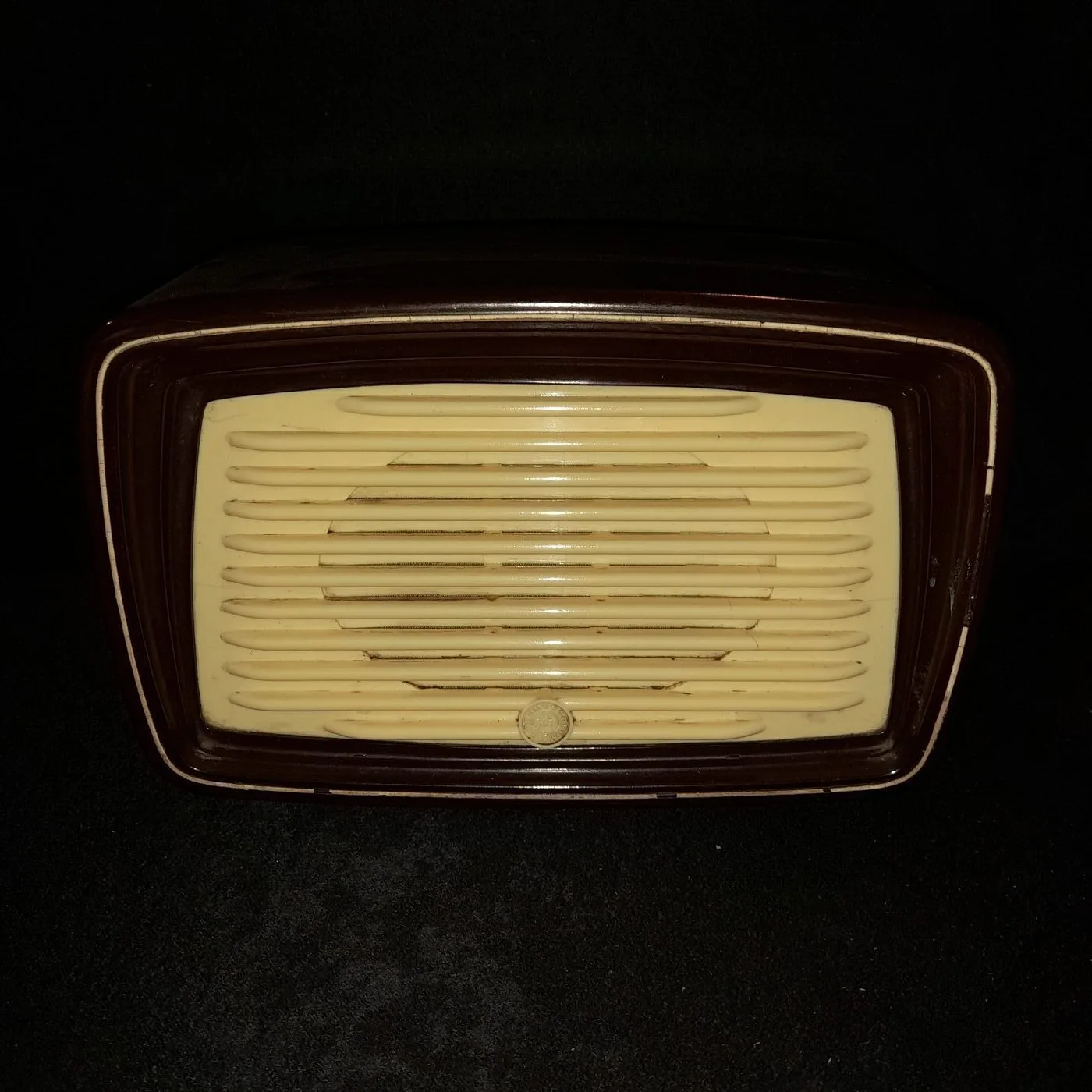 Bakelite subscriber's loudspeaker of Bulgarian manufacture, ELPROM brand — Collection Cold War Bulgaria
The same absence of aerial, the same absence of dial, the same single knob. Between the Bakelite casing of the early decades and the later TONMASTER, the material changes, the design changes, the function does not. A standard domestic appliance, renewed over the years without its principle ever being called into question.
That is what makes these two objects more eloquent than one alone. A radio without a dial may pass for a technical curiosity; two successive generations of radios without dials describe a policy.
The set that could tune
The counterpoint exists nonetheless, and it lies in a third device.
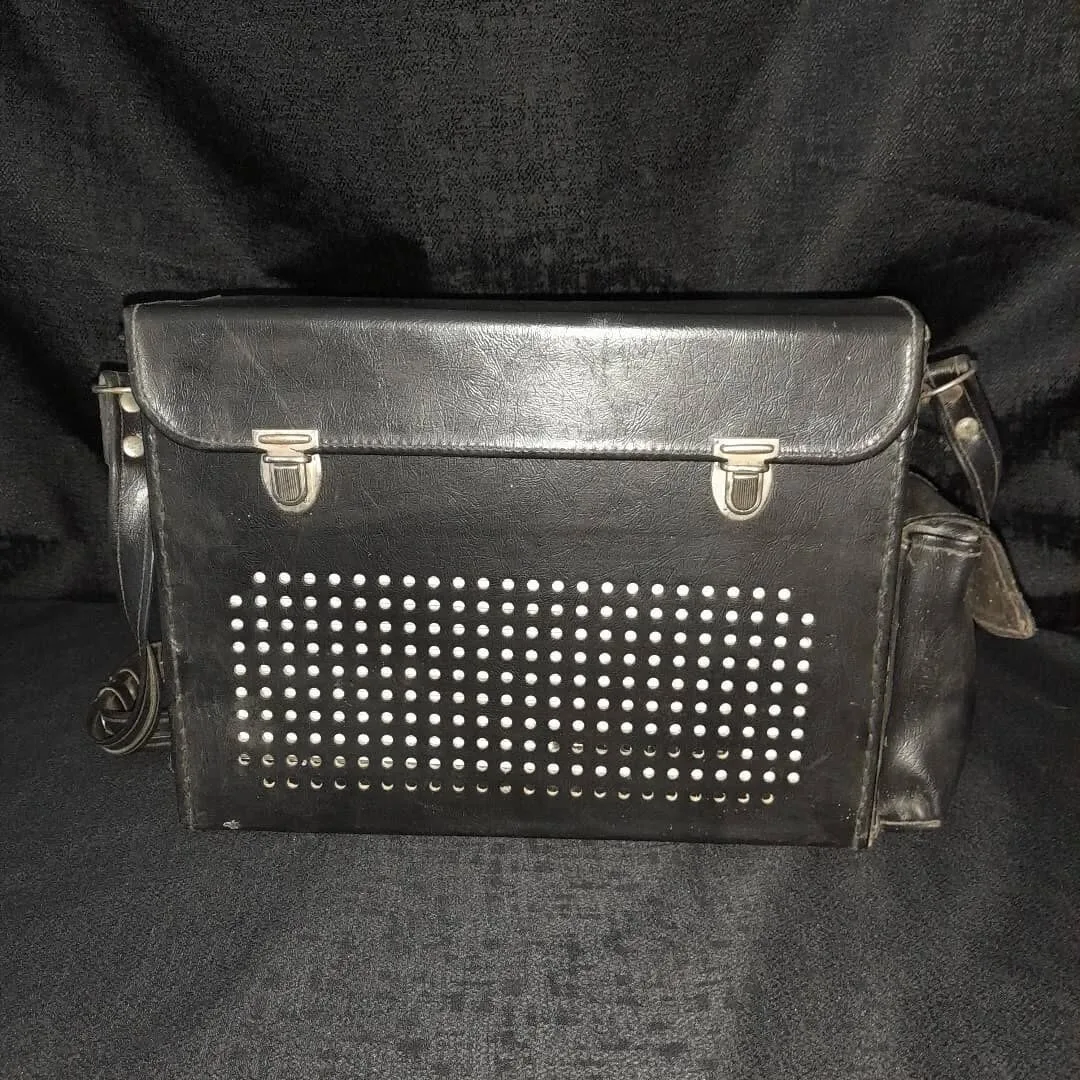 Portable radio of Bulgarian manufacture, Rodina brand — Collection Cold War Bulgaria
This one has a dial, and a dial changes everything: it allows tuning. Bulgarian National Radio, created in 1935 and state-owned, occupied the national frequencies with its two channels, among them Hristo Botev, on air since 1941 and devoted to culture and education.
But airwaves do not stop at borders, and that is exactly the problem the subscriber's loudspeaker removed. A set with a dial is an ambiguous object: it broadcasts what the state wants, and it can also pick up something else. The wire, for its part, brings only one voice.
A collectors' tradition holds that this model was reserved for officers (a hypothesis reported by the collector, which no consulted source confirms). The idea is plausible in a system where access to goods was graded by rank, but it remains unverified as it stands, and the set's name, "homeland", was a common commercial designation that indicates no particular status. Were it confirmed, it would give the object an additional meaning: in a country equipped with single-voice loudspeakers, the ability to turn a dial would itself have been something distributed.
The record player
The most unexpected part of the collection lies in a stack of records.
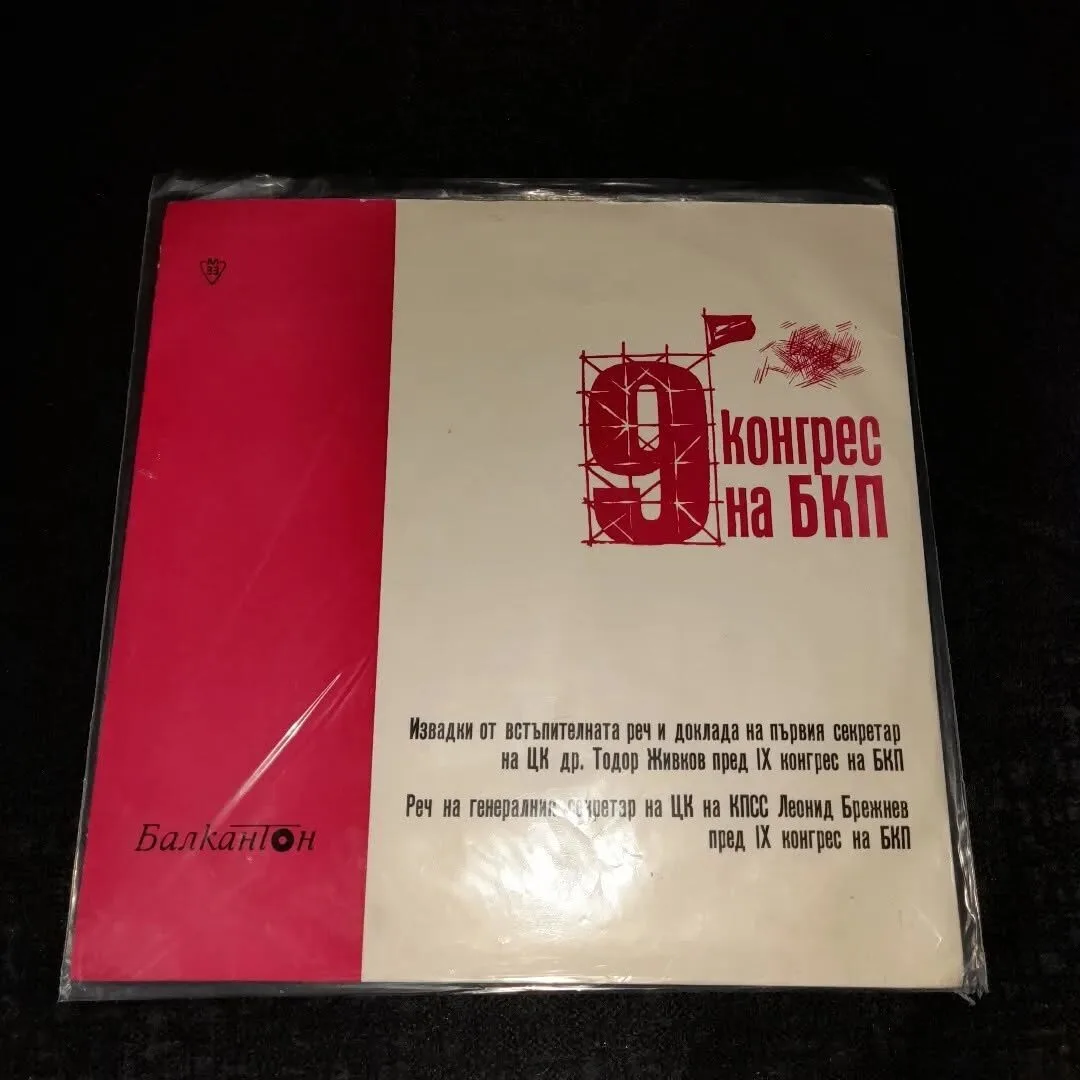 Vinyl recording of the ninth Congress of the Bulgarian Communist Party — Collection Cold War Bulgaria
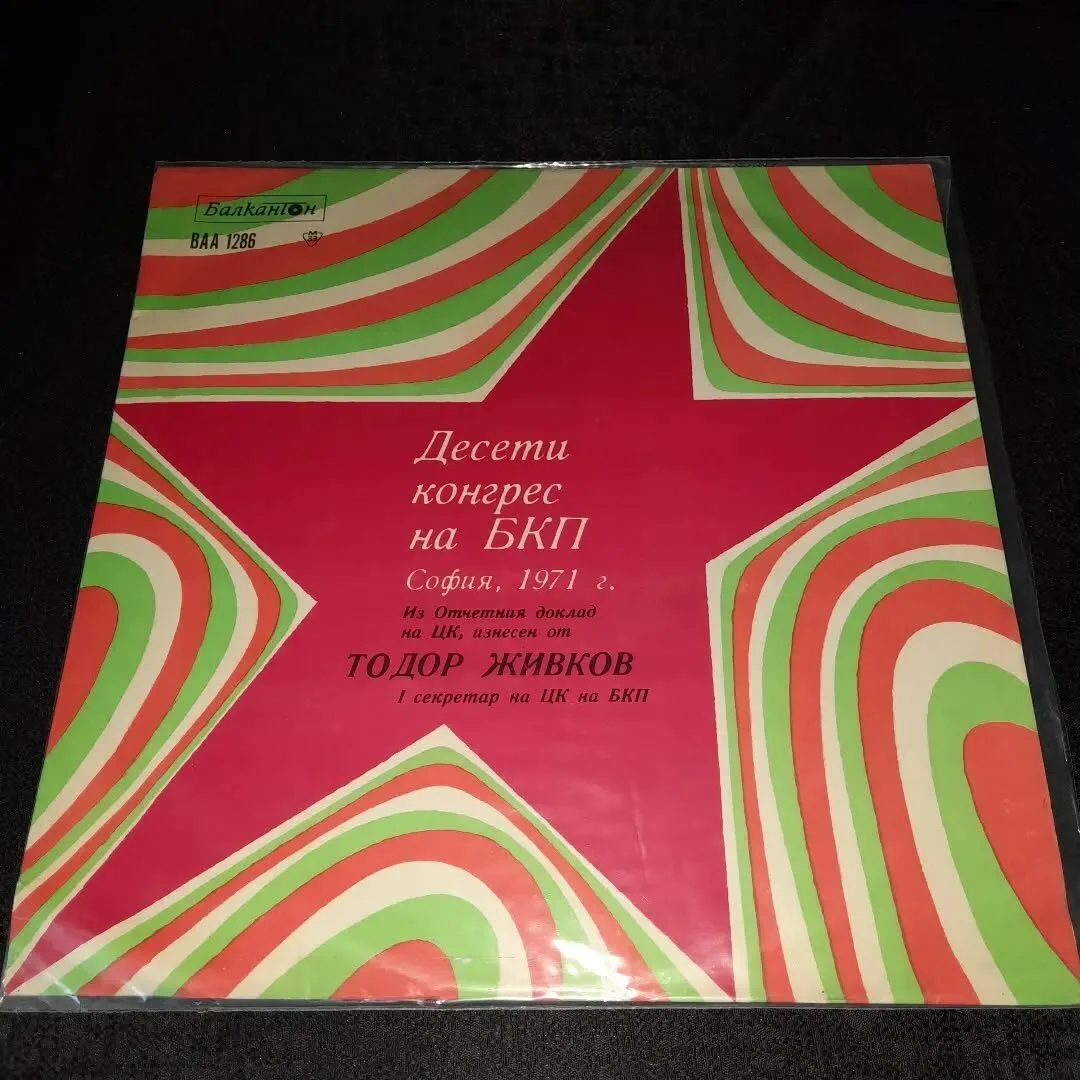 Vinyl recording of the tenth Congress of the Bulgarian Communist Party — Collection Cold War Bulgaria
Pressing a party congress onto a long-playing record is in no way obvious. The record is a leisure medium, associated with music, with the home, with the record player in the living room. To engrave political speeches on it amounts to bringing the congress into the domestic furniture.
The same principle extends to music itself.
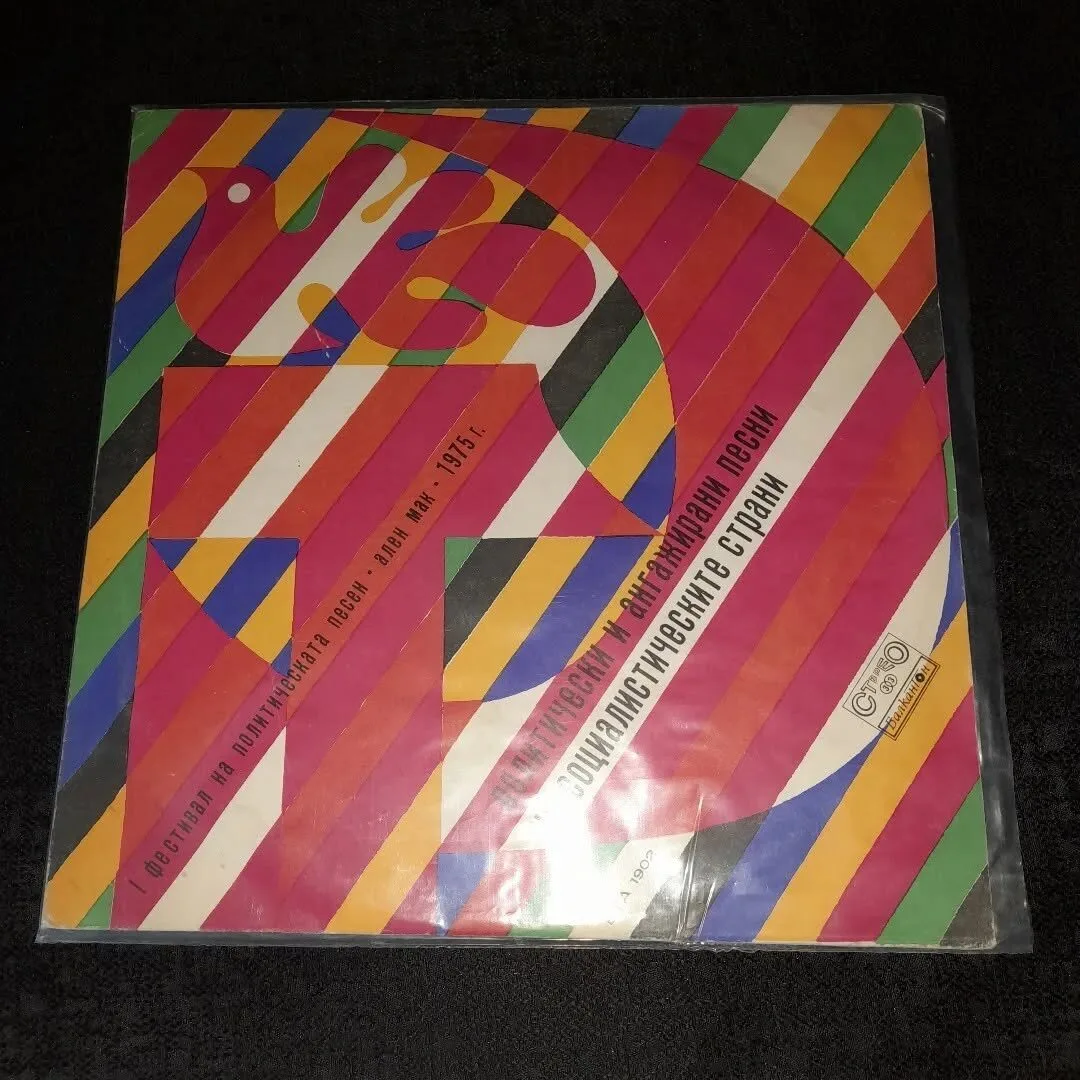 Vinyl recording of the first festival of political music, 1975 — Collection Cold War Bulgaria
A festival of political music: the genre is named without circumlocution, there is no embarrassment in designating it so. Song is not here an entertainment appropriated for propaganda purposes, it is an official category, with its festival and its prizewinners.
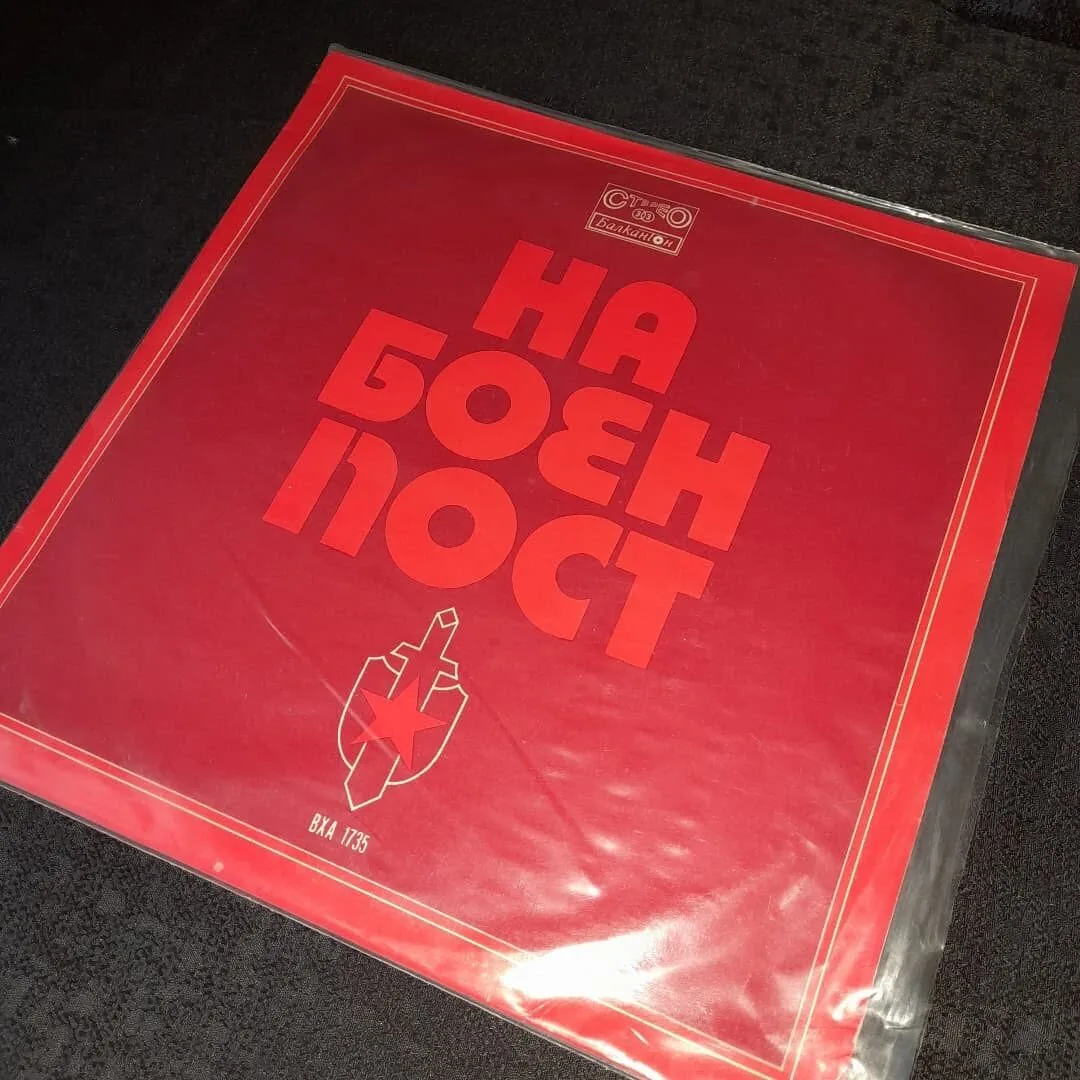 Vinyl recording "At a combat post", by a choral ensemble — Collection Cold War Bulgaria
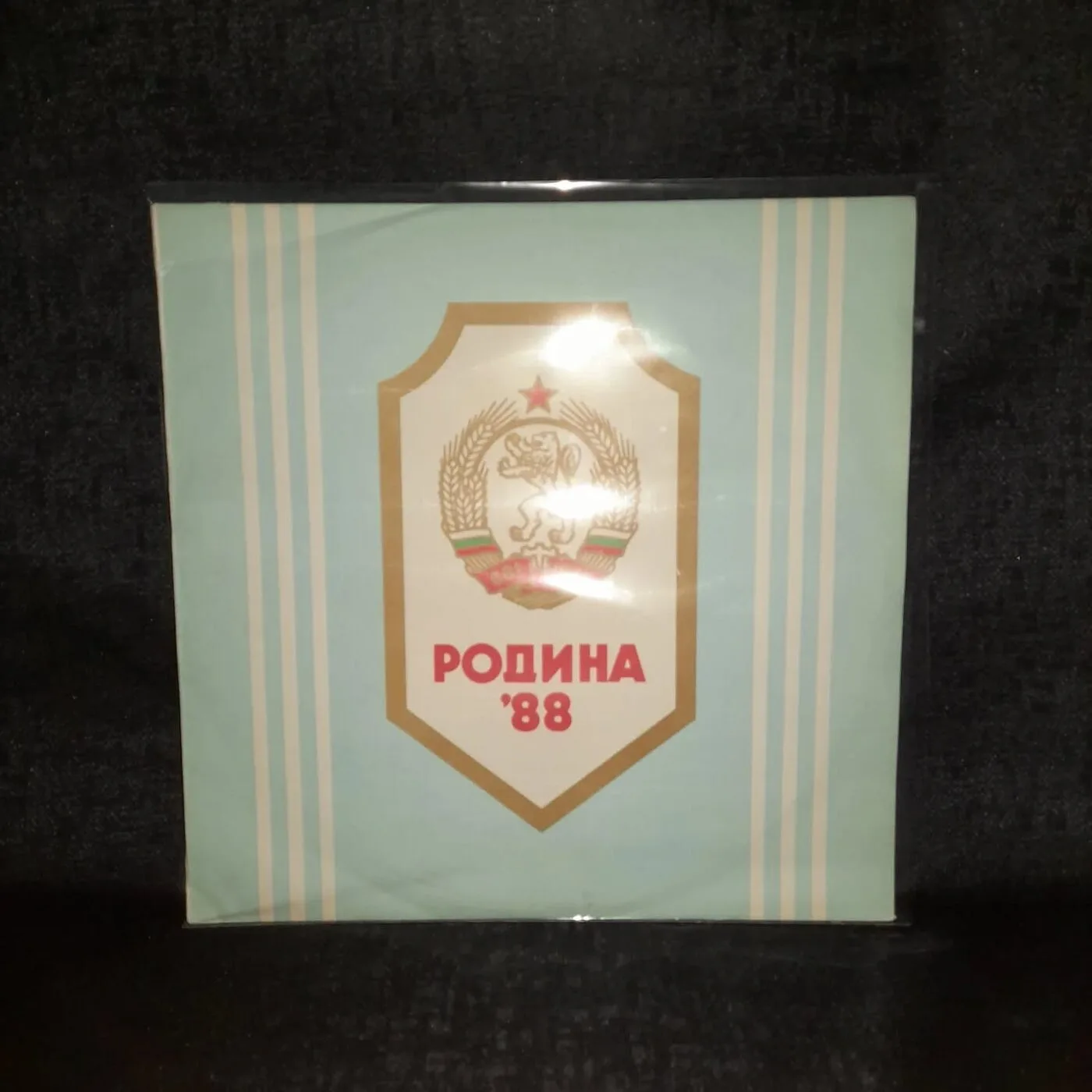 Vinyl recording "Rodina 88" — Collection Cold War Bulgaria
The gap between these two records is worth pausing over. One sings of the combat post, the other bears the name of the homeland and dates from 1988, a year before the end. The vocabulary shifts from the militant towards the national, and that drift is itself a document.
The lapel of the jacket, the corner of the desk
There remains the simplest and the oldest procedure: to put a face on everything.
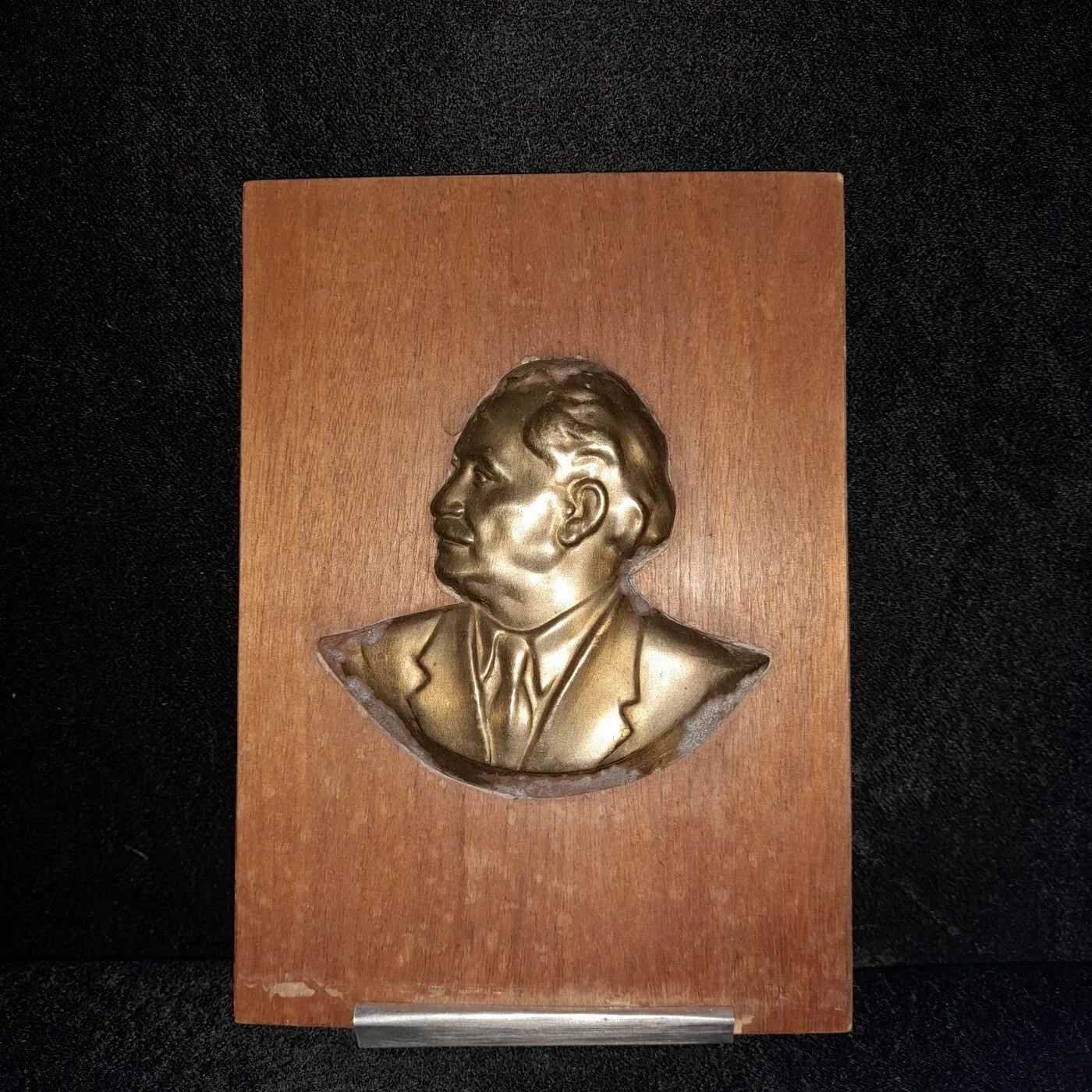 Small brass bust of Georgi Dimitrov on a wooden board — Collection Cold War Bulgaria
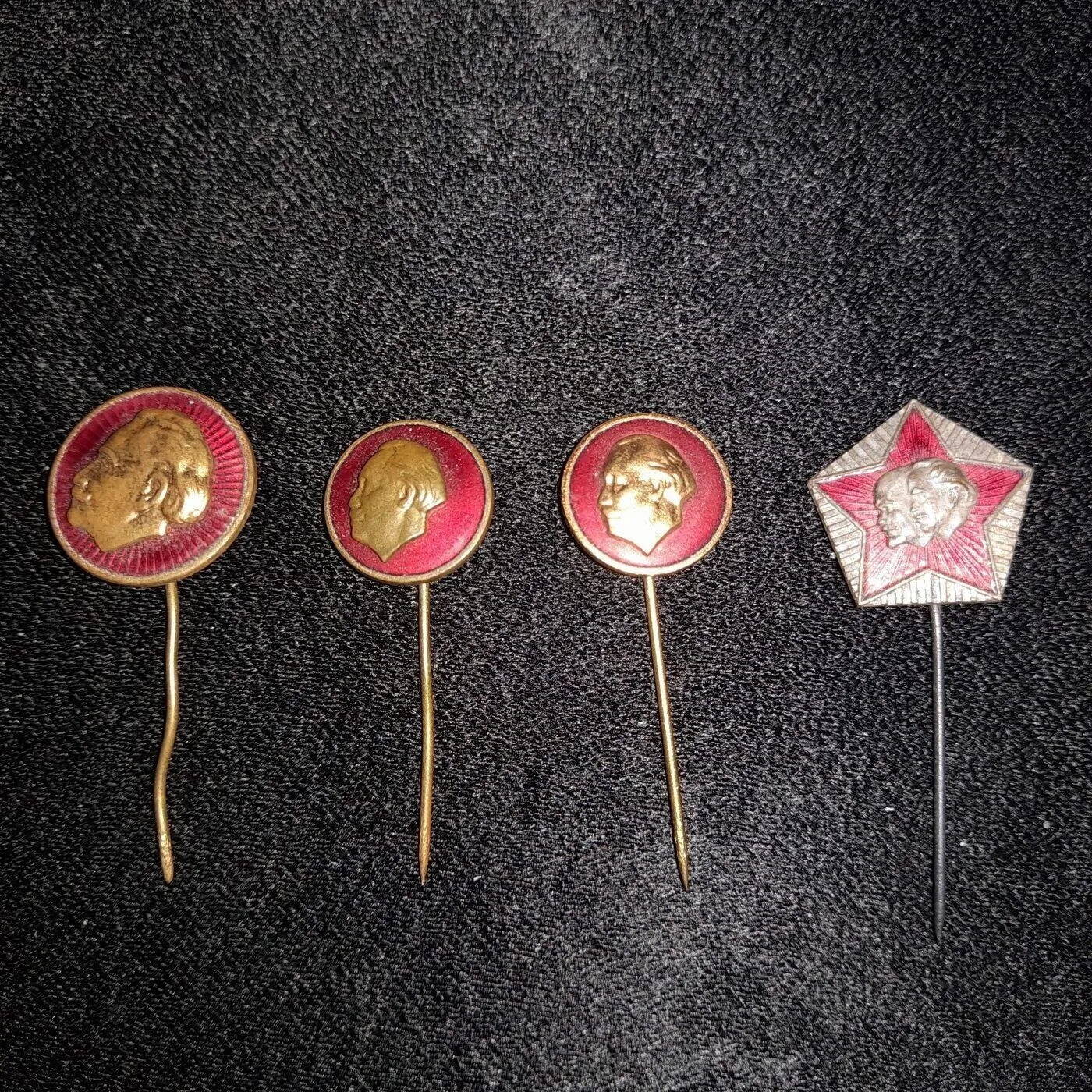 Small pins bearing the likeness of Georgi Dimitrov — Collection Cold War Bulgaria
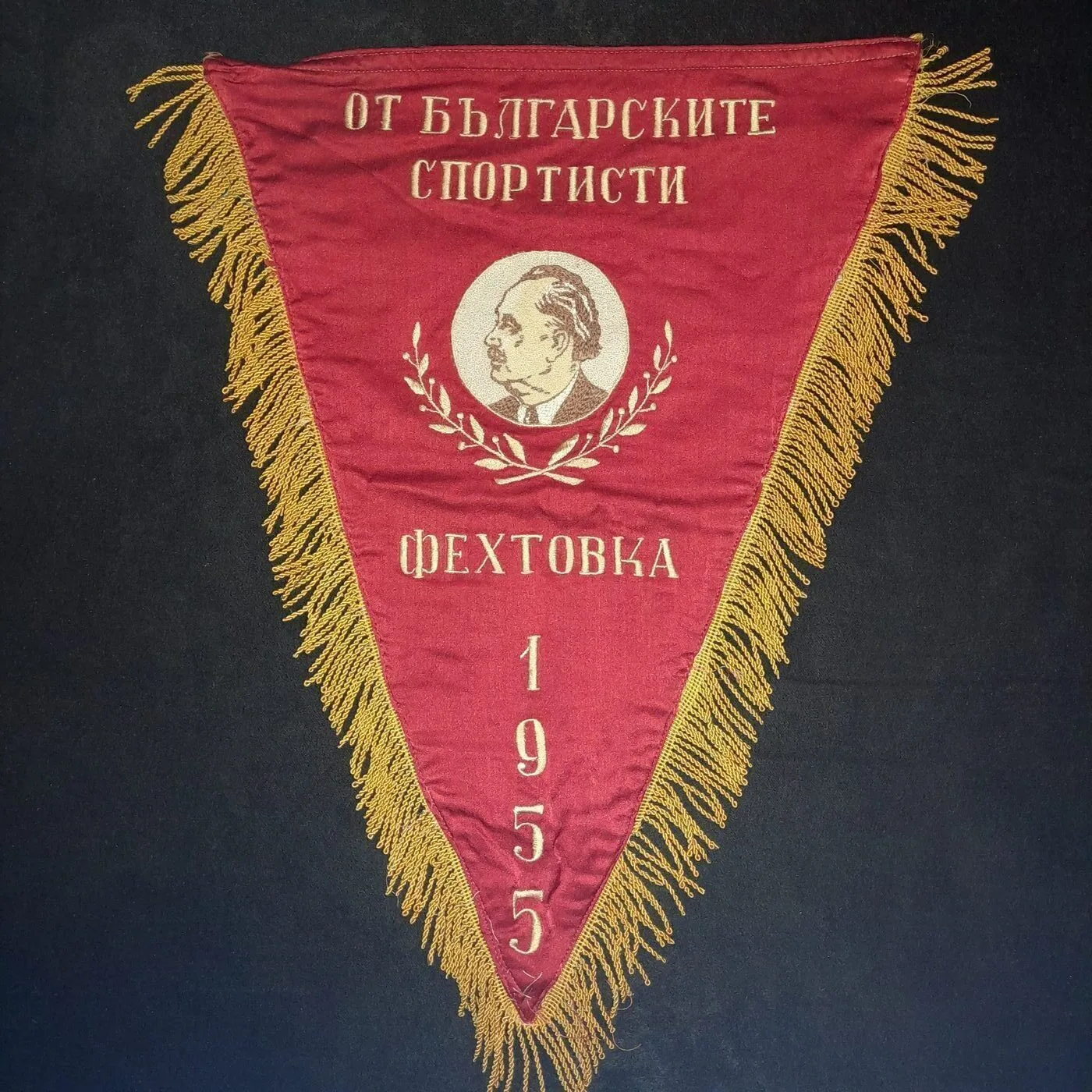 Sports pennant bearing the likeness of Georgi Dimitrov — Collection Cold War Bulgaria
Georgi Dimitrov died on 2 July 1949 in a sanatorium near Moscow. Within hours, the Council of Ministers decided to have his body embalmed and installed in a mausoleum in the centre of Sofia. The building was constructed in six days — the time it took for the body to return from the USSR. The mausoleum then formed part of state ceremonial for forty years.
What is striking about the objects is the diffusion of the face far beyond the monument. A pin one fastens on, a sports pennant, a postcard, a bust set on a desk: the same portrait, declined at every scale, from the monumental to the minuscule.
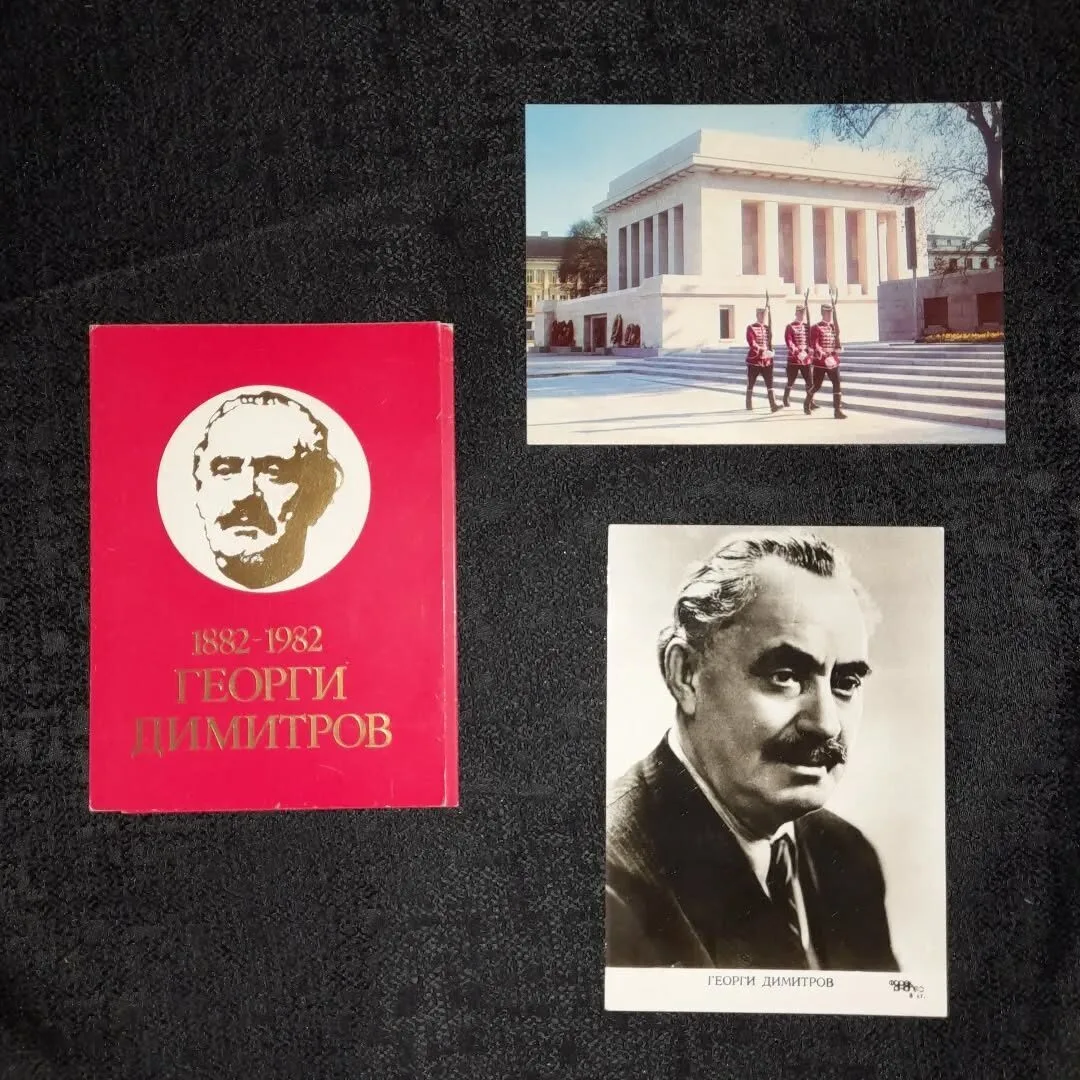 Postcards bearing the portrait and the mausoleum of Georgi Dimitrov — Collection Cold War Bulgaria
And one object closes the demonstration, because it shows the mechanism instead of the result.
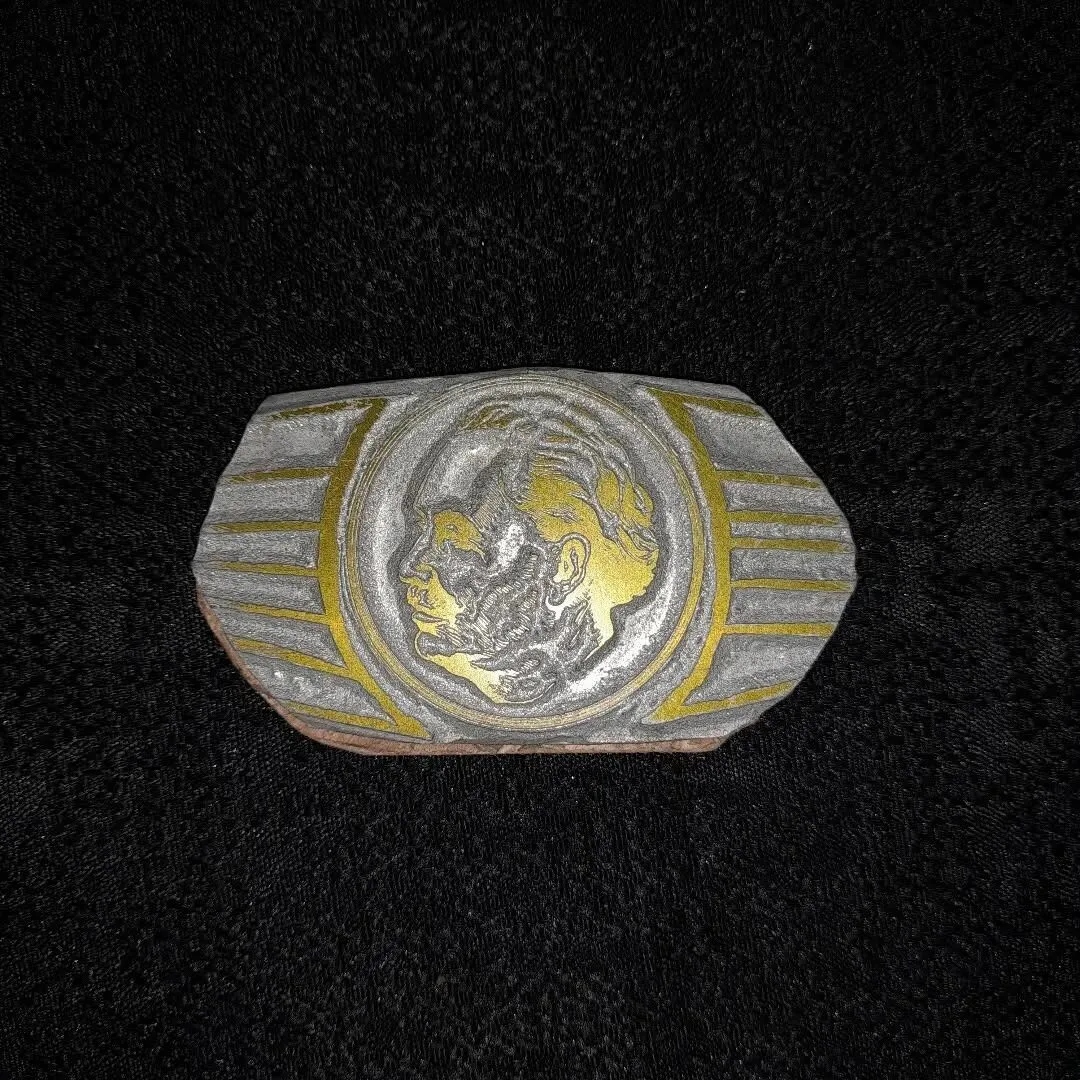 Printing type bearing the likeness of Georgi Dimitrov — Collection Cold War Bulgaria
This is not a portrait of Dimitrov. It is the tool that allows that portrait to be reproduced identically, indefinitely, on any surface. The official face is not an image: it is a workshop part.
What remains when everything falls silent
The mausoleum survived the regime by ten years. The body was removed on 18 July 1990 and cremated the same day; the ashes were deposited in Sofia's central cemetery. The empty building became a cumbersome object, covered in graffiti, used as a backdrop for performances. Its demolition, ordered in August 1999, required four attempts over seven days, more time than it had taken to build.
There is in this episode something beyond anecdote. A regime that speaks without interruption for forty-five years leaves behind objects that go on transmitting, and that nobody knows what to do with.
That is also what these objects are. A poster on a wall, a loudspeaker without a dial, a congress pressed on vinyl, a face on a pin: none of them was designed to be consulted. They were designed to be there, permanently, in the places where people live.
Today they lie side by side in a collection, silent, and one can at last look at them one by one, which is exactly what they were not asking for.
Facts verified against sources: the nature and functioning of the radiotochka, a subscriber's loudspeaker connected to a cable network and fitted with a single six-position volume control, a mode of distribution favoured by the Bulgarian authorities before 1990 so as to transmit only what was judged appropriate, and the existence of a fear of being overheard reported in political works; the creation of Bulgarian National Radio in 1935, its state ownership and its structure of two national channels; the first broadcast of the Hristo Botev channel in 1941 and its cultural and educational purpose; the death of Georgi Dimitrov on 2 July 1949 near Moscow, the decision on embalming and the construction of the mausoleum taken immediately, its erection in six days, its integration into state ceremonial from 1949 to 1989; the removal of the body on 18 July 1990, cremation the same day and the deposit of the ashes in Sofia's central cemetery; the demolition order of August 1999, four attempts over seven days. Resting on a reading of the objects and not on a documentary source: the identification of the TONMASTER and ELPROM sets as subscriber's loudspeakers, based on the absence of aerial, dial and any control other than volume, observed by the collector on both devices, but not confirmed by documentation of the models; the priority of the Bakelite model over the TONMASTER rests on the make of the casings and not on an established dating; the dating and exact contents of the records, taken from the collector's descriptions. The fear of being overheard through the radiotochki is reported as a perception of the period and not as an established technical fact. The attribution of the Rodina set to an issue reserved for officers is a collector's hypothesis, flagged as such in the text: no consulted source establishes it, and research conducted on this model has yielded nothing.